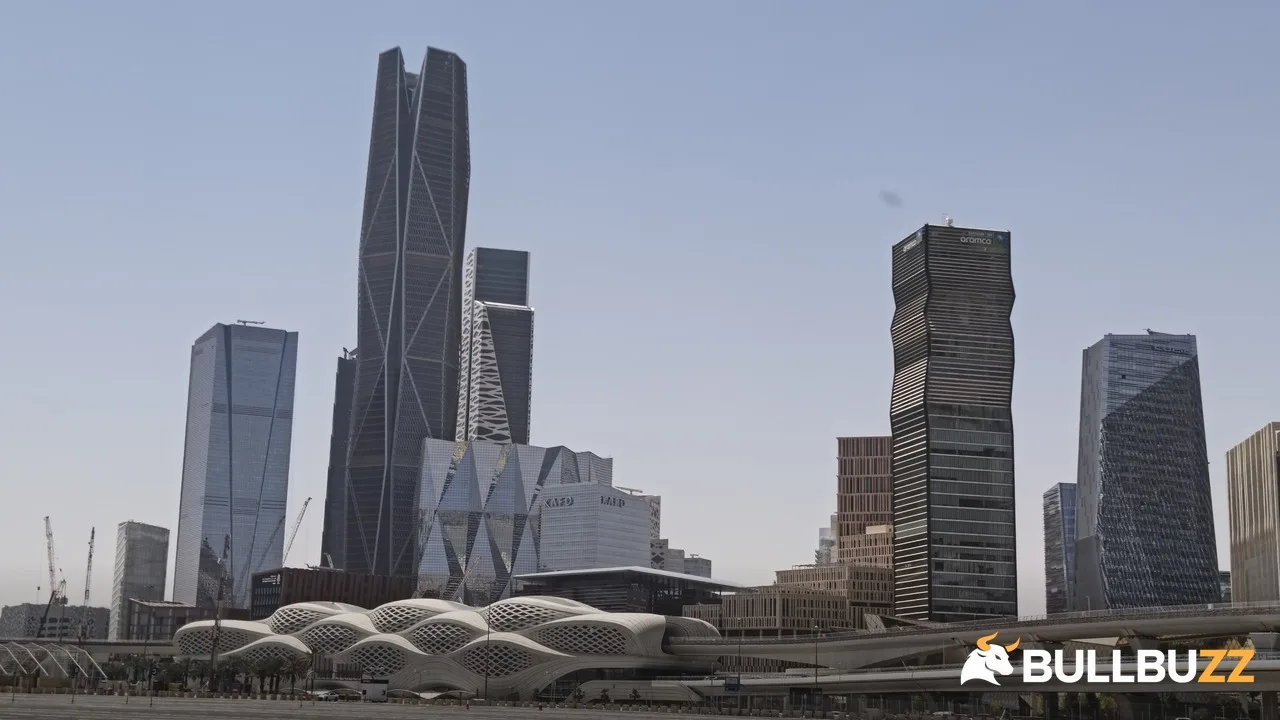
Falling debris from intercepted missiles damaged Aramco Tower in Riyadh's financial district on Sunday, in the most direct strike yet on the Saudi capital's business heart since fighting between the kingdom and Yemen's Houthis resumed in July.
Saudi Arabia's energy ministry said the damage to the administrative building belonging to state oil giant Saudi Aramco was limited and there were no casualties. Debris from an attempted attack blew out windows across several floors of the tower in the King Abdullah Financial District, Reuters reported.
Missiles intercepted over the capital
The Saudi-led coalition said its air defences intercepted two ballistic missiles and two cruise missiles targeting Riyadh and other regions early on Sunday, accusing the Iran-backed Houthis of launching the weapons. Witnesses in Riyadh said they heard a loud explosion and described damage at the Aramco building in the financial district, with glass shattered across several floors and part of the tower's facade torn away.
The Houthis' military spokesperson, Brigadier General Yahya Saree, claimed responsibility in a statement on Sunday, saying the group had hit the financial district and other targets. He said the operations involved ballistic missiles, cruise missiles and drones aimed at King Khalid International Airport, Aramco facilities in Khurais and Abqaiq, and a pumping station in Dawadmi, and described the strikes as retaliation for Saudi attacks on a village and a market in Yemen. Those claims have not been independently verified, and the Houthi-run health ministry's claim that 33 people were killed in the Saudi strikes is also unverified.
On Monday, Saudi civil defence authorities raised an alert in Riyadh and then said the danger had passed minutes later, a day after the attack damaged the Aramco building. The brief alert underlined how quickly the renewed fighting is reaching the capital's daily life, even as officials moved to reassure residents.
Oil eases as traders weigh the risk
Oil prices eased on Monday despite the attack, with Brent crude trading below $98 a barrel and US crude near $90. Traders took their cue from Washington, where US President Donald Trump said fresh attacks on Iran were highly unlikely while talks to end the conflict continued, easing fears of a wider supply disruption. Iraq's oil output topping 5 million barrels a day is already complicating OPEC+ quota talks, and the market is watching whether Gulf tensions add a lasting risk premium to crude or fade as they have after earlier incidents.
Gold, the other haven in the crosshairs of Middle East tension, held above $4,100 an ounce on Monday, extending its recovery as softer oil prices eased inflation worries and a weaker dollar gave buyers room. The metal's resilience shows traders are pricing the Riyadh attack as a contained escalation for now, rather than the start of a wider energy shock.
A financial district under fire
The King Abdullah Financial District is one of the most visible symbols of Saudi Arabia's economic reform drive, a cluster of glass towers housing major banks, international firms and government institutions. Aramco Tower, the 160-metre, 32-storey skyscraper at its centre, is home to offices of the world's largest oil exporter. A damaged tower there carries a message beyond the repair bill: the fighting that resumed in July is no longer confined to Yemen's borders or to remote border regions, and it can now reach the buildings where the kingdom does its business.
Hostilities between Saudi Arabia and the Iran-aligned Houthis resumed in July, shattering a 2022 UN-brokered truce that had largely halted the fighting. Since then the Houthis have stepped up missile and drone strikes on Saudi airports, ports and oil facilities, opening another front in the wider Middle East war triggered by US and Israeli attacks on Iran in February. Saudi Arabia has responded with airstrikes against Houthi targets in Yemen, and the cycle has now reached Riyadh's financial district, with the coalition also reporting a cruise missile interception aimed at the Riyadh region on Saturday.
Risks to commercial shipping in the region also remain high. The United Arab Emirates said it rescued 22 crew members after a fire broke out aboard a cargo ship in the Sea of Oman, a reminder that the Gulf's energy and trade routes sit close to the fighting. The US strikes on Iran last week already put those routes on edge, and insurers and shippers will be watching whether the Houthi campaign widens from Saudi targets to the sea lanes.
What to watch next
The first question is whether the Houthis keep striking Saudi energy and financial targets, or whether the weekend barrage was a one-off retaliation. A sustained campaign would force a reassessment of war-risk premiums on Gulf oil, insurance rates for shipping, and the security costs of doing business in Riyadh's financial district. The second is whether Saudi Arabia's response stays limited to airstrikes in Yemen or escalates further.
Markets will also be watching Tuesday's US inflation report, due at 9:30pm MYT, the last full read on consumer prices before the Federal Reserve's December meeting. With traders already pricing in a December rate rise after Friday's strong US jobs report, a hot inflation print could strengthen the dollar and pressure both oil and gold, whatever happens in the Gulf. For now, the damage in Riyadh is limited and no one was hurt, but the tower's shattered windows are a reminder that the region's markets are trading with a war next door.