Asian stocks slid on Tuesday, 13 October, as selling in AI-linked chip shares combined with concern over the Saudi-Houthi conflict. Brent crude remained near $106 a barrel in early Asian trading, keeping energy costs in focus as investors awaited major US bank earnings.
Reuters reported that MSCI's broad Asia-Pacific index excluding Japan fell 2.4% to a two-month low. South Korea led the regional selling as doubts about the durability of the AI rally hit semiconductor shares.
The Saudi-related risk follows fresh reports of strikes in Yemen after Riyadh's missile alerts. The market story also has a separate technology driver: investors are reassessing the price paid for future AI profits.
Asian Stocks Slide as Chip Shares Lead Selling
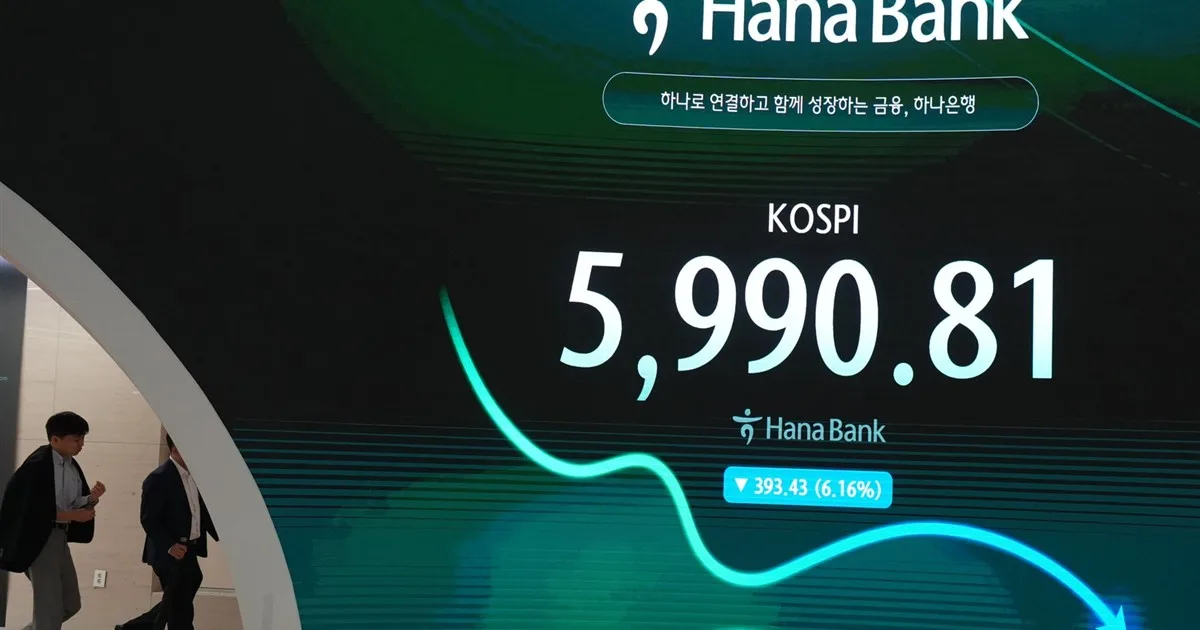
In Reuters' Tuesday intraday report, South Korea's KOSPI was down 6%, Japan's Nikkei fell 2.6% and Taiwan shares dropped 2%. The Korean move triggered a five-minute restriction on program trading, according to the report.
A separate Associated Press report recorded the KOSPI down 7.4%, with Samsung Electronics falling 7.7% and SK Hynix losing 8.8%. AP linked the chip sell-off to concerns about Chinese competitor CXMT and the outlook for the AI boom.
Reuters and AP quote different intraday snapshots, rather than a common closing price. The photograph's screen captures another point during Tuesday's session.
Why Oil Stayed Elevated Near $106
Brent traded at $106.04 at 00:00 GMT on Tuesday, or 8 AM Malaysia time, according to Reuters' oil report. That was down 0.57%, following Monday's settlement at $106.65.
Oil was therefore lower on the day at that observation, while still elevated after the previous session's gains. Traders were balancing Saudi-related supply concerns against the possibility of additional Russian diesel reaching the market.
NDTV Profit's early Tuesday report also placed Brent near $106, citing Middle East tensions and attacks on energy infrastructure in the Russia-Ukraine war. AP's separate market report subsequently carried Brent at $105.20. None of these figures is a live quote at the time a reader opens this article.
BullBuzz previously covered the energy-ceasefire claim and continued Ukrainian strikes. Tuesday's Asian equity reaction is a new session, with semiconductor selling adding another source of pressure.
Malaysia's Benchmark Recovered, but Breadth Was Weak
Malaysia did not move in lockstep with every regional index. Bernama reported that the FBM KLCI gained 2.39 points, or 0.14%, to 1,620.40 at 12:30 PM, supported by bargain hunting in banking and energy heavyweights.
Across the wider Bursa market, however, 815 counters fell and 273 rose. The benchmark's gain was accompanied by broad selling pressure. Those figures describe the midday break, rather than Malaysia's closing session.
What Investors Should Watch Next
US bank results and subsequent inflation data are the next tests for sentiment. Reuters' Tuesday report placed Nasdaq futures down 0.77%; a futures reading is an indication of positioning before cash trading, rather than a forecast of where the market will close.
Investors can compare subsequent earnings and market data with the earlier financing risks around AI investment. Higher funding and energy costs matter to profit assumptions, but share-price declines alone do not establish that an AI project or chip order has failed.
Photo: Hana Bank dealers in Seoul on October 13, 2026. AP/Lee Jin-man. The screen shows an intraday KOSPI reading.
- Final exchange closing figures, compared with Tuesday's intraday snapshots.
- US bank earnings and their assessment of credit and financing conditions.
- Confirmed changes to Gulf shipping or energy infrastructure, alongside fresh oil quotes.
The next useful signal is whether technology selling broadens after the earnings releases, and whether reported regional fighting produces a verified change in energy supply. Both require fresh evidence beyond the morning's price moves.