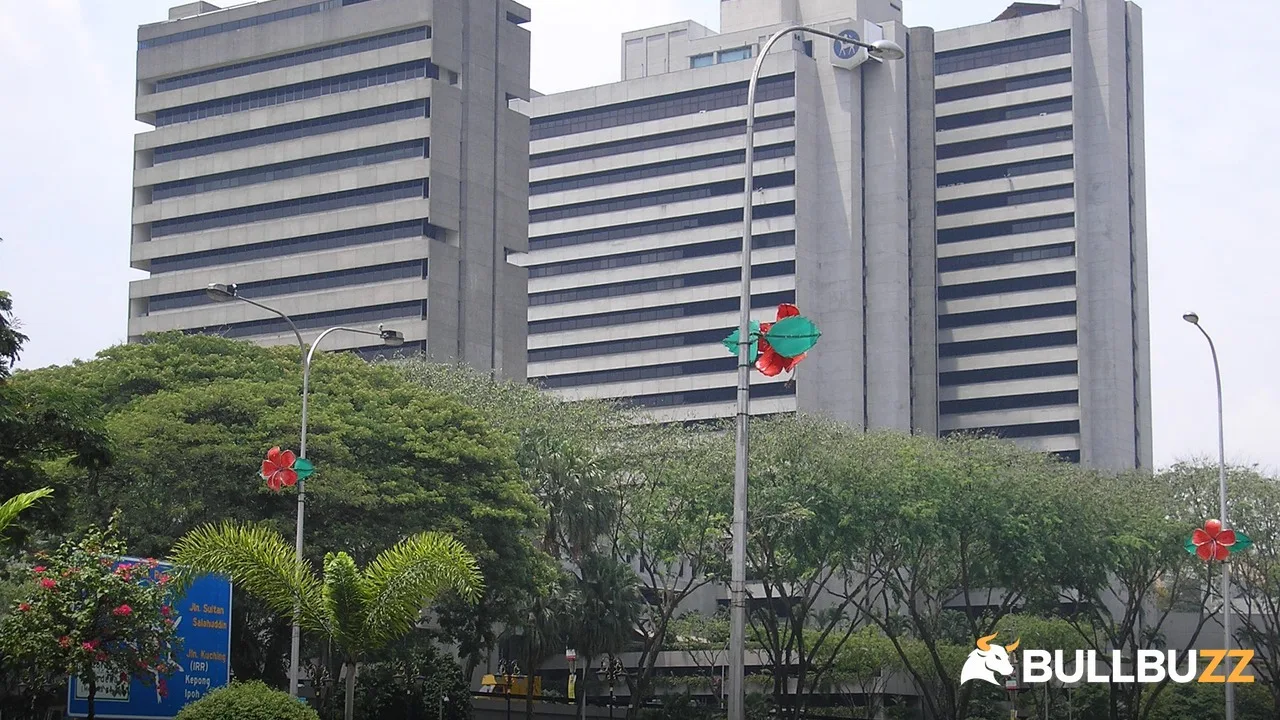
Bank Negara Malaysia held its overnight policy rate (OPR) at 2.75% on Thursday, keeping borrowing costs unchanged at its sixth and final Monetary Policy Committee (MPC) meeting of 2026, with the central bank pointing to resilient growth and contained inflation.
The decision was announced at 3pm in Kuala Lumpur and matched the expectations of most economists. A Bloomberg survey had 20 of 22 economists forecasting a hold, with only two looking for a 25-basis-point increase, Webull reported, citing the central bank's statement. The OPR has now been unchanged since Bank Negara delivered a pre-emptive 25-basis-point cut in July 2025.
"At the current OPR level, the Monetary Policy Committee (MPC) considers the monetary policy stance to be consistent with the outlook of continued price stability and sustainable economic growth," Bank Negara said in its statement, according to the Wall Street Journal. "The MPC will remain vigilant to ongoing developments and assess the balance of risks surrounding the outlook for domestic inflation and growth."
The hold ends weeks of debate over whether the central bank would start normalising rates before the end of the year. The ringgit had traded in a narrow range in the run-up to the decision as investors waited on the outcome, BullBuzz reported last week.
BNM OPR: why the hold won the argument
The case for a hike was real, and it had serious backers. UOB, Nomura and ANZ had all argued that stronger-than-expected growth had weakened the case for keeping the July 2025 insurance cut in place, and each expected the central bank to lift the OPR by 25 basis points to 3.00% at this meeting.
But the majority view held that the data did not yet force the central bank's hand. Headline inflation eased to 1.8% in September from 1.9% in August, and the central bank said headline and core inflation had averaged 1.8% and 2% respectively over the first seven months of 2026. Growth, meanwhile, has been strong enough to argue for patience rather than urgency.
Governor Abdul Rasheed Ghaffour had also signalled flexibility rather than commitment. In October he said the central bank had greater room to adjust rates after it dropped its previous description of the policy stance as "appropriate" from the September statement, adding that decisions would remain data-dependent.
Growth running at around 5% as inflation stays tame
Bank Negara's statement painted a firm picture of the domestic economy. Malaysia expanded by a robust 5.7% in the first half of 2026 despite a challenging global environment, driven by stronger-than-expected export performance and sustained domestic demand. The central bank said that momentum should bring full-year 2026 growth to around 5%, with the economy's sound fundamentals keeping growth resilient into 2027.
The external sector is expected to keep carrying much of the load, lifted by robust demand for electrical and electronics goods, technology-related exports and tourist spending. Stable labour market conditions and ongoing investment activity should continue to support domestic demand.
The risks are still shaped by the same forces driving policy everywhere. Bank Negara flagged downside risks from a prolonged conflict in the Middle East and lower commodity production, while the upside could come from stronger-than-expected global growth, firmer technology-related export demand and higher tourism activity.
On prices, the central bank said that despite elevated costs and strong economic growth, the pass-through to consumer prices had been contained by domestic policy measures and stable demand conditions. Uncertainty over the Middle East conflict remains, it said, with elevated global commodity prices continuing to exert upward cost pressures. Global inflation has eased in recent months but is expected to remain elevated, reflecting the lagged pass-through of higher energy costs — a pattern also visible in Europe, where eurozone inflation hit 4% in October, a three-year high.
What comes next for Malaysia rates
With the final meeting of 2026 now done, attention shifts to the first meeting of 2027 and whether the normalisation debate returns with it. A Reuters poll of economists taken before the decision pointed to a hold now and a hike in the first quarter of 2027, TradingView reported, as strong growth and the risk of renewed inflation pressures push the central bank towards gradually lifting rates.
Bank forecasts point the same way, with the timing spread across the first half of the year. BofA Securities expects Bank Negara to keep rates unchanged for an extended period but sees the possibility of a 25-basis-point increase in March 2027, by which time the central bank should have greater clarity on the impact of geopolitical tensions and the sustainability of the artificial-intelligence investment boom. Kenanga Research expects a 25-basis-point rise in the first quarter of 2027, RHB Research looks for a similar move in the first half of the year, and CIMB expects the OPR to reach 3.00% in March 2027.
For now, though, the message from the central bank is one of watchful patience. The MPC will remain vigilant on cost pressures and domestic demand conditions, and the next decision will turn on whether inflation stays contained as growth runs at around 5% — or whether the price pressures the hawks have been warning about finally start to show up in the data. In the United States, private payrolls rose by 86,000 in October even as hiring cools, a reminder that central banks on both sides of the Pacific face the same trade-off.