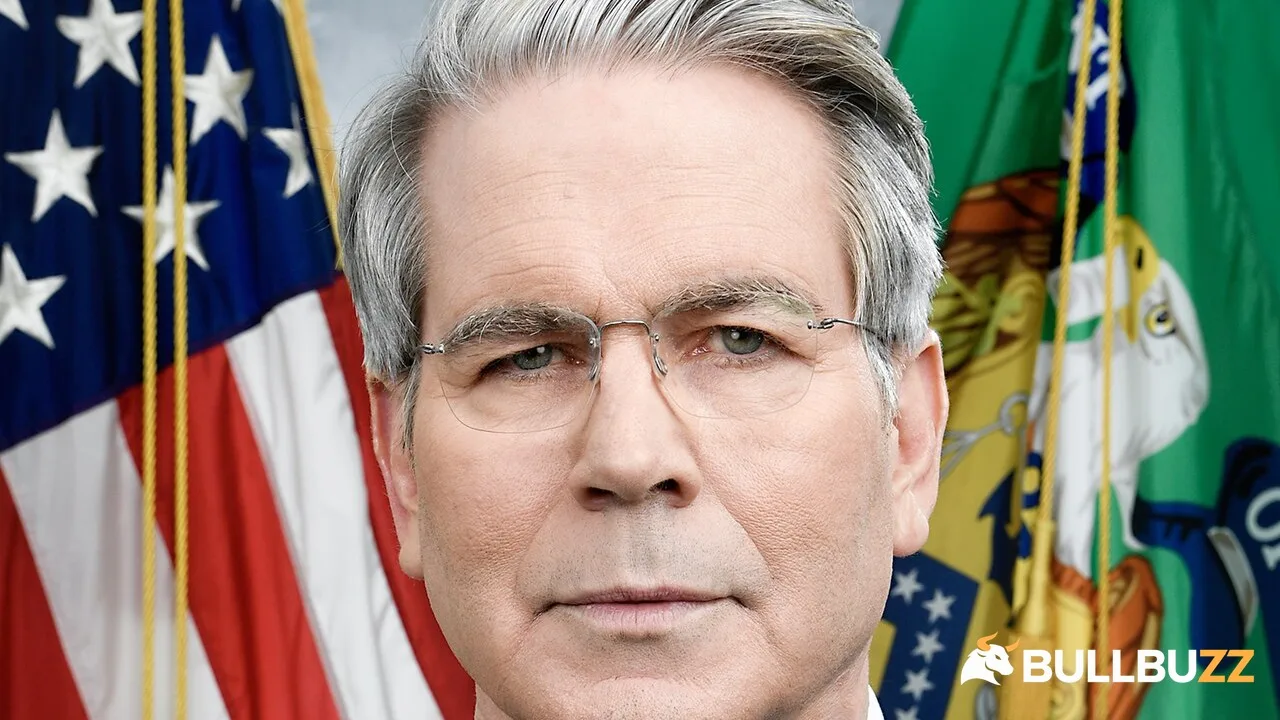
US Treasury Secretary Scott Bessent has warned the Federal Reserve it risks making a policy mistake if it tightens monetary policy too far, putting the Treasury openly at odds with the central bank's hawks less than three weeks before its December decision. Speaking on CBS's Face the Nation on Sunday, Bessent said "many people believe that they may be making a policy mistake if they over-tighten", pointing to a run of hawkish remarks from Fed governors and what he called a substantial tightening in financial conditions over recent months, InvestingLive reported.
The warning lands as markets reprice the Fed's next move. Fed funds futures put an 88.6% probability on a 25-basis-point hike at the Fed's December 8-9 meeting, with a larger 50-basis-point move now priced out, after the dollar eased off a 19-month high in early Asian trade on Monday. Bessent's intervention is aimed squarely at the minority of officials still arguing for the bigger move, and at a market that spent last week swinging between pricing a hike and fearing one.
Bessent's case is that the inflation the Fed is reacting to will fade on its own. He has argued through November that the price pressure is largely an energy supply shock that is already easing, and that hiking hard into it would punish growth for a problem that is solving itself. He also described recent inflation data as noisy, after October's headline consumer price index rose 0.4% against expectations of 0.3%. His remarks are the Treasury's view, not that of the officials who set rates, and the Fed has not responded.
Fed December rate hike debate splits hawks from doves
The sharpest disagreement is over the size of the December move. Fed Governor Christopher Waller has said a half-point hike is probably necessary in December and that the central bank may need to "shock people", Bitcoin Magazine reported. Minutes of the Federal Open Market Committee's October meeting showed nearly all officials expect a quarter-point hike in December, with two floating a larger one, so Waller is not alone, but he is the most vocal advocate of the bigger step.
Bessent has been building his counter-argument in public for weeks. In a CNBC interview on 13 November, he said it would be a mistake for the Fed to hike too aggressively into an energy supply shock, and he repeated the point on 20 November, urging policymakers not to back a larger rise. He noted that one governor who now favours a 50-basis-point increase had supported a cut of a similar size within the past year, and told the Fed to "look forward, not backwards". He did not say what outcome he wants in December, and he did not name any of the officials he had in mind.
The divide matters because the Fed's target range has been 3.75% to 4.00% since a quarter-point hike in September, and it was held there in October. A December hike would be the second increase in four months, at a moment when Wall Street has just entered a correction and financial conditions have already tightened sharply. Bessent's point is that the central bank should weigh that tightening before adding to it, rather than reacting to backward-looking inflation prints.
Ackman joins Bessent in urging Fed restraint
Bessent is not the only prominent voice urging restraint. Hedge fund manager Bill Ackman has warned that a rate hike in December would be a significant mistake, arguing that the higher cost of equity capital and recent stock market volatility call for a change of strategy, Times Now reported. Ackman went further than Bessent, challenging the Fed's long-standing 2% inflation target and suggesting a 3% goal would be more appropriate given modern global realities.
Bessent's message also sits alongside President Donald Trump's repeated public pressure on the Fed to cut rates, although Trump has so far refrained from directly criticising the new Fed chair, Kevin Warsh, Coinotag reported. The combination leaves the Fed caught between a White House that wants easier money and its own governors warning that inflation has not yet been beaten.
What the warning means for the dollar and markets
For currency traders, the Treasury-Fed split is now a live variable in the dollar's direction. The greenback has already softened from its 19-month high as hike bets were pared, and any further sign that the December move will be smaller than feared would take more pressure off the currency. Gold has rebounded to $3,630 as forced selling eased, and gold has tended to fall when hike expectations rise, so a softer Fed path would remove one headwind for the metal.
Bessent also offered his own reading of last week's rout, blaming it on Democrats' gains in the polls, the party's stance on slowing the AI buildout, and the Fed's tone. That is his view, not an established cause: the selling was broad, with the S&P 500 down 3.7% on Friday to 6,910.39 and the Nasdaq down 5.3%, and Asian markets opened the week under pressure before steadying. Traders will now watch Wednesday's US PCE inflation data, further Fed commentary and how deep the equity correction goes to judge whether a December hike stays on the table, and how large it might be.