Brent crude topped $103 a barrel on Thursday after a tanker reported being struck by multiple projectiles near Qatar and an Iranian official threatened to close a disputed maritime route Tehran considers illegal. The developments revived supply and inflation concerns.
Brent was up 3.7% at $103.91 shortly after European markets opened, while U.S. West Texas Intermediate rose more than 3.45% to above $91.41, Euronews reported. The outlet also reported weaker European and Asian shares and higher bond yields amid renewed inflation concerns.
UKMTO Confirms a Qatar-Area Strike
A verified UK Maritime Trade Operations warning said a tanker reported being hit by multiple projectiles at about 19:00 UTC on October 7, roughly 51 nautical miles north of Madinat ash Shamal, Qatar. Casualties were reported, but the notice gave no count, did not identify the vessel or the projectiles’ origin, and said authorities were investigating.
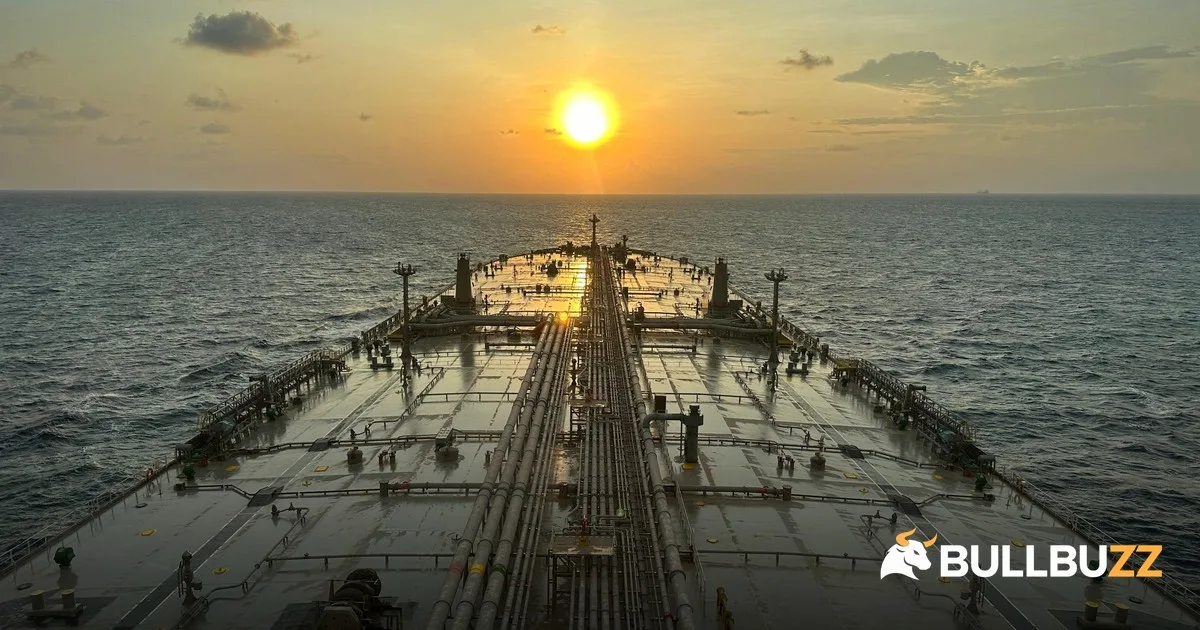
The position is in the wider Gulf, outside the narrow Strait of Hormuz. BullBuzz’s earlier report on three tanker strikes inside Hormuz covered a different stretch of the shipping risk. Al Jazeera, citing AFP and DPA, described an attack in this part of the Gulf as unusual and said Qatar had not commented at the time of its report. UKMTO confirmed the incident, but it did not assign responsibility. The banner photograph is illustrative, not a confirmed image of the vessel.
Iran’s Route Warning Is Contested
Separately, an adviser to Iran’s Revolutionary Guards commander said routes Tehran considers unauthorized would soon be closed, referring to a southern passage along Oman’s coast, The Guardian reported. The statement did not confirm that the route had actually been shut.
The same report said the Iranian adviser put current Strait traffic at about 10 ships a day, compared with a prewar average of 125. U.S. Secretary of State Marco Rubio disputed Tehran’s claim of control, saying oil flows were close to prewar levels. Those competing accounts leave verified vessel movements and export data central to the market picture.
What Is Driving Brent Crude Higher?
The Qatar-area incident and transit threat added to market concern, while other supply pressures were in play. The Euronews report cited producers shutting in more than 500,000 barrels per day of Gulf of Mexico output ahead of Hurricane Isaias. That separate disruption means Thursday’s price rise cannot be attributed to Iran alone.
Provisional Kpler data cited by Al Jazeera put the seven-day average of Middle East crude exports at 18.3 million barrels per day on September 30, above the prewar average of about 18 million barrels per day. The outlet also said the Strait normally carries about one-fifth of global crude and liquefied natural gas supplies. The figures show physical exports had been recovering even as threats to ships and routes intensified. Al Jazeera’s report cited the provisional flow data.
BullBuzz’s earlier oil-price update tracked Brent’s rebound after Washington denied offering Iran sanctions relief. Brent later swung between $96 and $100 during tanker incidents inside Hormuz, before topping $103 again on Thursday as the Qatar-area strike and route threat dominated headlines.
Why Traders Care About the Supply Premium
A sustained oil rise can lift fuel and transport costs, feed inflation expectations and push yields higher. Higher borrowing costs can then weigh on company valuations and household spending. The inflation risk also lands against a firm U.S. policy backdrop: September’s Fed minutes said most participants judged another rate increase would likely be appropriate by year-end.
For traders, the question is whether the latest incident changes transit, insurance costs or the willingness of crews and shipping firms to cross the Gulf. A rise in oil that persists beyond Thursday’s initial reaction would add pressure to inflation and rate expectations; verified vessel movements and export data will show whether the supply concern is becoming a physical disruption.
What Traders Should Watch Next
- New UKMTO advisories, vessel identities, casualty updates or confirmed route restrictions.
- Brent and WTI prices alongside verified Gulf transit and export data.
- Bond yields and inflation expectations, which show whether the oil move is changing rate pricing.
The tanker’s attacker has not been identified, and Iran’s route statement is not proof of a new closure. Traders are watching for verified shipping changes and whether the supply premium holds beyond Thursday’s initial market reaction.