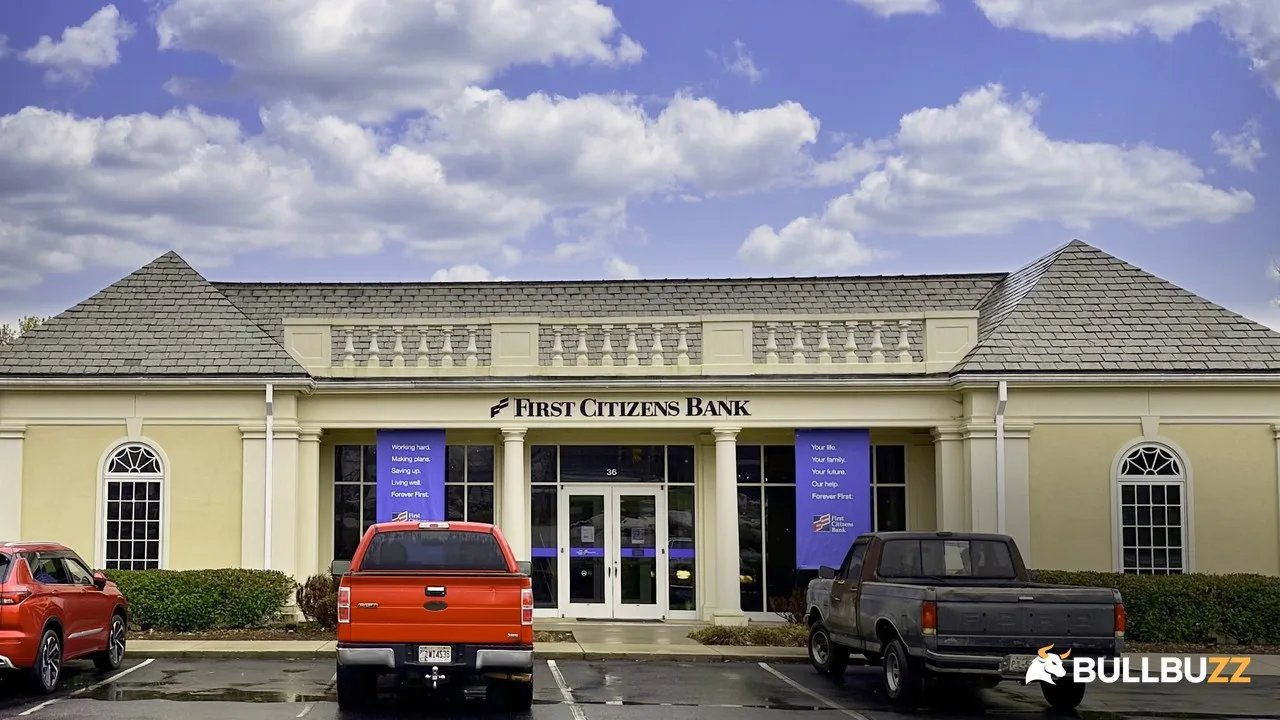
US regulators shut United Fidelity Bank on Friday, in the biggest US bank failure since April 2024, and First Citizens Bank agreed within hours to take over the failed Indiana lender's deposits, loans and 22 branches.
The Office of the Comptroller of the Currency closed United Fidelity Bank, fsb, of Evansville, Indiana, and appointed the Federal Deposit Insurance Corporation (FDIC) as receiver, the FDIC said. The closure was announced on Saturday morning, Malaysia time. First-Citizens Bank & Trust Company, the banking arm of First Citizens BancShares (Nasdaq: FCNCA), will assume substantially all of the failed bank's deposits and buy substantially all of its assets in a whole-bank purchase agreed through the FDIC's competitive bidding process.
As of 30 September, United Fidelity had about $5.9 billion in total assets and $5.4 billion in total deposits, according to the FDIC. Under the agreement, First Citizens will assume $5.9 billion in assets, $4.5 billion in deposits and $3.1 billion in loans. Its winning bid included an asset discount of about $2.6 billion and no deposit premium. The figures are estimates based on the bank's 30 September balances and remain subject to adjustment on the final closing balance sheet and the post-closing settlement with the FDIC.
What the US bank failure will cost
The FDIC estimates the failure will cost its Deposit Insurance Fund $1.83 billion, an unusually steep loss equal to about 31 per cent of the bank's total assets. The size of the hit, and the deep discount First Citizens demanded on the loan book, suggest the lender was in serious trouble by the time regulators stepped in.
First Citizens agreed to take on only $4.5 billion of the $5.4 billion in deposits the FDIC said United Fidelity held at the end of September. The accounts left behind exclude certain brokered deposits and other excluded accounts, the FDIC said, without disclosing how many or why. CNN reported that the 31 per cent loss rate on assets is far above what the insurance fund typically absorbs in a bank failure.
Depositors keep their money as branches reopen
Depositors of United Fidelity will become depositors of First Citizens, so customers do not need to change their banking relationship and will retain all of their funds and deposit insurance coverage, the FDIC said. Over the weekend, depositors can still access their money by writing cheques or using ATM and debit cards, cheques drawn on United Fidelity will continue to be processed, and loan customers should keep making their payments as usual.
The bank's 22 branches, in Indiana, Illinois, Florida, Colorado and the US Virgin Islands, will reopen as a division of First Citizens from Saturday, with locations that normally operate on Saturdays opening as usual and all branches open during normal business hours on Monday, 30 November. The two branches in the US Virgin Islands operate as Bank of St. Croix, a division of United Fidelity. The agreement also includes United Fidelity's subsidiaries, including real estate development and management company Pedcor Homes Corporation.
The biggest failure since April 2024
United Fidelity is the biggest US bank failure since Philadelphia-based Republic First Bank closed in April 2024 with $6 billion in assets, according to FDIC data. It is the second-biggest failure since the 2023 regional banking crisis that brought down Silicon Valley Bank and First Republic, a crisis that ended only after US officials stepped in with a rescue to stop other banks going under.
It is also the latest in a quickening run of failures. Six US banks had already failed in 2026 before United Fidelity, up from two in each of 2024 and 2025. The closure landed at the end of a strong week for US stocks, with the Dow Jones surging almost 600 points on Friday to cap its best week since 2022. Investors are watching central banks closely too: Tokyo's core inflation hit 2.9 per cent in November, keeping a December Bank of Japan rate hike in view, while banking leadership is changing in Europe, where Pablo Hernández de Cos is set to become the next president of the European Central Bank.
Why First Citizens keeps buying failed banks
First Citizens has made a habit of stepping in where other buyers will not. It also served as the distressed buyer in the larger Silicon Valley Bank failure of 2023, and its chairman and chief executive, Frank B. Holding Jr., said the United Fidelity deal was both financially and strategically compelling. "We look forward to welcoming our new customers, earning their trust and positioning our company for continued success," he said in a statement.
First Citizens describes itself as a top 20 US financial institution with more than 125 years of history. Its parent company, First Citizens BancShares, is a Fortune 500 company with more than $225 billion in assets, according to a statement from the bank.
What happens next is largely administrative: the branches reopen under the First Citizens name, a conversion to First Citizens' operations and systems will take place at a later date, and the final balances will be settled between the bank and the FDIC. The wider question for the industry is whether United Fidelity was a one-off casualty or a sign of deeper strain among smaller US lenders, a question that will sharpen when First Citizens shares trade again and US markets reopen on Monday.