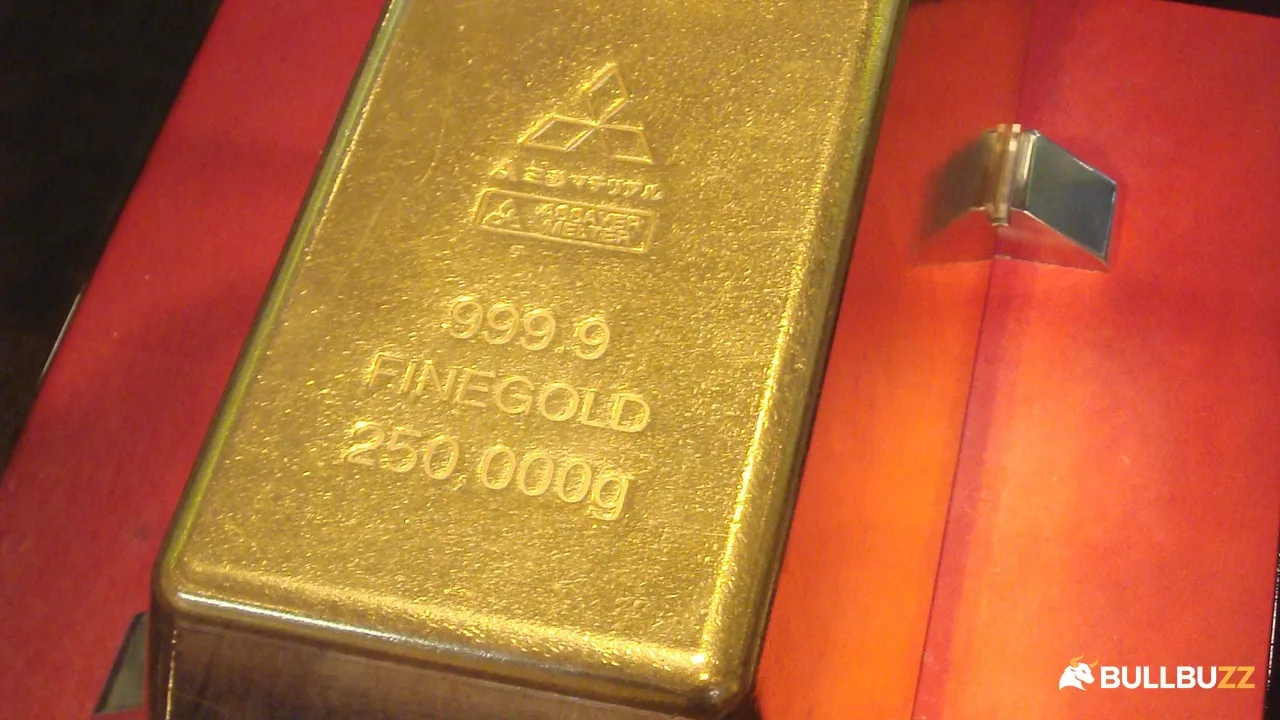
Gold price crashed to its lowest level in more than a year on Thursday as hot US inflation data, a surging dollar and a sharp rise in oil prices convinced traders the Federal Reserve will keep raising interest rates.
Spot gold fell 2.7% to $3,880.93 an ounce by 2:53 a.m. on Friday in Malaysia, after touching $3,852.14 during the session — its lowest since 3 October 2025 — while US gold futures for December delivery settled 2.9% lower at $3,885.30, EconoTimes reported, citing Reuters data. The Nation reported the same figures, confirming the scale of the sell-off.
The slide was bullion's third consecutive daily loss. BullBuzz reported on Thursday that gold had fallen below $4,000 an ounce for a third straight session — and Thursday's session pushed it much further below that level, wiping out the metal's recovery from earlier in the week. Spot gold steadied near $3,887 an ounce in early Asian trading on Friday, Vietnam.vn reported, but remained close to its one-year low.
Gold price slide follows hotter-than-expected US inflation
The trigger for the sell-off was Tuesday's US consumer price report. The US Bureau of Labor Statistics said consumer prices increased 0.4% in October from September, above the 0.3% rise economists had expected, while core inflation — which excludes food and energy — rose 0.3% for a third consecutive month.
Before those figures were released, Federal Reserve Governor Christopher Waller had said in a 10 November speech that he would support a 25-basis-point increase in December if inflation improved as he expected — and that a core reading of 0.3% or higher would mean a 50-basis-point hike "should be considered" at the December meeting. The data came in exactly at that threshold.
Traders now assign an 87% probability to a 25-basis-point Fed rate increase in December, according to CME Group's FedWatch tool, while the odds of a larger 50-basis-point move have also risen. The US 10-year Treasury yield jumped to 5.13%, and the dollar pushed towards a 19-month high — BullBuzz reported the greenback had already neared 160 against the yen as the US currency strengthened. Gold, which pays no interest, loses appeal when rates and yields rise.
Oil surge adds to the inflation pressure
Rising energy prices added to the pressure on gold. Brent crude settled 3.3% higher at $95.82 a barrel on Thursday, while US West Texas Intermediate crude gained 2.6% to $88.74, NDTV Profit reported, after President Donald Trump said on social media that the United States did not need a deal with Iran.
"We don't need a deal with Iran," Trump wrote, dimming hopes of a diplomatic breakthrough to end the conflict that has disrupted supplies from the region. Yemen's Iran-aligned Houthis said they had attacked a pumping station on Saudi Arabia's East-West oil pipeline, a facility in the Red Sea city of Yanbu and a Saudi Aramco building in Riyadh, while explosions were reported on tankers in the Strait of Hormuz, CNBC TV18 reported.
"Higher energy prices continue to warrant a hawkish Fed, and a hawkish Fed is an environment of higher interest rates and hence a headwind for the yellow metal," David Meger, director of metals trading at High Ridge Futures, said. "Those factors are working to press the gold market lower," Jim Wyckoff, a market analyst at American Gold Exchange, added, pointing to the stronger-than-expected US inflation reading, hawkish remarks from Fed officials and the dollar's rally.
Silver and platinum fall with gold
The rout spread across precious metals. Spot silver fell 3% to $50.12 an ounce on Thursday, after touching its lowest level since 4 November earlier in the session. Spot platinum declined 1.2% to $1,518.49 an ounce, having reached its lowest since 6 November, while palladium dropped 3.1% to $995.91 an ounce.
The decline also triggered stop-loss orders on bullish gold positions built up over the previous two weeks, according to independent metals trader Tai Wong, adding to the selling as traders who had bought into bullion's recovery from an earlier sell-off in technology shares were forced out.
Traders now watch Friday's US PPI
Attention now turns to the US producer price index, due at 9:30 p.m. on Friday in Malaysia. The report, which measures prices received by producers, is the next test of whether inflation is still running hot enough to force the Fed's hand. TalkMarkets reported that traders will take their cues from the data ahead of the Fed's next policy meeting, set for 8-9 December.
Forecasts cited by FXStreet put headline producer prices up 6.6% from a year earlier and the core measure up 5.0% — those are estimates, not official results, and a hotter reading would likely deepen the pressure on gold. For now, bullion's break below $3,900 has put the $3,852 session low in focus as the level traders will watch next, with the metal's one-year low marking how far sentiment has turned since gold traded above $4,000 only days ago.