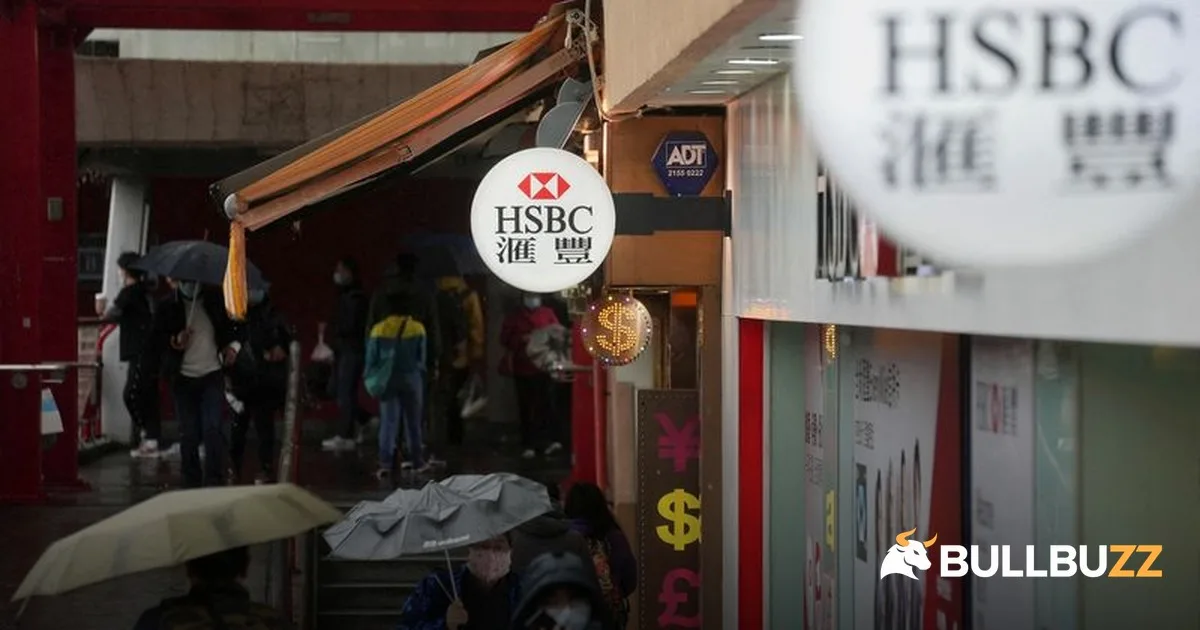
HSBC Q3 results showed profit before tax rising 32% to US$9.6 billion as the bank outlined another share buyback of up to US$1 billion. The figures released on Tuesday, 27 October MYT, reflected higher interest income and the absence of legal provisions booked a year earlier.
Reuters reported that quarterly profit matched estimates compiled by HSBC. Expected credit losses fell 17% to US$800 million, helped by reduced charges involving Hong Kong property and businesses in the UK and Mexico.
The results give shareholders a fresh capital-return announcement while raising a familiar earnings question: how much of the reported increase comes from recurring business? A lower comparison base accounts for a substantial part of the headline growth.
HSBC Q3 Results Show Two Growth Measures
HSBC's official results summary puts profit growth at 10% on a constant-currency basis excluding notable items. Revenue on that basis rose 5%. These measures remove currency translation effects and specified unusual items to make the periods more comparable.
Reported profit benefited from a US$1.4 billion favourable movement in notable items, mainly because legal provisions recorded in the third quarter of 2025 did not recur. That comparison helps explain why reported profit growth exceeded the adjusted increase.
Both measures have a role. Reported earnings show the accounting result shareholders receive; the adjusted comparison helps assess changes in the operating business. Reading the 32% increase alone would leave out an important part of the bank's explanation.
Interest Income and Credit Charges Improve
The bank's earnings release shows reported revenue of US$18.6 billion and banking net interest income of US$11.7 billion. The latter rose US$600 million from a year earlier. HSBC cited deposit growth and reinvestment of its structural hedge at higher yields among the drivers of interest income.
Banking net interest income is a company-defined measure with exclusions, so it should be compared consistently across reporting periods. It is different from the broader net interest income figure in the accounts.
- US$0.10 per share: third interim dividend approved.
- US$1 billion: maximum size of the intended further buyback.
- 13.9%: common equity tier 1 capital ratio at quarter-end.
Capital Returns Carry Conditions
A dividend pays cash per eligible share, while a buyback uses company funds to repurchase shares. The two announcements therefore reach shareholders through different mechanisms. Neither announcement by itself determines the market price of the remaining shares. For a holder comparing distributions across quarters, the approved dividend and the intended repurchase ceiling should be tracked separately, with execution checked against subsequent disclosures.
HSBC expects to complete the new repurchase programme by its full-year results announcement. A stated maximum remains a programme limit; it does not establish that every dollar has already been spent buying shares.
The capital ratio fell 0.2 percentage points from June. HSBC attributed the change to higher risk-weighted assets, debt-instrument valuation movements and the earlier buyback, partly offset by regulatory profits. The bank continues to manage towards its medium-term capital range.
For Malaysian readers, these are group-level earnings and shareholder distributions. They do not announce a change to Malaysian deposit rates or lending terms. BullBuzz's HSBC payments-test coverage concerns a separate technology initiative, while BNM's electronic trading framework addresses local market rules.
What Shareholders Should Watch Next
The next checks are the pace of repurchases, the durability of interest income and whether lower quarterly credit charges persist. Credit losses recognise lending risks; a single improved quarter does not settle the outlook for property exposures or other borrowers.
HSBC maintained its financial targets, including annual banking net interest income of at least US$46 billion for 2026. Delivery against that outlook, together with capital and credit-loss disclosures, will provide a fuller test of earnings momentum than the headline profit comparison alone.