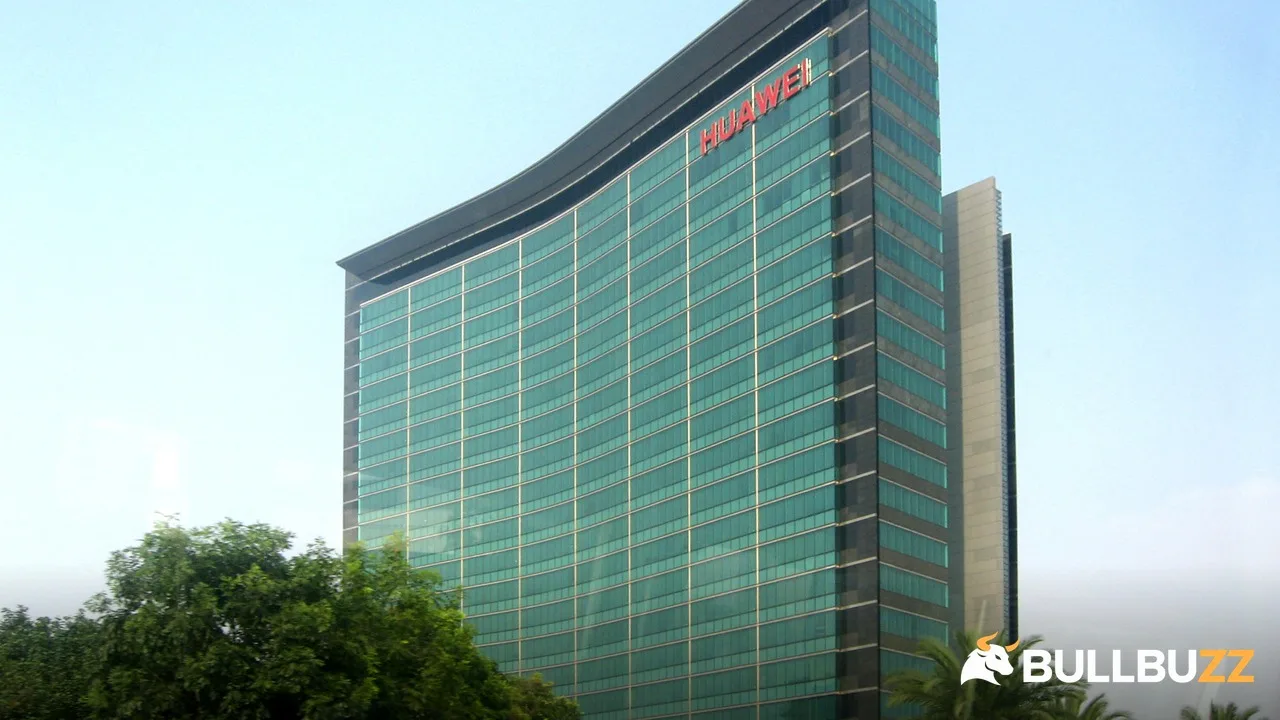
Huawei has been convicted in the United States in a sprawling criminal case over its business in Iran and the theft of trade secrets from American companies, after a federal jury in Brooklyn found the Chinese telecoms giant guilty on 10 of the 12 counts it faced.
The verdict, delivered on Tuesday in New York, in the early hours of Wednesday in Malaysia, closes the courtroom chapter of a case that began in 2018 and has shadowed Huawei ever since, even as the company grew into a central player in China's push for artificial intelligence. Reuters reported that jurors acquitted Huawei of racketeering conspiracy, the charge that it operated as a criminal enterprise, and of conspiring to obstruct justice.
In a statement, Huawei said the charges on which it was convicted lack legal merit and that it would take all necessary legal actions to defend its rights and interests. Its lawyer, Brian Heberlig, told reporters the company was disappointed by the convictions but that the racketeering acquittal vindicated its "good-faith compliance culture" — and that it fully expects to appeal.
Huawei Convicted: What the Jury Decided
The counts on which Huawei was convicted included bank fraud, wire fraud, sanctions violations, money laundering and conspiring to steal trade secrets. Bloomberg Law reported that the jury deliberated for about four days after an 11-week trial, in a rare US prosecution of a foreign corporation.
The case turned on two sets of allegations. The first, in the original 2018 indictment, was that Huawei misled HSBC, Standard Chartered and BNP Paribas about its business in Iran, so that it could move dollars in and out of the country in violation of US sanctions. Prosecutors added charges in 2020, alleging a two-decade conspiracy to steal trade secrets from US technology companies.
During the trial, prosecutors called more than 60 witnesses. They sought to prove Huawei stole source code from Cisco Systems for its routers, took antenna technology from wireless company Quintel, and hired a professor to gain access to a circuit board developed by semiconductor company CNEX. Jurors were shown a video that prosecutors said showed a Huawei employee slipping part of a T-Mobile testing robot into a backpack, and heard about a Huawei engineer who entered a Fujitsu booth at a trade show to photograph a device.
"After the media started questioning Huawei's operations in Iran, so did Huawei's banks," prosecutor Meredith Arfa told jurors in her closing argument.
The Iran Business at the Centre of the Case
The prosecution's roots go back to December 2018, when Meng Wanzhou, Huawei's chief financial officer and the daughter of founder Ren Zhengfei, was detained in Canada on a US warrant. The arrest triggered a diplomatic crisis involving the United States, China and Canada. Meng had been secretly indicted for allegedly misleading an HSBC banker about Huawei's business in Iran. She fought extradition for nearly three years before entering a deferred prosecution agreement and flying home to China, where the charges against her were later dropped.
In 2019, the year after the case began, the US government placed Huawei on a trade blacklist that restricted its access to American technology, citing national security risks — a designation that has since become the template for Washington's wider controls on advanced technology exports to China. The United States moved again this week to tighten those controls, blacklisting Megaspeed over the alleged diversion of Nvidia chips.
Trade Secrets: Cisco Code, Antennas and a Testing Robot
The defence countered that HSBC and the other banks knew about Huawei's business in Iran and were competing for its business, and Heberlig accused prosecutors of having "cherry-picked" a handful of disparate incidents to support the claim of a 20-year conspiracy.
He said Huawei had succeeded through "hard work, innovation, and investment in research and development." The company employs more than 200,000 people and operates in about 170 countries. Asked how much Huawei might have to pay in penalties, Heberlig said it was premature to comment, but said the acquittal on the racketeering conspiracy charge could make a significant difference to the eventual bill.
Why the Verdict Matters Beyond the Courtroom
The conviction lands at a delicate time in US-China relations, with technology at the centre of the rivalry. Yet experts have said the long-running case has not undermined Huawei's business: the company diversified after the 2019 blacklisting and has emerged as a key player in China's push for artificial intelligence.
That resilience is part of why the verdict matters to markets even though Huawei itself is not publicly traded. The case has been a symbol of Washington's campaign against Chinese technology companies, and its outcome is likely to be read in Beijing as a measure of how far US courts will go. For traders, the more immediate question is whether the verdict hardens the American position on technology controls — the same controls that have already whipsawed chip stocks this week, after Nvidia reinstated Jensen Huang as chief executive and its shares soared 31%.
Huawei's appeal will now work through the US courts, a process that could take years. Until then, the verdict stands as a landmark US criminal judgment against a Chinese technology company — and a reminder that the legal fallout from the 2018 case is still unfolding.