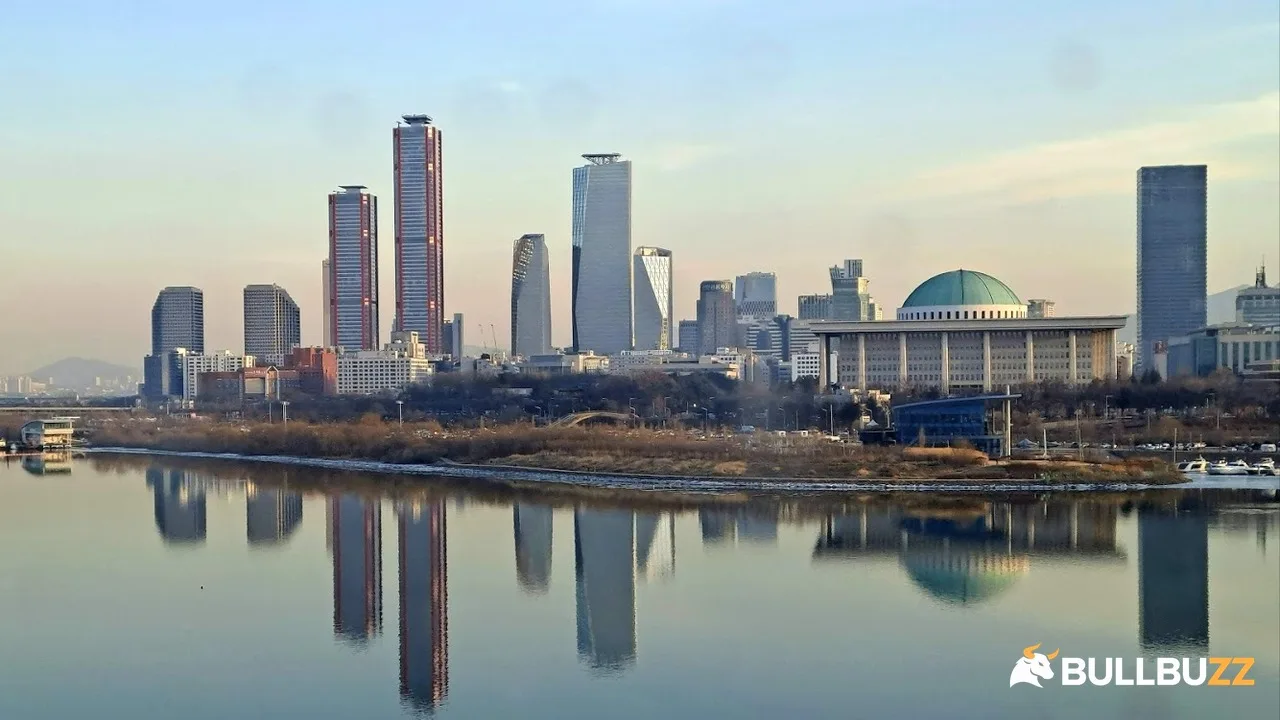
South Korea's Kospi fell sharply in Tuesday morning trade as worries over heavy artificial intelligence infrastructure spending hammered technology stocks across Asia, with the benchmark index down 196.71 points, or 3.36%, to 5,662.37 by 9.15am Seoul time, according to BusinessToday, citing Yonhap. The index had opened 2.46% lower at 5,715.19 and kept sliding, and Reuters reported Korean shares down as much as 3.8% in early trade, dragging MSCI's broadest index of Asia-Pacific shares outside Japan 0.9% lower.
Japanese markets were closed for the Culture Day holiday, removing one of the region's usual anchors, while the selling spread unevenly elsewhere: Taiwanese shares fell 1.3%, Hong Kong's Hang Seng Index rose 0.3% and Australian shares edged up 0.1%. S&P 500 e-mini futures were up 0.1%, a small sign that the overnight Wall Street weakness had not yet carried into the next US session.
Chipmakers lead the slide
The damage was concentrated where the AI trade lives. Samsung Electronics tumbled 4.59% and SK Hynix fell 5.1% in morning trade, BusinessToday reported, while Hyundai Motor lost 1.57%, Doosan Enerbility declined 3.77%, shipbuilder HD Hyundai Heavy Industries fell 2.26% and defence company Hanwha Aerospace shed 0.81%. The pattern is familiar from recent weeks: when investors question whether the huge sums being poured into AI data centres will pay off quickly enough, the chipmakers that supply them fall first and hardest.
That doubt has been building through earnings season. Memory-chip prices, which had been a tailwind for Samsung and SK Hynix, are now cutting the other way for their biggest customers, and the market is repricing how much growth is already assumed in chip valuations. The Kospi's slide is therefore less a verdict on Korea alone than a regional expression of a global argument about AI spending, one that has already knocked US technology shares in recent sessions.
Wall Street set the tone
Overnight, US markets gave Asia little cover. The S&P 500 slipped 0.5% and the Nasdaq Composite fell 1.07%, while the Dow Jones Industrial Average gained 0.41%, Reuters and BusinessToday reported. Apple shares extended their losses, falling 2.8% in after-hours trading after the iPhone maker forecast lower gross margins for the crucial holiday quarter, citing rising memory-chip costs, and projected services revenue growth that fell well short of Wall Street expectations.
Apple's warning matters for Asia because it connects the two sides of the chip trade: the same memory prices lifting Korean chipmakers' revenues are squeezing the margins of the device makers that buy from them. Apple's quarterly earnings had beaten estimates on iPhone sales, but the outlook, not the quarter just reported, is what traders sold on Monday night.
Midterms keep traders cautious
Beyond earnings, investors are waiting on politics. Americans vote in midterm elections on Tuesday, with opinion polls favouring the Democrats to win the House while the Senate remains too close to call, Reuters reported, and prediction markets assigning around a 75% probability that Democrats take the Senate. ING analysts summed up the mood in a note quoted by Reuters: Tuesday will be nothing more than the day ahead of a much bigger day, with guidance due by tomorrow on the midterm implications and on the US Treasury's quarterly refunding announcement.
That wait-and-see stance explains part of the morning's caution. A change in control of Congress would not by itself rewrite corporate earnings, but it would change the odds on spending, debt-ceiling fights and trade policy, and hedge funds nursing heavy October losses have little appetite for large positions into an uncertain result.
What else moved on Tuesday morning
The Reserve Bank of Australia's decision, due later on Tuesday, was the other event on traders' screens. Australian shares were up 0.1% and the Aussie dollar held steady at $0.70 ahead of a decision at which the central bank is widely expected to raise its cash rate target by 25 basis points to 4.85%, from 4.6%, which would be a near two-decade high, Reuters reported.
China's markets offered a mixed picture despite Beijing's latest support steps. China's central bank is running a 100 billion yuan swap facility on Tuesday to support stocks, but Hong Kong's Hang Seng managed only a 0.3% gain in early trade. The People's Bank of China also said on Tuesday it would raise the foreign exchange deposit reserve ratio for financial institutions to 6% from 4% from 15 November, and the US dollar was 0.3% stronger at 6.6645 yuan in offshore trade. The dollar index edged up 0.1% to 101.81, recovering from a one-month low, while the Korean won strengthened 3.95 won against the dollar to 1,342.05 by 9.15am.
Oil, the other big mover of the week, steadied after Monday's plunge. Brent crude was last 0.1% lower at $104.72 in Asian trade after falling more than 7% on Monday as hopes for US-Iran talks stripped out part of the war premium, while Bitcoin steadied around $77,112 in early Asian trade, up 0.5%, and ether nudged 0.1% lower to $2,253.59, according to Reuters.
For now, Tuesday's story is a morning snapshot, not a closing verdict: Seoul was still trading when these figures were recorded, the RBA decision was still to come, and US midterm results will not start arriving until Wednesday morning Bangladesh time. What the morning already shows is how tightly Asia's markets are tied to the AI spending debate: when it turns negative in New York, it lands in Seoul first, and hard.