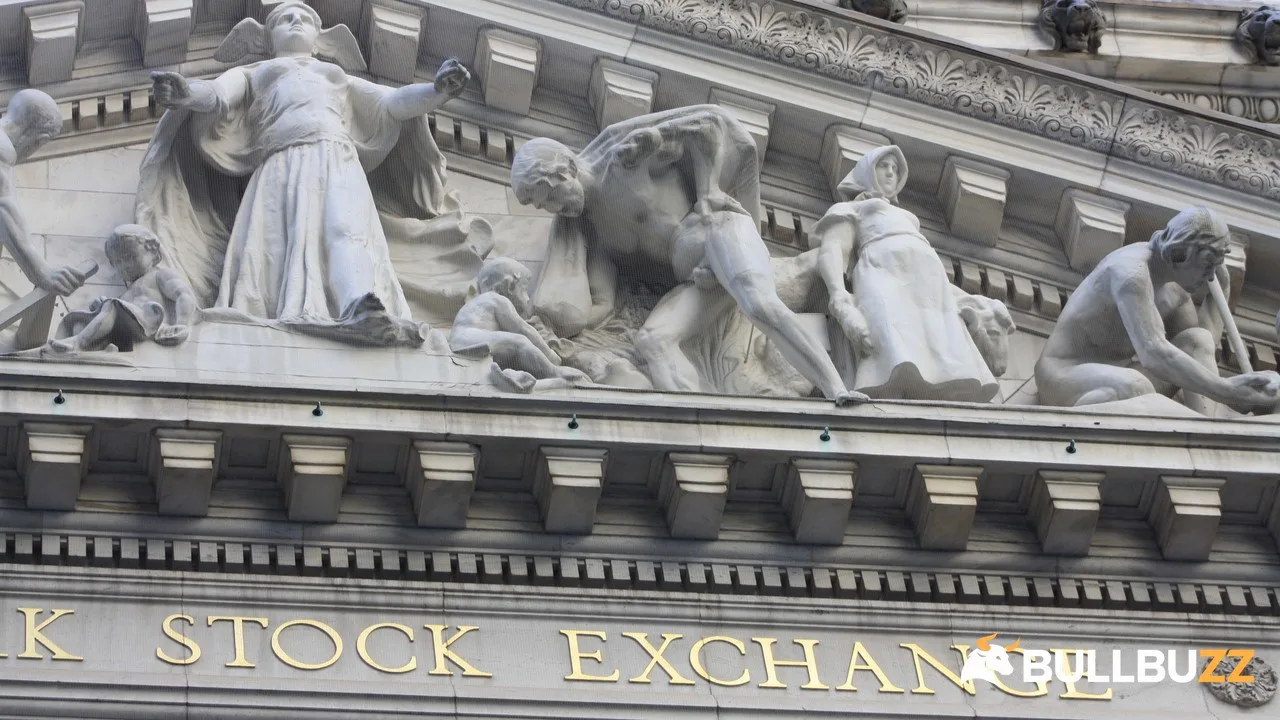
The OPay IPO is off, hours after it was priced. OPay has withdrawn its planned $304 million initial public offering on the New York Stock Exchange, after pricing 16 million American Depositary Shares at $19 each on Friday, 30 October, Techpoint Africa reported, citing a company statement carried by Reuters. The shares never began trading under the ticker OPAY, even though company executives had rung the NYSE opening bell that morning.
OPay blamed a regulatory inquiry in a foreign jurisdiction it has not named. In a statement carried by Reuters, the company described the jurisdiction as immaterial to its core operations and said it expects the matter to be resolved satisfactorily in the near future, Techpoint reported. It did not identify the regulator or say what the inquiry is about.
OPay IPO: from a trading hold to a full withdrawal
OPay's position moved during the day. It first told Nigerian newspaper ThisDay that it was placing a temporary hold on trading while it secured a formal regulatory no-objection connected to its United States listing, a requirement it said falls outside Nigeria's regulatory framework, Techpoint reported. A later statement went further: the offering will not be completed and the shares will not begin trading as scheduled. The deal had been due to close on 2 November.
BusinessDay reported that OPay and its underwriters mutually agreed to terminate the underwriting agreement dated 29 October, after deciding that postponing the offering was the most prudent course of action. OPay said the development should not be interpreted as a reflection of its business performance, financial condition, operational integrity or regulatory standing, and that it is engaging relevant stakeholders to seek an early resolution.
The company also said the decision would not affect its operations or customer service in Nigeria and its other markets, which include Indonesia, Egypt and Pakistan. BusinessDay reported that OPay said it continues to operate normally and would provide further updates as material developments occur.
What the $304 million deal was worth on paper
The pricing itself was set at the bottom of the range. OPay priced the 16 million shares at $19 each, the low end of its $19 to $21 range, valuing the company at about $4 billion. The NYSE had certified its approval of the shares for listing on 27 October, and Citigroup, Deutsche Bank, Standard Bank and CICC were among the underwriters, Techpoint reported.
The cancelled offering also puts linked deals on hold. When OPay set its price range on 23 October, it disclosed that nine investors had indicated interest in up to $270 million of the shares, and that Stanbic Africa Holdings, part of South Africa's Standard Bank Group, had agreed to buy up to $200 million in new shares through a concurrent private placement. According to OPay's amended prospectus, that placement depends on the IPO being completed, Techpoint reported. OPay's statements did not address the placement, its partnership with Standard Bank, or its planned secondary listing on the Nigerian Exchange.
Why the OPay IPO window was already difficult
The withdrawal lands in a cautious market for new listings and for large technology funding. Techpoint noted that OPay's pullback adds to a string of delayed listings worldwide, as stubborn inflation and a sell-off in artificial-intelligence-related stocks weigh on investor sentiment. That backdrop was visible in the United States this week, when the Nasdaq plunged 2.9% as Intel and Amazon deepened an AI spending sell-off, and when OpenAI cut its funding target to $20 billion at a $1.25 trillion valuation.
For OPay itself, the listing would have been a step from a large private payments business into United States public markets. Founded in 2018 by Chinese billionaire Yahui Zhou, who also founded Beijing Kunlun Tech, OPay offers payments, transfers, savings and loans across Nigeria, Indonesia, Egypt and Pakistan, Techpoint reported. It reported about 50 million monthly active users as of 31 July 2026, and Nigeria generated 89.5% of its revenue in the first half of the year.
OPay raised $400 million at a $2 billion valuation in 2021 and was reported in May to have hired banks for a United States listing, Techpoint reported. Entities linked to SoftBank held a 6.6% stake before the offering and did not immediately respond to a request for comment from Reuters. The Condia also reported the termination, the $19 pricing and the about $4 billion valuation, and likewise noted that OPay did not identify the regulator or the nature of the inquiry.
What to watch next for OPay
Three questions now matter more than the priced deal itself. First, whether the unnamed inquiry is resolved quickly, as OPay expects, or drags into a longer disclosure process. Second, whether the underwriters and the Stanbic private placement return on the same terms if the offering is revived, or whether pricing and size are reset. Third, whether OPay pursues its planned Nigerian Exchange secondary listing on a separate timetable, a point its statements so far have not addressed.
Until one of those questions is answered, the facts are narrow: a $304 million offering was priced, it was withdrawn the same day over an inquiry OPay has not described in detail, and no OPay shares traded on the NYSE.