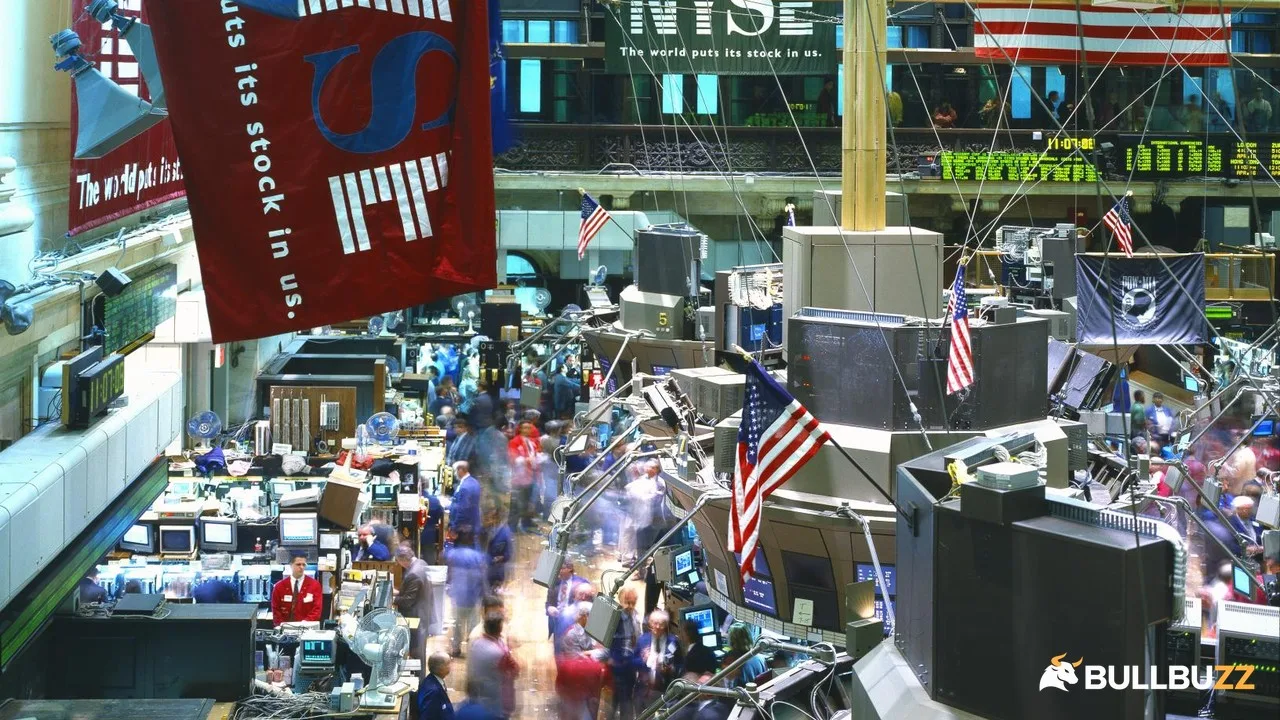
US stocks tumbled to seven-month lows on Thursday, with the S&P 500 logging a sixth straight daily loss — its longest losing streak since April 2024 — as a strong early rally collapsed and selling spread to almost every corner of the market.
The S&P 500 fell 2.02% to 7,175.83 at the 5:00am MYT close on Friday, down 147.80 points and 8.2% below the record high it set last month. Reuters reported that both the S&P 500 and the Nasdaq made fresh seven-month lows, while the Dow Jones Industrial Average dropped 1,101 points, or 2.2%, to 49,097.06 and the Nasdaq Composite sank 2.3% to 23,879.20.
The selling was strikingly broad. More than 90% of the stocks in the S&P 500 finished lower, and all 11 of its sectors fell. Communication services and consumer cyclicals each dropped about 3%, while technology, industrials, materials and healthcare each lost about 2%. The volatility index jumped about 16% to around 28.5 as investors rushed for protection.
The session had opened with real optimism. The S&P 500 rose as much as 1.3% in early trading and the Nasdaq gained more than 2% after the open, as investors cheered the arrival of Anthropic on the public market. But the rally faded fast: the AI lab's shares closed 17% above their $83 IPO price at $97.17, yet the wider market slid to session lows soon after trading in the stock began. Even the largest initial public offering in history could not hold the market up.
What is driving the S&P 500 sell-off
Doubts over the AI trade sit at the centre of the slide. Nvidia fell 3.3% on Thursday, its sixth straight loss, and now sits about 40% below the peak it reached last month, Reuters reported. The chipmaker has kept falling despite a forecast-beating $115.8 billion quarter, and its board has dismissed the idea of rehiring former chief executive Jensen Huang, who resigned last week. With AI shares driving so much of this year's gains, their reversal has dragged the whole market with them: the Nasdaq is now 13.5% below its October record.
The Federal Reserve is the other weight on stocks. Minutes from the Fed's October meeting showed most policymakers pushing for more rate hikes, with some open to a larger 50-basis-point move next. Governor Christopher Waller has since doubled down, saying the central bank may need to act aggressively to stop 3% inflation becoming the norm. Traders now price a roughly 90% chance of a 25-basis-point hike at the Fed's 9 December meeting, and the 10-year Treasury yield eased to 5.05% as money moved toward safer assets.
Gold and copper slide as the dollar climbs
The hawkish shift hit commodities as well as stocks. Gold fell 1.5% to $3,662 an ounce, extending its slide below $3,800, while copper slipped to a seven-month low after a 6% drop on Wednesday. Oil bucked the trend, rising about 0.5%, and the dollar strengthened, with dollar-yen nudging 160.00. Bitcoin held near a four-month low as risk appetite faded across markets.
What traders watch on Friday
Friday brings a fresh round of tests for the market. UK retail sales are due at 3:00pm MYT, European Central Bank President Christine Lagarde speaks at 4:30pm MYT, and the final University of Michigan consumer sentiment reading for November is released later in the day. Fed Governors Christopher Waller and Lisa Cook are also due to speak, giving traders another chance to judge how far the central bank intends to go in December.
The six-day slide has now cost the S&P 500 5.8%, its worst six-day stretch since April 2025, and left the index up just 4.8% for the year, TheStreet reported. History offers one small comfort: each of the recent five- and six-day losing streaks was followed by a higher close a month later. Whether this one breaks on Friday will depend on whether buyers are finally willing to step in front of a falling market — or whether the Fed's hawkish turn keeps them on the sidelines.