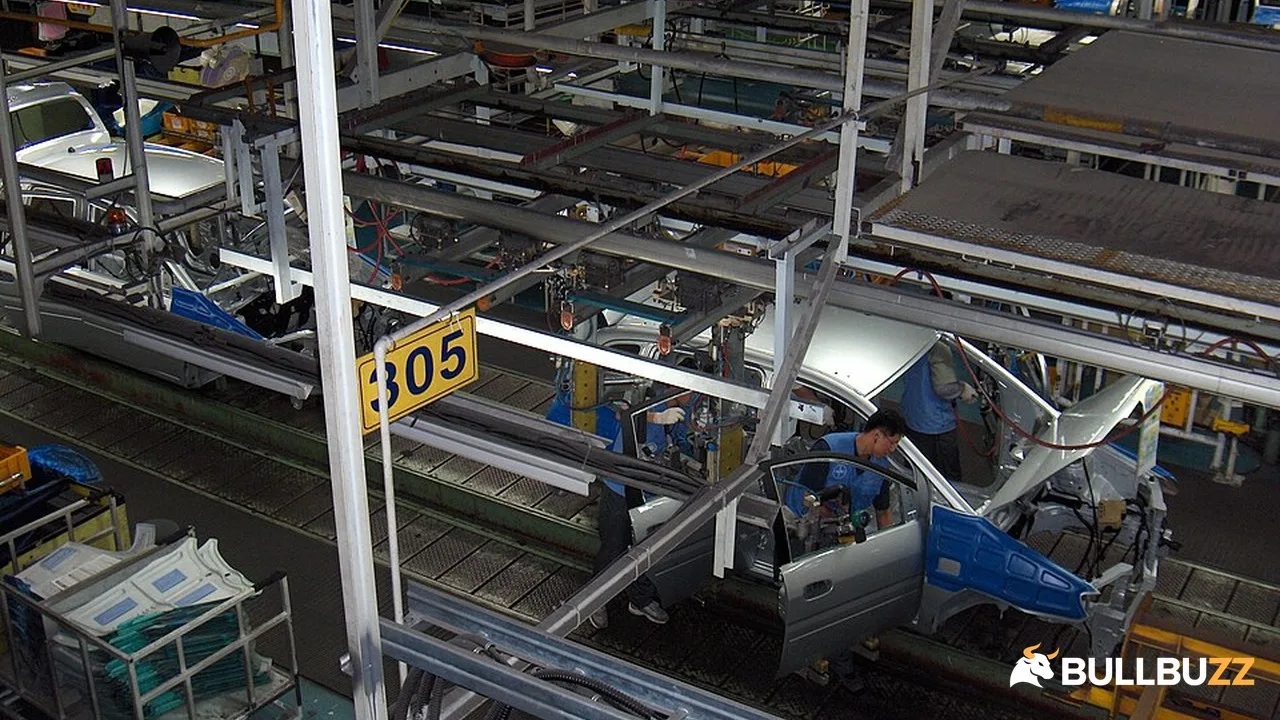
US manufacturing expanded for a 10th consecutive month in October as the Institute for Supply Management's (ISM) manufacturing PMI rose to 55.5, up from 54.5 in September and above economists' forecasts of 54.5, according to Reuters. A reading above 50 signals expansion, and the October result means American factories have now pointed to growth in every month since January, with manufacturing accounting for about 9.4% of the US economy.
The headline gain was driven by production. The ISM production index climbed 2.3 points to 59.0 from 56.7 in September, its highest level since November 2021, while new orders edged up to 55.5 from 55.3 for a 10th straight month of expansion. The employment index slipped 0.3 point to 52.4 from 52.7 but stayed above 50 for a fourth consecutive month, and supplier deliveries ticked up to 59.1 from 59.0. Inventories moved back into expansion at 51.4 from 48.6, CFO Dive reported, citing the ISM survey.
Production leads, but prices stay high
The strength in output did not come with relief on costs. The ISM prices index, which tracks what manufacturers pay for inputs, fell 2.7 points to 75.2 from 77.9 in September, yet that still marked a 25th consecutive month of rising prices. Just over half of respondents, 53.1%, reported paying more, down from 58.6% in September. Susan Spence, who chairs ISM's Manufacturing Business Survey Committee, pointed to rising steel and aluminium prices, tariffs on many imported goods and costlier petroleum-based products linked to the Middle East conflict as forces still driving the index.
That split between volumes and costs is the story of the October report. Factories are busier, but the managers answering the survey are not happier about it: sentiment in panelists' comments worsened for a third consecutive month, with 66% of comments negative. Many cited pricing volatility, longer lead times, tariffs or the Iran war. Twelve of the 18 manufacturing industries reported growth in October, led by plastics and rubber products and by electrical equipment, appliances and components, while three contracted: printing, paper products and nonmetallic mineral products.
What the second survey says
A second widely watched read on the same month told a slightly softer story. The S&P Global final manufacturing PMI registered 54.9 in October, down from a flash estimate of 56.0 and from September's 55.9, though still above 50 for a 15th straight month. The gap between the two surveys is a reminder that PMI readings are survey-based gauges, not hard output data, and they can diverge on timing and sample even when they agree on the direction: both say US manufacturing is expanding.
Put beside the broader data, October's factory report fits a resilient rather than booming picture. The US economy grew at a 3.4% annualised pace in the third quarter, as BullBuzz reported, and ISM said its October reading corresponds to annualised real GDP growth of 2.7% on the survey's past relationship with the wider economy. That is a useful cross-check, not a forecast: the survey link to GDP is historical, and the final quarter will turn on spending, hiring and the very input prices manufacturers are still complaining about.
Why traders are watching the prices gauge
For markets, the prices index matters as much as the headline. A prices gauge at 75.2, even after easing, supports the view among economists cited by Reuters that inflation will continue to run above the Federal Reserve's 2% target into 2027. That keeps the Fed's path in focus in a week already crowded with market-moving events: Americans vote in midterm elections on Tuesday, and the October jobs report lands on Friday.
The factory data also lands against a shifting energy backdrop. Oil prices plunged more than 7% on Monday as hopes for US-Iran talks stripped out part of October's war premium, which, if sustained, would ease one of the petroleum-linked cost pressures manufacturers flagged. But no deal is signed yet, and the Strait of Hormuz has not reopened, so that relief is conditional rather than locked in.
Europe offers a contrast. The eurozone's manufacturing PMI eased to 52.7 in October even as export orders surged, as BullBuzz reported, leaving US factories, on the ISM measure, growing faster than their eurozone counterparts. The next factory signal comes on Wednesday, when ISM releases its services PMI, which is expected to edge down to 54.7 from 54.9 in September. Until then, October's message is straightforward: American manufacturing is still expanding, production is running at its best pace in nearly five years, and the cost squeeze has eased only slightly.