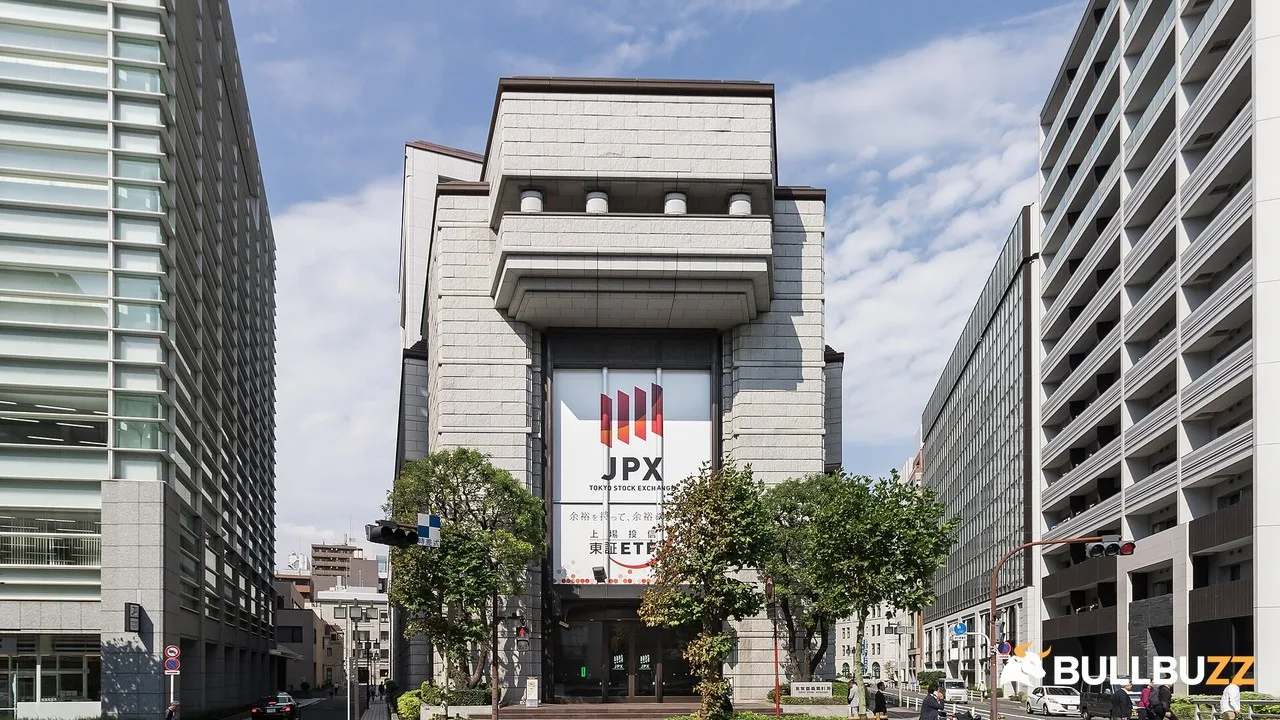
Asian stocks slid on Friday, with Japan's Nikkei tumbling more than 4% and MSCI's Asia-Pacific index heading for its worst week since March 2020, as the artificial intelligence trade that powered this year's rally continued to unravel.
MSCI's broadest index of Asia-Pacific shares outside Japan fell 2.5% on Friday, putting it on course for a sixth straight daily loss and a 7% drop for the week, its worst performance since the pandemic sell-off in March 2020. Reuters reported that the slide came as Anthropic's record-breaking stock market debut failed to restore faith in AI shares, while the dollar extended its rally on safe-haven flows.
Japan's Nikkei 225 tumbled 4.1% and was headed for a 6.8% weekly drop, while South Korea's Kospi fell 4.7% and was set to end the week 7.5% lower. NDTV Profit reported the broader Topix index declined 2.4% and Australia's S&P/ASX 200 slipped 1.13%, as selling spread from Tokyo and Seoul across the region.
SoftBank leads the rout as chip stocks sink
SoftBank Group led the damage in Tokyo, falling more than 11% as investors punished the biggest backer of the AI build-out. The conglomerate has put tens of billions of dollars into OpenAI, the rival of Anthropic, tying its shares closely to sentiment on AI spending, and it has now lost more than 30% of its value in November alone.
Chip stocks were hit hardest across the region. Tokyo Electron and Lasertec fell more than 6%, while Samsung Electronics lost 4.7% and SK Hynix dropped 6% in Seoul. Taiwan's market also fell sharply, a day after Taiwan stocks slid almost 5% on the same AI doubts. The selling followed losses of more than 2% for the S&P 500 and the Nasdaq Composite on Thursday, and US stock futures pointed to further declines, with S&P 500 futures down 0.4% and Nasdaq futures down 0.7% in Asian trading.
The irony was not lost on traders. Anthropic, the AI lab behind the Claude chatbot, saw its shares surge more than 30% in a historic Nasdaq debut on Thursday, but the euphoria failed to lift other AI names. Anthropic closed 17% above its $83 IPO price at $97.17, yet the stock gave back about 3% in after-hours trading, and the wider market kept falling.
"Anthropic's blockbuster IPO proved not enough to assuage the overall concern about the outlook for the AI trade and equities more broadly," Kyle Rodda, senior financial market analyst at Capital.com, told Reuters. With the AI trade fading and Federal Reserve rate hikes seen likely, Rodda said general market sentiment was shaky and the risk was that the bearishness would begin to drag stocks even lower.
Japan inflation adds to the pressure
Fresh data from Tokyo gave traders another reason to sell. Japan's annual inflation rate rose to 2.3% in October, up from 2.1% in September and its highest level since November 2025, while core inflation, which excludes fresh food prices, increased to 2.2%. The reading stayed above the Bank of Japan's 2% target for a second consecutive month, keeping alive expectations of a rate rise at the central bank's December meeting.
South Korea's producer prices rose 7.2% from a year earlier in October, easing from a 7.6% increase in September, but the slowdown did little to lift the Kospi. Chicago Fed President Austan Goolsbee did not rule out a larger-than-usual rate rise in December, citing persistently high inflation, adding to the hawkish drumbeat from US policymakers.
That drumbeat has been building all week. Minutes from the Federal Reserve's October meeting showed most policymakers pushing for more rate hikes, and Fed funds futures now imply that a quarter-point rise next month is essentially locked in. The dollar index held steady at 103.86, after hitting its strongest level since April 2025 this week, while the yield on the benchmark 10-year Treasury note held at 5.026%, near a one-week low, as investors sought safety in bonds.
Gold and oil feel the strain
The risk-off mood spilled into commodities. Gold dipped 0.6% to $3,601.40 an ounce and was headed for a 7.3% weekly loss, extending its slide below $3,800 as the stronger dollar and higher-for-longer rate bets weighed on the metal. Brent crude futures settled flat at $91.98 a barrel, on track for a third straight week of decline, even as reports of tanker disruptions in the Strait of Hormuz offset pressure from rising US crude inventories. Bitcoin held near a four-month low as risk appetite faded across markets.
Global stocks are now on track for their longest losing streak since September 2023, based on the MSCI All Country World Index. With the S&P 500 at a seven-month low after six straight losses, traders are watching whether Friday's Asian session marks the low point of the week or the start of a deeper unwind.
Later on Friday, attention turns to Europe, where UK retail sales are due at 3pm MYT and European Central Bank President Christine Lagarde speaks at 4:30pm MYT. For Asian markets, the immediate question is whether the weekend brings any relief for AI shares, or whether the rout that began with Nvidia's slide and gathered pace through the Fed minutes has further to run.