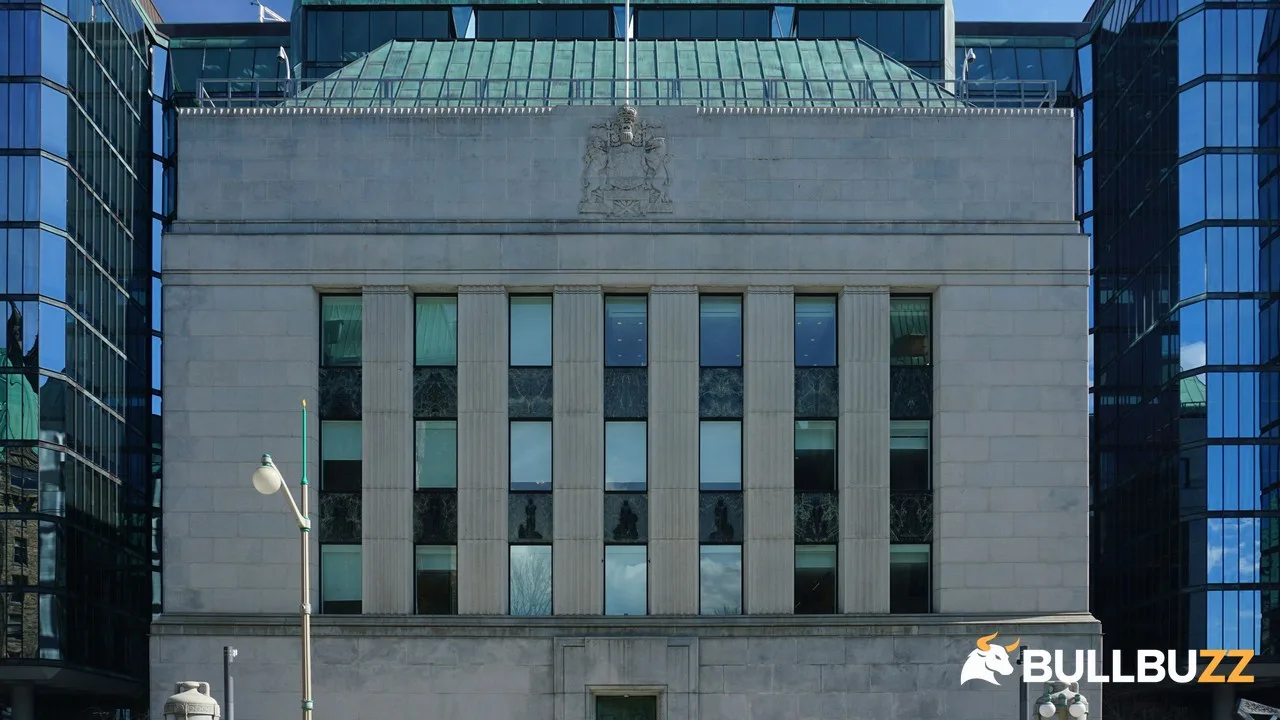
The Bank of Canada rate hike is official: the central bank raised its target for the overnight rate by 25 basis points to 2.50% on 28 October, its first increase since July 2023, ending seven straight holds at 2.25%. The Bank Rate rose to 2.75% and the deposit rate to 2.45%, the Bank of Canada said in its decision statement. The move had been widely expected by markets, and it breaks a long run in which the bank had only cut or held rates since its 2023 peak. For Canadian borrowers and for traders in the Canadian dollar, the question now is not whether the tightening cycle has restarted, but how far it goes.
Governor Tiff Macklem left that question deliberately open. The bank said there “could be a need to increase the policy rate further”, but that Governing Council had agreed to proceed carefully and to take future decisions one meeting at a time, Reuters reported. That caution matters: the bank is trying to stop a second round of inflation without squeezing an economy that is still recovering from trade headwinds.
Bank of Canada rate hike: why energy inflation forced the move
The reason given in the statement was narrow and specific. Governing Council decided to increase the policy rate “to reduce the risk that continuing high energy prices spread broadly to the prices of other goods and services”. In other words, the bank is not reacting to a broad overheating of the economy. It is reacting to the risk that a persistent energy shock becomes embedded in everything else, from transport costs to the prices charged by businesses that rely on fuel and freight.
The inflation backdrop explains the urgency. Inflation has been around 3% since April, above the bank's 1% to 3% target range, and the bank now expects it to rise to about 3.5% by year-end and stay around 3% through much of 2027 before returning close to 2% by mid-2028. Reuters reported the bank raised its 2027 inflation forecast to 3.1% from 2.0% in July, a sharp revision since the summer.
Energy runs through that revision. The Middle East conflict is now in its eighth month, oil prices have stayed high, and that has pushed up what Canadians pay for petrol and transport. The October Monetary Policy Report acknowledged exports, business investment and government spending still support recovery despite trade headwinds, and revised 2026 growth higher to 1%, TD Economics reported. Stronger activity gives energy-driven price rises more room to spread.
Bank of Canada rate hike: what it means for borrowers
The transmission to households is fastest through variable-rate borrowing. The major banks, including RBC, TD, BMO and CIBC, raised their prime rate from 4.45% to 4.70% effective 29 October, the day after the decision. Variable-rate mortgages, home equity lines of credit and other loans priced off prime therefore become more expensive by roughly the same quarter-point, while existing fixed-rate mortgages do not change during their term, because fixed rates follow bond yields rather than the policy rate directly.
That distinction matters for new fixed-rate quotes, which follow bond yields rather than the policy rate directly. Morningstar, carrying Dow Jones Newswires, noted officials discussed leaving the rate unchanged, in part because inflation excluding petrol was close to 2% and spare capacity remained. The hike was a judgement call about persistence, not a mechanical response to one month of data.
Bank of Canada rate hike breaks with the Fed, BoJ and RBNZ
The decision stands out against the week's other central bank action. The Federal Reserve held at 3.75% to 4.00% in a 10-2 vote, the Bank of Japan held at 1.25% in an 8-1 vote and the Reserve Bank of New Zealand held at 2.75%. Canada is the major central bank that actually moved up, while others waited for more data.
Markets did not panic. TD Economics noted two-year yields moved higher by only a couple of basis points and the Canadian dollar remained relatively unchanged, consistent with a hike largely priced in. That calm reaction also means the next surprise, in either direction, could move the currency more sharply.
What to watch next for the Canadian dollar
The next scheduled decision is 9 December 2026. Three things will shape it: whether energy prices stay high or ease, whether price rises spread beyond energy into services and other goods, and the October inflation data due in mid-November, which will show whether recent pressures are fading or building.
Markets are already looking beyond December. Reuters reported markets pricing in a further increase early in 2027 and a benchmark rate toward 3.25% by December next year, while TD Economics expects one more 25-basis-point hike in the first quarter of 2027, to 2.75%. Those are market prices and analyst forecasts, not bank guidance, and Macklem's meeting-by-meeting language leaves room to stop if inflation cools faster than expected.
For now, the signal is clear. After more than three years without a hike, Canada's central bank has decided the risk of doing too little on inflation outweighs the risk of doing too much on growth. That is a change in stance, not just a number, and it puts the Canadian dollar and the December decision at the centre of the forex calendar into year-end.