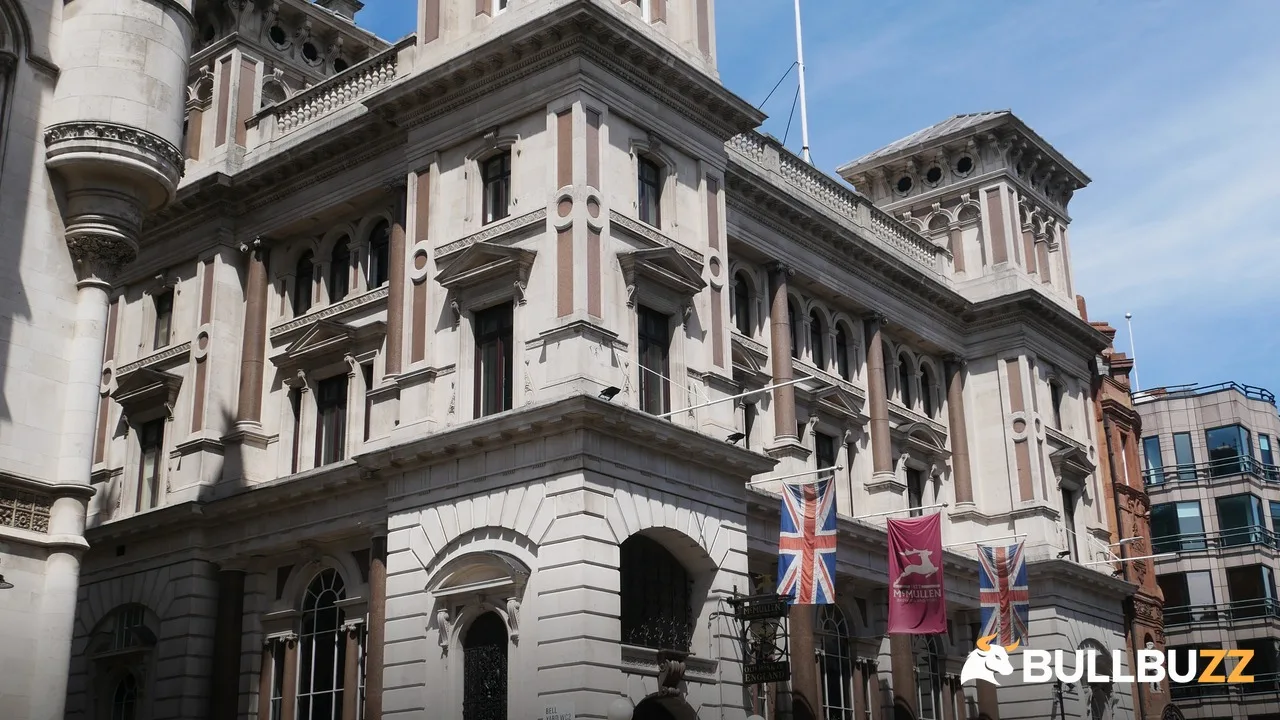
The Bank of England raised interest rates to 4% on Thursday, its first increase in more than three years, as policymakers moved to stop war-driven energy costs from pushing British inflation towards 5%.
The Monetary Policy Committee voted 8–1 to lift Bank Rate by a quarter of a percentage point from 3.75%, ending six consecutive meetings on hold. The decision, announced at noon in London, was widely expected by markets, but the Bank's warning that more increases may follow if the conflict in the Middle East continues gives the move a harder edge than a single quarter-point step suggests.
Bank of England Raises Rates in 8–1 Vote
The Bank of England's November Monetary Policy Report puts the case plainly: the conflict in the Middle East is now in its ninth month, global energy prices have kept rising from an already elevated level, and the inflationary pressure building in the pipeline is now enough to warrant higher rates. UK consumer price inflation reached 3.5% in September, and the Bank expects it to climb to around 5% by the middle of next year before falling back towards its 2% target.
The dissent came from the hawkish side. Catherine Mann, the only member to vote against the quarter-point rise, wanted a half-point increase to 4.25%, arguing the Bank had been slow to show markets it had a grip on inflation. That split is the reverse of what a Reuters poll had expected: traders had braced for a dove arguing to hold, not a hawk arguing to go further. Reuters reported that the Bank warned at least one more increase was likely if the US-Iran conflict continues, a message Governor Andrew Bailey has echoed in public.
The Bank also lifted its growth forecasts, expecting the economy to expand 1.6% this year and 1.3% next, stronger than it had pencilled in before. But the upgrade comes with a warning: activity is likely to weaken over the coming quarters as higher energy costs work through household budgets and business costs, and the Bank's forecasts see inflation returning to its 2% target only in late 2028.
What the Rise Means for Mortgages and Savers
For households, the increase lands fastest on tracker mortgages, which follow Bank Rate directly. UK Finance figures put the typical increase at £30.72 a month for tracker borrowers, and £14.28 a month for those on standard variable rates if lenders pass the rise on in full. Around 510,000 homeowners hold tracker deals, and a further 500,000 sit on standard variable rates.
The roughly 87% of mortgage holders on fixed-rate deals will feel nothing immediately, but the squeeze arrives at remortgage. An estimated 2.3 million fixed deals expire in 2027, and borrowers rolling off sub-4% deals face materially higher pay rates. For savers, the picture is brighter: higher Bank Rate tends to lift the returns on cash, and some easy-access accounts were already paying around 5% before the decision, though banks are under no obligation to pass the full increase on.
The timing is awkward for Britain's new prime minister, Andy Burnham, who has sought to ease cost-of-living pressures. Higher borrowing costs and energy bills rising towards 5% inflation cut directly against that promise, and the Bank's signal that this may not be the last increase leaves the government with little room to claim the squeeze is over.
Pound Steady as Traders Look to December
Sterling barely moved on the announcement. The pound held near $1.3472 against the dollar and around 1.2000 against the euro, because traders had put a roughly 96% chance on a rise to 4% before the meeting. The market's attention has already shifted to the Bank's next decision on 17 December, and to Friday's US October jobs report, which will shape what the Federal Reserve does next.
The calm in the currency stands in contrast to the turmoil in equities. The Nasdaq 100 suffered its worst day since March 2020 on Thursday, falling 6.4% as investors sold technology stocks on fears that the Democratic sweep of Congress could slow the artificial-intelligence buildout. The Bank's move is part of the same story: a war-driven energy shock is forcing central banks to tighten even as growth wobbles and markets reel.
Central Banks Turn to Hikes as War Fuels Inflation
The Bank of England is not acting alone. Australia's central bank raised its cash rate to an 18-year high of 4.85% earlier this week, and the Federal Reserve held its rate at 3.75–4.00% in late October while markets priced in a growing chance of a hike at its December meeting. Across the Channel, eurozone inflation hit 4% in October, a three-year high, while Bank Negara Malaysia held its overnight policy rate at 2.75% in its final meeting of the year.
The pattern is now clear: the central banks that spent the past two years cutting rates are being forced back into hikes by an energy shock they cannot control, while the ones still holding are watching the same inflation numbers climb. The Bank of England has chosen to move early rather than wait for 5% inflation to arrive. Whether one rise is enough depends on a war in the Middle East that shows no sign of ending, and on energy prices that have yet to peak.