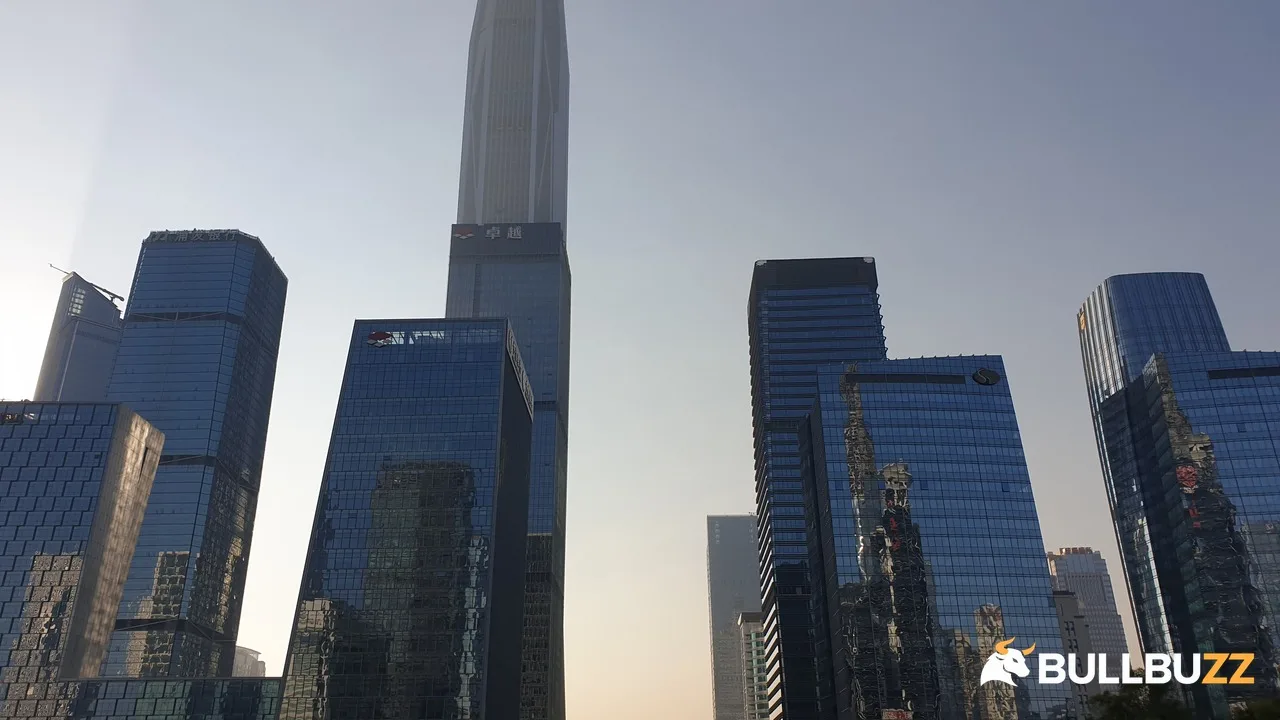
China confirmed on Monday that President Xi Jinping will host US President Donald Trump and Russian President Vladimir Putin in Shenzhen on Thursday, 19 November, for the first-ever trilateral summit of the three leaders.
"On November 19, Chinese President Xi Jinping will hold a China-Russia-US heads of state meeting with Russian President Vladimir Putin and US President Donald Trump in Shenzhen," the Chinese Foreign Ministry said in a brief statement on Monday, according to the Korea Times. The ministry gave no further details, including an agenda, but the confirmation itself settles the question that has hung over the Asia-Pacific Economic Cooperation (APEC) summit all month.
The meeting will take place on the sidelines of the 33rd APEC Economic Leaders' Meeting, which China is hosting in Shenzhen on 18 and 19 November, with Xi chairing the gathering of the forum's 21 member economies, the Hindu reported. It will be the first time the presidents of China, the United States and Russia have ever sat down together in a three-way format, although each pair has met bilaterally many times.
The White House schedule lists the trilateral session for 2:30pm MYT at Kylin Villa in Shenzhen, Outlook India reported. Trump is also scheduled to hold bilateral talks and a working lunch with Xi on the same day. Washington has confirmed there are no plans for a separate meeting between Trump and Putin.
Nuclear arms and Iran on the agenda, Ukraine off it
Nuclear arms reduction is expected to dominate the session. Trump wants to discuss cutting nuclear arsenals, and is also set to raise the war in Iran, according to US officials cited by the Korea Times. The discussion comes amid deep uncertainty over global arms control after the New START treaty between the United States and Russia expired in February.
China has long insisted that Washington and Moscow reduce their own far larger nuclear arsenals before Beijing agrees to talks on its own stockpile, a position that has kept it outside every bilateral arms-control framework to date. Whether Xi is willing to move from that stance in a three-way room is the central question of the summit.
Ukraine, by contrast, is not expected to be on the trilateral agenda. US officials say Washington is pursuing a separate negotiating track on the war, and German President Frank-Walter Steinmeier said after a recent meeting with Xi that the Chinese leader showed "irritation" when the idea of the trilateral talks covering Ukraine came up. "He explicitly pointed out that this is a European conflict, in which the Europeans must also be at the table," Steinmeier told German broadcaster ARD.
Kyiv has objected to the format from the start. President Volodymyr Zelenskyy has warned against deals on Ukraine's future being made without Ukraine's participation, and the exclusion of the war from the Shenzhen agenda is likely to deepen that frustration even as it clears the way for the three leaders to focus on arms control and the Middle East.
How the three-way meeting came together
The confirmation is the culmination of a fortnight of quiet diplomacy. The Financial Times reported on 3 November that officials from the three countries had held secret talks for two weeks about arranging the meeting, and that the idea had come from Moscow: Putin is said to have proposed the three-way format to Trump in a phone call on 9 October. Kremlin spokesman Dmitry Peskov said on 3 November that work was under way to organise the session.
Beijing initially kept its distance. On 4 November, Foreign Ministry spokesperson Mao Ning would say only that China was "in communication with relevant parties" about a meeting, stopping short of confirming it would take place, as BullBuzz reported at the time. The White House announced Trump's plan on Friday, 13 November, and the Kremlin confirmed on Saturday, 14 November, that the three countries had agreed to hold the summit. Monday's statement from Beijing closed the last open question.
Trump is travelling to Asia for the week. He is due to leave Washington on Monday, 16 November, and attend the ASEAN Summit in the Philippines on Tuesday, 17 November, before heading to Shenzhen for the APEC leaders' meeting and the trilateral session.
What the summit means for markets
For traders, the meeting lands in an already jittery week. Any credible signal on nuclear arms control or the Iran conflict would move energy and safe-haven assets fast: oil has swung sharply in recent weeks as Hormuz supply fears collide with a market the International Energy Agency now expects to move into surplus, with Brent near $95 a barrel.
Asian equities are also on edge. Regional tech stocks plunged on Monday as investors braced for Nvidia's earnings, with Taiwan's Taiex down 6% and TSMC falling 5.7%. A photograph of the three presidents in the same room — or a joint statement on arms control — could shift sentiment in either direction, and markets will be watching the 2:30pm MYT session closely.
What to watch next is whether the three leaders emerge with anything more than that photograph. No joint statement has been announced, Beijing has disclosed no agenda of its own, and the history of great-power summits suggests the most likely outcome is a carefully staged image and a promise to keep talking. But even that would be a first: three presidents, one room, and a format that did not exist a month ago.