The world oil market is swinging back to surplus. The International Energy Agency said on Friday that global supply will outpace demand in the fourth quarter, a sharp reversal from its earlier forecast of a deficit — and crude prices fell again on Monday as traders priced in the extra barrels.
Brent crude was down 47 cents, or 0.49%, at $95.37 a barrel by 9:45am MYT on Monday, while US West Texas Intermediate fell 23 cents, or 0.26%, to $88.33, according to a Reuters report carried by The Business Times. Both benchmarks had already closed lower on Friday. Brent settled at $95.84 and WTI at $88.56 at the end of last week, after falling about 2.5% each — on top of slides of 16% and 13% respectively in the week before that.
IEA sees 105 million barrels a day against weaker demand
The IEA said oil supply will average 105 million barrels per day in the final three months of the year, 1.7 million barrels a day higher than forecast demand. The agency had previously expected the quarter to run short of crude, making the change of view a notable turn in the market's direction.
The surplus is already visible in the monthly figures. Dawn reported, citing the IEA, that world oil supply outstripped demand by almost 2 million barrels per day in October — the first surplus since the start of the US-Israeli war against Iran, now in its ninth month. Investment bank JP Morgan put the surplus at 1.1 million barrels a day in September, widening to 1.4 million in October.
"For the first time since the US-Iran conflict began, traders are actively contemplating the possibility of excess supply rather than persistent tightness. That shift in narrative is clearly dampening the tone," Tim Waterer, chief market analyst at KCM Trade, told Reuters.
Gulf exports recover as OPEC+ pumps more
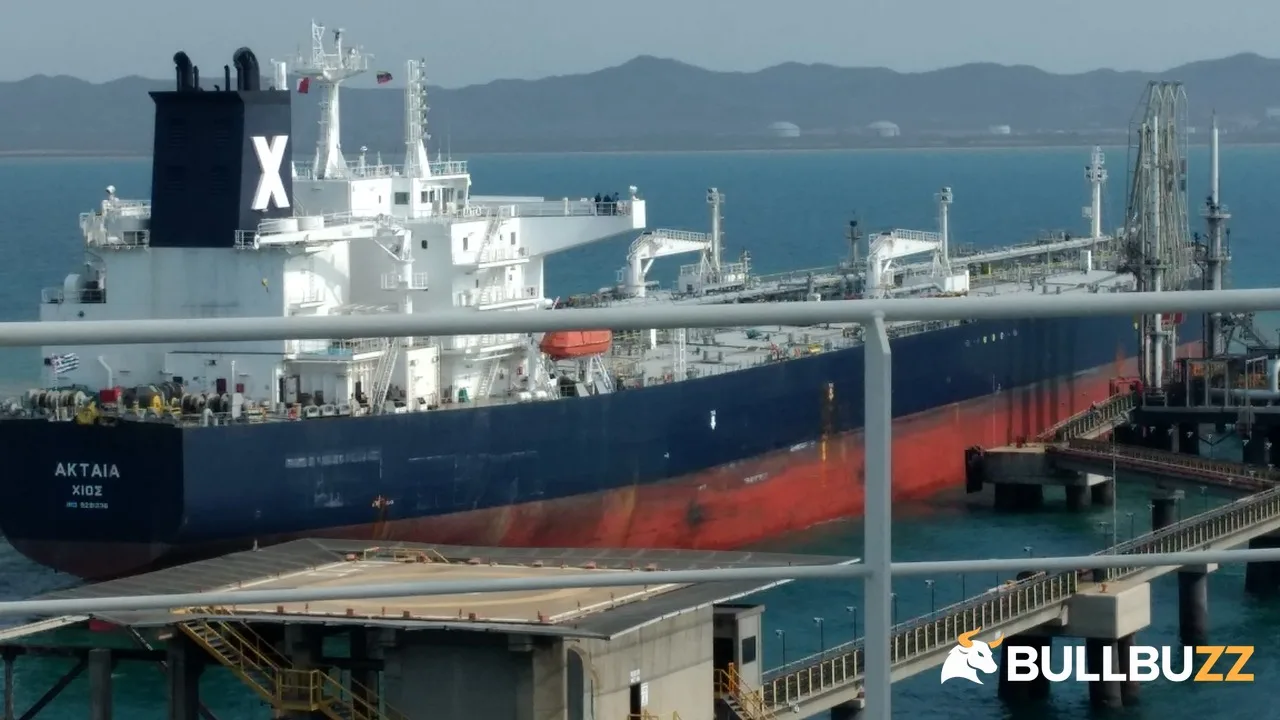
The extra supply is coming largely from the Gulf. Shipments through the Strait of Hormuz have been nearly restored to pre-war levels, and the IEA said Middle East exports are recovering faster than global demand despite continued attacks on shipping.
Production data backs that up. OPEC+, which includes non-OPEC producer Russia, raised output by 2.04 million barrels per day in October to an average of 41.23 million barrels a day, according to the IEA figures cited by Dawn. Saudi Arabia alone added 1.18 million barrels a day, taking its output to 10.56 million — essentially its pre-war production level.
Logistics are easing too. US President Donald Trump extended for 90 days a waiver of the Jones Act, allowing foreign-flagged tankers to move oil and fuels between American ports. The IEA also said 71 million barrels from its members' emergency reserves would be made available by the end of February, including 15 million barrels of diesel.
Demand is softening at the same time
The surplus is not only a supply story. The IEA expects global oil demand to fall by 2.68 million barrels per day this year to 103.2 million barrels a day. The US Energy Information Administration, in its November short-term energy outlook, said demand "has fallen considerably during the prolonged oil supply disruption" and now estimates global liquid fuels consumption will fall by 2 million barrels per day in 2026.
Weakness in Asia's big economies is part of that picture: Japan's economy contracted by an annualised 0.1% in the July-September quarter, ending a year of growth, as BullBuzz reported.
Why prices have not fallen further
Despite the improving supply picture, crude has not collapsed — and shipping costs are one reason why. Freight rates remain high because of the risks tankers face carrying crude through the Strait of Hormuz, and because a large number of ships are tied up shuttling oil through the waterway for transfer to other vessels, reducing the available fleet.
The security risk has not gone away. The Strait has seen mine strikes on tankers in recent days, as BullBuzz reported, and on Sunday night Iran's navy said a tanker caught fire after striking a naval mine east of the strait, according to state media. Reuters said it could not independently verify that report. Even so, Monday's market reaction suggests traders are now more focused on the barrels than on the risk.
What the surplus means for inflation and rates
Cheaper oil, if it lasts, eases one of the main sources of price pressure in the global economy. US wholesale inflation hit 6.5% in October, its highest since 2022, as BullBuzz reported, and markets are pricing in a further Federal Reserve rate rise at the central bank's December meeting.
Gold slipped to around $3,876 an ounce in Asian trading, according to InvestingLive, as traders awaited opening remarks from Fed Chair Kevin Warsh at a productivity and jobs conference in San Francisco at 1:00am MYT on Tuesday. The forum will examine whether artificial intelligence will lower inflation, push prices higher or displace workers.
For now, the oil market's message is clear: after nine months in which war kept traders braced for shortages, the barrels are coming back faster than the world is using them.