China has vowed to take countermeasures if the United States presses ahead with sweeping new curbs on remote access to advanced artificial intelligence chips, as the rules take effect on Thursday and President Xi Jinping prepares to meet Donald Trump in Shenzhen.
Beijing's commerce ministry said on Tuesday it expressed "strong dissatisfaction and firm opposition" to the measures, warning that "if the US persists, China will take countermeasures to firmly safeguard its sovereignty, security and development interests", the Business Times reported. The ministry also urged Washington to return to resolving differences "through consultation and cooperation", and said the curbs run counter to understandings reached by the two countries' leaders and threaten the stability of global semiconductor supply chains.
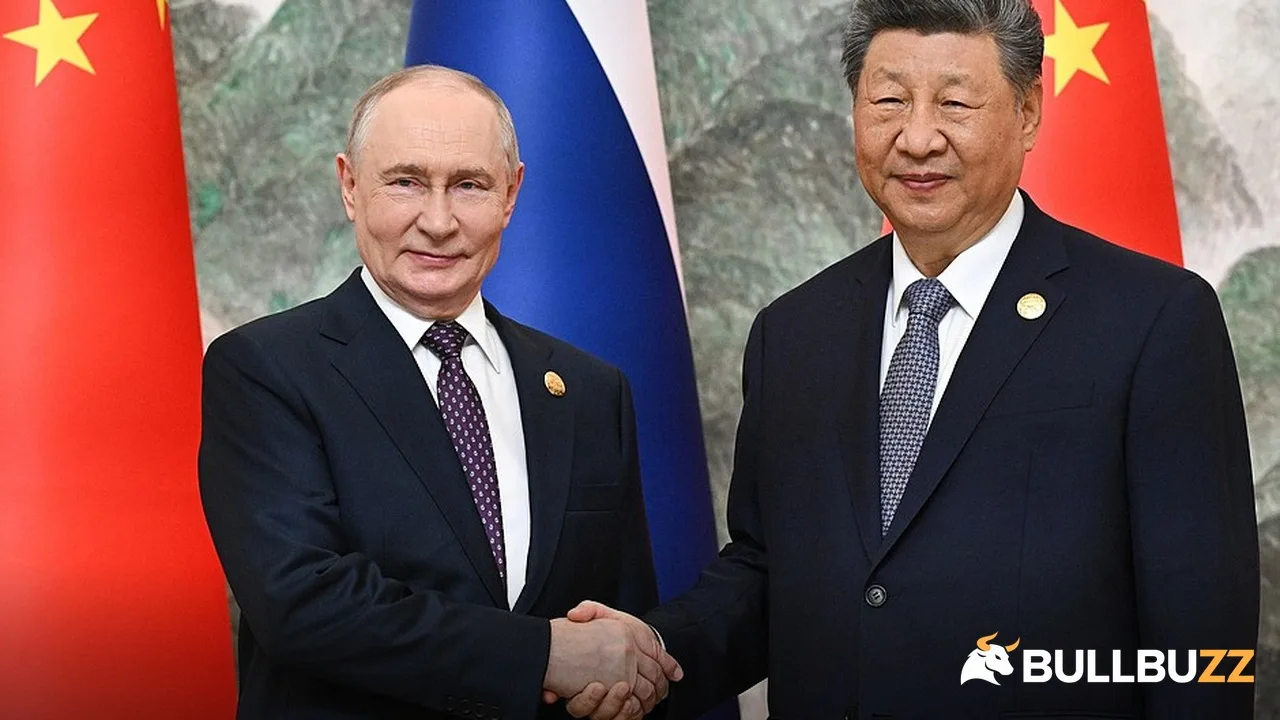
The warning lands weeks before a fragile trade truce between the world's two largest economies is due to expire in January, and hours before the first-ever meeting of the American, Chinese and Russian leaders, due in Shenzhen on Thursday.
US AI chip curbs take effect on Thursday
The interim rule from the US Commerce Department's Bureau of Industry and Security, released on Monday, requires licences for advanced AI chips shipped to data centres in five countries — Singapore, Malaysia, Thailand, Indonesia and Brazil — and for data centres renting large-scale computing power to Chinese firms, as BullBuzz reported. The rule is scheduled for publication in the Federal Register on Thursday, 19 November, when it takes effect; data centres already supplying large-scale computing to restricted customers then have 90 days to obtain licences.
The target is the remote-access route Chinese AI developers have used to work around export controls — renting high-end computing from data centres abroad instead of buying the chips outright. Remote access alone could account for about a quarter of China's AI computing capacity by the end of this year, according to a think-tank estimate cited by Outlook India.
Washington says the measures are needed to stop sensitive technology reaching China through third countries. Beijing calls them economic coercion and a violation of market principles. The row follows reports of Nvidia chips being diverted to China, and lawmakers from both US parties have pressed for tougher controls.
Xi pitches free trade at APEC
Xi chose the APEC CEO Summit in Shenzhen, China's southern tech hub, to answer. Addressing business executives on Wednesday, he said the Asia-Pacific should back "free and open trade", promised lower tariffs and wider market access, and took a stand against protectionism and unilateralism, Outlook India reported.
The pitch carries its own baggage: Western partners accuse China of running annual trade surpluses above $1 trillion on policies that favour its manufacturers, and worry that its grip on supply chains gives Beijing leverage. Analysts quoted by Outlook India expect the message to resonate across the Global South and sharpen the contrast with Washington's technology strategy.
Trump, Xi and Putin meet on Thursday
The real test comes on Thursday. Trump, arriving from Manila after meetings with ASEAN and the Quad, will hold a working lunch with Xi before the two sit down with Vladimir Putin, Outlook India reported. On the agenda: the wars in Iran and Ukraine, trade, artificial intelligence and nuclear weapons.
Putin arrived in Shenzhen on Wednesday, telling Xi their meeting was the third face-to-face encounter this year and their 50th since 2013, according to the Kremlin. The Russian president said the two countries' bilateral trade has exceeded $200 billion for several years running.
Smaller powers in Europe and Asia worry about a deal struck over their heads, and most Western observers expect little beyond a photo opportunity. Trump and Xi are due to meet again at the G20 in Miami in December.
Trump is also seeking to deepen AI cooperation with India, Australia and Japan. Leaders of the Quad held their first summit in two years in Manila on Tuesday, promoting deals to reduce reliance on "any single foreign supplier" for critical minerals — a likely reference to China.
What it means for Malaysia and markets
For Malaysia, the stakes are direct. The country is among the five named in the US rule, and its data-centre boom helped drive gross domestic product 5.5% higher in the third quarter. Any Chinese retaliation — Beijing has not said what form it would take — could hit the same supply chains Malaysia's new facilities depend on.
Traders will also be watching the Federal Reserve's hawkish October minutes, released at 03:00 MYT on Thursday, which point to further rate hikes, and the Australian jobs report due at 08:30 MYT, both of which shape the rate outlook hanging over stocks, gold and bitcoin.
For now, the truce holds — but with the chip curbs in force, a retaliation threat on the table and three nuclear-armed leaders in one room, Thursday in Shenzhen will show whether it survives the week.