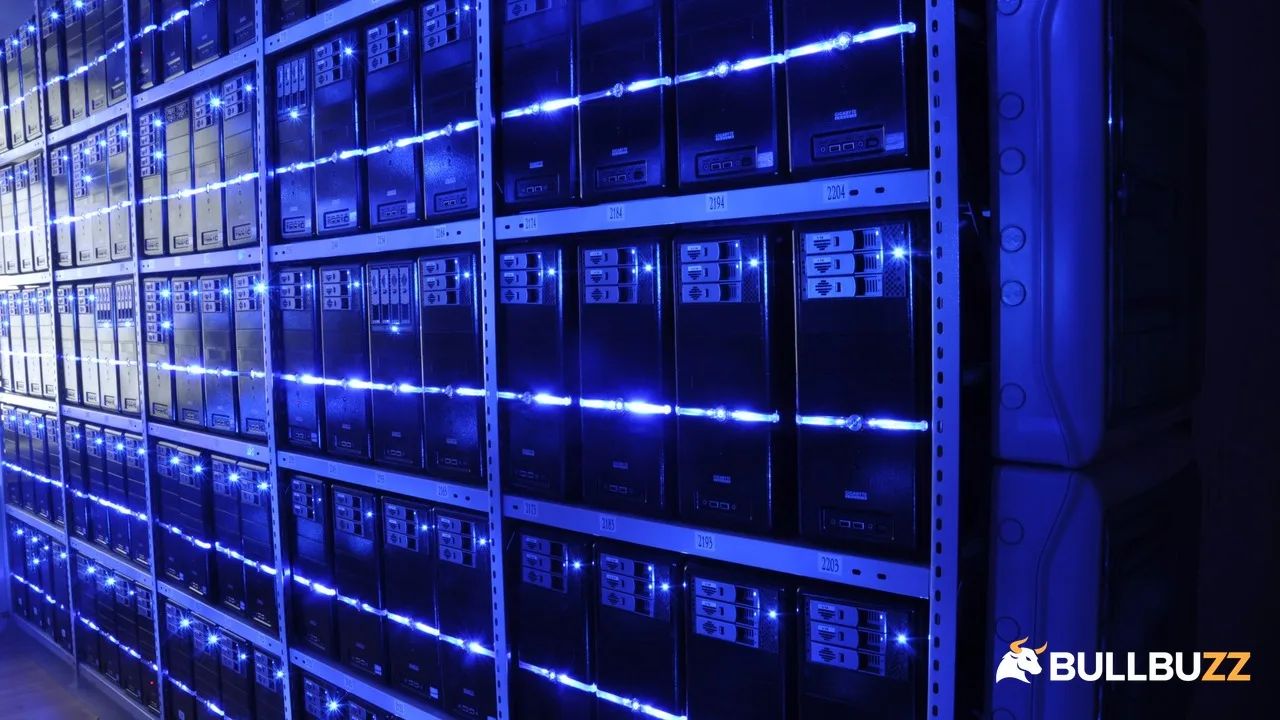
Malaysia has been named among five countries facing new United States licence requirements for advanced artificial intelligence chips, as Washington moves to close the cloud loophole that let Chinese firms rent American computing power from data centres abroad.
The interim final rule from the US Commerce Department's Bureau of Industry and Security (BIS), released on Monday, targets the remote-access route Chinese AI developers have used to work around export controls — renting high-end computing from data centres in third countries instead of buying the chips outright. BIS said the rule was written at the direction of the Treasury Department and the National Security Council, and is designed to ensure existing controls "cannot be circumvented through remote computing arrangements involving data centers in third countries".
The rule takes effect when it is published in the Federal Register, which is scheduled for Thursday, 19 November. Data centres already supplying large-scale computing to restricted customers will then have 90 days to obtain licences.
Malaysia named among five diversion-risk countries
The rule designates Indonesia, Malaysia, Singapore, Thailand and Brazil as countries carrying an "unacceptable risk of diversion", and requires an export licence before advanced AI chips and servers can be shipped to them. Al Jazeera reported that companies headquartered in the United States are exempt from the five-country licence requirement, subject to reporting obligations.
For Malaysia, the timing is awkward. The country's data-centre boom helped drive gross domestic product 5.5% higher in the third quarter, with non-residential construction up 16.7% as new facilities rose across Johor and the Klang Valley. Much of that build-out depends on imported high-end chips, and every new shipment to a Malaysian facility will now need a US licence first.
Singapore, which hosts dozens of data centres, said on Tuesday it was "studying the details of this new measure carefully" and engaging affected companies, while stressing it did not condone using Singapore to circumvent other countries' laws.
The 12 million TPP threshold
The second control in the rule applies worldwide. A licence is now required to export, re-export or transfer advanced AI chips and servers to any data centre that provides — or will provide — more than 12,000,000 aggregate total processing performance (TPP) of computing to a company headquartered in China, Macau or another restricted Country Group D:5 destination, or whose ultimate parent is based there. Nikkei Asia reported the rule is aimed squarely at that remote-rental model.
The threshold is high — roughly the computing power of hundreds of top-end graphics processors — so small cloud users are unaffected. The carve-outs are narrow: computing used only for commercial recommender systems, such as the ranking engines behind online shops and social media, is exempt.
The same rule formally rescinds the Biden-era AI Diffusion Rule from January 2025, which had sorted the world into tiers for chip access but, according to BIS, was never enforced.
The Megaspeed scandal behind the rule
The rule lands in the middle of the scandal that cost Nvidia its co-founder. Jensen Huang resigned last week as chief executive after reports that he had been romantically involved with Alice Huang, a former executive of Megaspeed, a Singapore-based data centre company and Nvidia customer, who US officials allege was recruited by China's Ministry of State Security. Beijing has denied the spying allegations, calling them "entirely groundless, speculative and intended to smear and malign China".
Al Jazeera reported that the Commerce Department began investigating Megaspeed for potential export control violations in 2024, and that late on Monday the Commerce Department and the Department of Justice publicly confirmed a criminal investigation into the company. Nvidia is separately facing a US Securities and Exchange Commission probe into its investor disclosures after Huang's exit.
Nvidia slides as chip stocks fall
Markets reacted sharply on Monday. The Nasdaq Composite fell 2.5%, the S&P 500 dropped 1.9%, and Nvidia shares fell 4.1% — extending a slide that has wiped more than 30% off the company's market value over the past month. Alphabet fell 4.1% and Amazon 3.3% in the same session, and the sell-off continued across Asia on Tuesday, with Japan's Nikkei 225 down 1.3%, South Korea's Kospi down 2.6% and Hong Kong's Hang Seng down 0.9%.
The fall came even as Nvidia's latest quarterly results beat forecasts, underlining how far the story has moved from earnings to export controls and leadership uncertainty. TechCrunch reported the new controls were prepared in the days after Huang's resignation, as the scandal put chip diversion back in the spotlight.
What to watch next
The first test is publication: once the rule appears in the Federal Register on Thursday, the 90-day clock starts for data centres already renting large-scale compute to Chinese firms, and licence applications will show how strictly Washington intends to police the new line. Operators in Malaysia and Singapore will be watching whether licences are granted routinely or become a choke point for new capacity.
Traders will also be watching the Federal Reserve's minutes of its October meeting, due at 3am Malaysia time on Thursday, and the first-ever trilateral meeting of the US, Chinese and Russian leaders in Shenzhen later that day — a session expected to cover the same questions of technology, trade and security now reshaping the chip market.