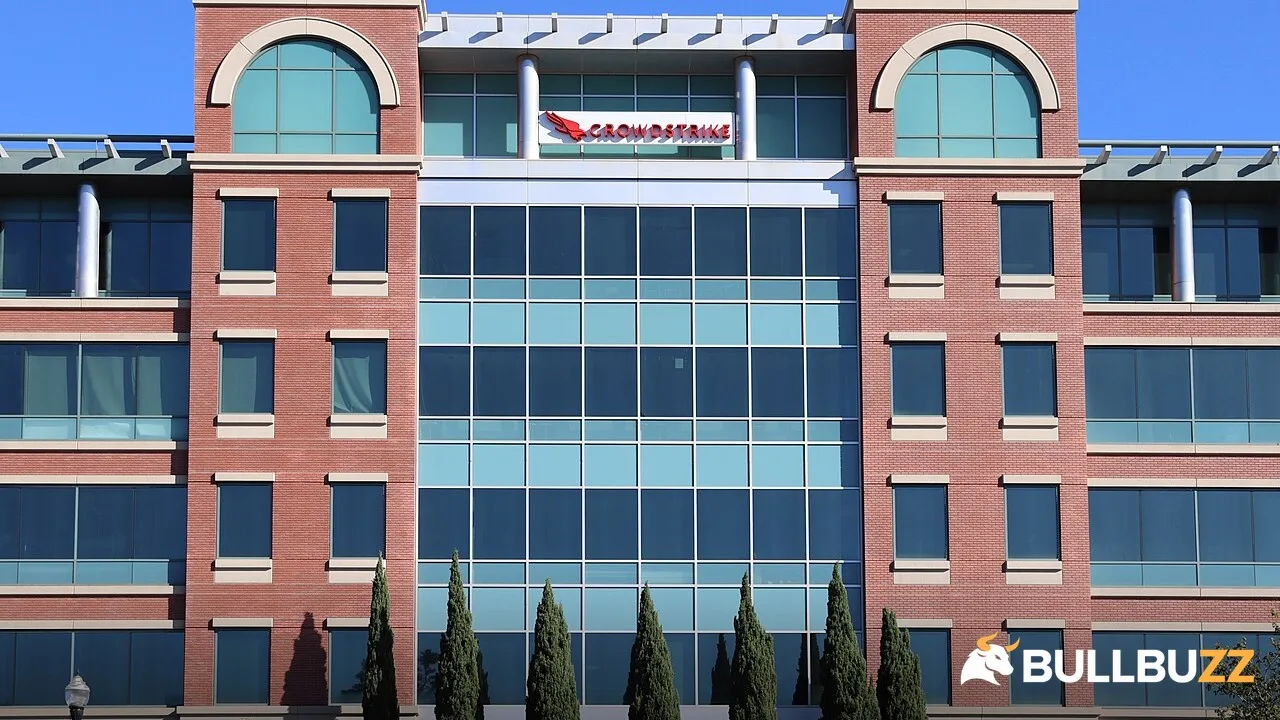
CrowdStrike will buy Zscaler in a $43.9 billion all-stock deal, the largest cybersecurity acquisition on record, uniting two of the industry's biggest names as artificial intelligence reshapes both cyberattacks and the defences built to stop them.
The CrowdStrike Zscaler deal, announced on Monday, will see Zscaler shareholders receive 1.135 CrowdStrike shares for each Zscaler share they own, Reuters reported. The exchange ratio implies a value of about $260.41 per Zscaler share, a 34% premium to Zscaler's closing price on Friday, with an equity value of about $42.46 billion.
The deal brings together CrowdStrike's protection for computers, servers and other devices with Zscaler's technology for securing employees' access to applications and data, creating one of the world's largest pure-play cybersecurity providers. The combined company will start with more than $10 billion in annual recurring revenue, including roughly $3.9 billion from Zscaler, and CrowdStrike expects about $1 billion in annualised revenue synergies within 30 months of closing.
The transaction is expected to close in the second half of CrowdStrike's fiscal 2028, subject to regulatory and shareholder approval. George Kurtz, CrowdStrike's chief executive, will lead the combined company, while Zscaler chief executive Jay Chaudhry will stay on to run the Zscaler business and join CrowdStrike's board. The agreement carries a $1.4 billion breakup fee payable by Zscaler if it walks away under certain circumstances, including to accept a rival offer. Qatalyst Partners, JPMorgan and BofA Securities are advising CrowdStrike on the transaction, while BDT & MSD Partners, Citigroup and Goldman Sachs are advising Zscaler.
Shares split as investors weigh the CrowdStrike Zscaler deal
Zscaler shares jumped more than 13% in trading to $220.52, but remained well below the deal's implied value of $260.41 a share. CrowdStrike shares fell nearly 12%, Channel News Asia reported. The gap between Zscaler's trading price and the value of the offer reflects investor doubts over regulatory scrutiny of a combination of two of the industry's biggest players.
"Antitrust scrutiny is certainly possible given the size of the transaction and the importance of both companies, but it would be premature to assume that regulators will necessarily try to block it," Axel Rudolph, chief technical analyst at IG Group, said. "The key issue is likely to be how much overlap regulators see between the two businesses and whether customers would genuinely have fewer competitive alternatives as a result."
AI threats drive cybersecurity consolidation
The acquisition comes amid a wave of consolidation in cybersecurity, as companies race to build broader platforms and customers look to reduce the number of security vendors they use. Demand for cybersecurity tools has grown as enterprises confront increasingly sophisticated attacks, with advances in AI making it easier to identify and exploit software vulnerabilities, while also improving the tools designed to detect and stop them.
For CrowdStrike, the deal also opens up cross-selling opportunities, giving it access to roughly 8,000 Zscaler customers that do not currently use its products. Zscaler's customer base includes large companies such as Unilever and United Airlines. CrowdStrike said the deal would expand its addressable market by more than $185 billion.
The deal tops Google's $32 billion purchase of cloud security firm Wiz earlier this year, underlining how quickly the cybersecurity industry is consolidating around a handful of large platform providers, Reuters reported.
Strong quarters from both companies
The deal was announced alongside strong quarterly results from both companies. CrowdStrike's third-quarter revenue rose 28% to $1.58 billion, helped by a 29% increase in subscription revenue, and it forecast fourth-quarter revenue of between $1.638 billion and $1.644 billion, above analysts' average estimate of $1.62 billion. Adjusted profit was 34 cents per share, above estimates of 31 cents.
Zscaler reported a 20% rise in first-quarter revenue to $949.3 million, beating estimates of $938 million. Adjusted profit of $1.23 per share also topped estimates of $1.16.
The deal landed on a day when US stocks staged a powerful rebound, with the Nasdaq surging 6.5% after Nvidia reinstated Jensen Huang as chief executive, while traders fully priced in a December rate hike from the Federal Reserve.