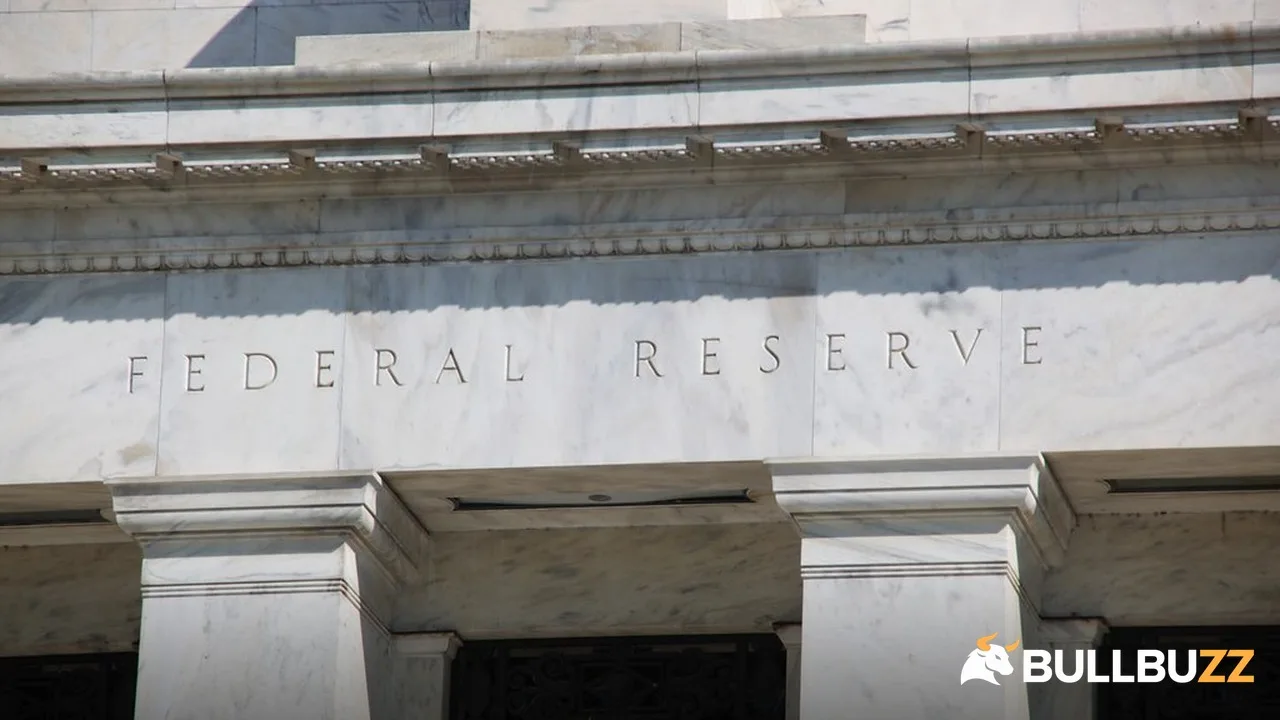
The US dollar held near a 20-month high on Tuesday as traders fully priced in a Fed December rate hike, betting that the market rebound sparked by Nvidia's boardroom reversal has given the Federal Reserve room to tighten further.
The dollar index, which tracks the greenback against a basket of major currencies, firmed at 104.32 in early Asian trading, having peaked at 104.53 in the previous session, Reuters reported. The move extends a sharp reversal from last week, when the dollar eased off its highs as traders pared back bets on further rate increases while equity markets sold off.
The trigger was Monday's stunning turnaround at Nvidia. The chipmaker's board unanimously reinstated Jensen Huang as chief executive, president and board director, sending Nvidia shares up 31% in their best day since 2003 and lifting the Nasdaq 6.5% and the S&P 500 4.7% by the close at 5:00am MYT on Tuesday. The rally eased fears that a deeper equity rout would force the Fed to hold back on rates.
Fed December rate hike now fully priced
Traders have now fully priced in a 25-basis-point Fed December rate hike at the Federal Open Market Committee's meeting on 8-9 December, and see a slim chance of an outsized 50-basis-point move, up from zero a day earlier, according to the CME FedWatch tool. FXStreet reported the market-implied chance of a quarter-point hike at 99%, with scope seen for further increases in January and March.
That is a rapid turnaround from last week, when the equity rout led investors to pare back bets on further tightening on doubts about how much more the economy could withstand. The dollar had eased off its 19-month high as those bets faded, and Treasury Secretary Scott Bessent warned that over-tightening in response to the latest inflation data could harm the US economy.
"Our US economists have been flagging that tighter financial conditions and lower equity valuations could limit the Fed's appetite for further tightening, though Monday's move is reversing some of that pressure," Citi markets analyst Preston Pagli said, according to Reuters.
Carol Kong, a currency strategist at Commonwealth Bank of Australia, said it was hard to say what Huang's comeback meant for the artificial intelligence investment boom, but that investors were buying back into the AI narrative. "For now, it seems to be a positive for the AI narrative that has been a crucial pillar of the US exceptionalism story that has supported the US dollar," she said.
Euro, yen and Aussie under pressure
Against the resurgent dollar, the euro languished near an 18-month low at $1.0907 after sliding 0.6% overnight, Reuters reported, while FXStreet put the pair at 1.0897, down 0.63% on the day and at its lowest level since April 2025. Sterling similarly struggled near a one-year low, last buying $1.3037.
The yen eased slightly to 159.06 per dollar in the early Asian session, while the Australian dollar was pinned near an 11-month low at $0.6627 and the New Zealand dollar struggled at $0.5450, not far from Monday's 17-year trough of $0.5434.
The Aussie has come under intense pressure from a repricing of domestic rate expectations, with markets now fully pricing in a rate cut next August and a total of 50 basis points of easing by the end of 2027. Analysts at J.P. Morgan said in a note that short positions in the Australian dollar against the greenback had "accumulated substantially", with bearish positioning reaching "extreme levels in some cases" by their metrics.
The dollar's strength also reflects the jump in Treasury yields that accompanied the equity rebound. The yield on the benchmark 10-year Treasury note rose to 4.94%, while the two-year yield, which moves closely with expectations for Fed policy, climbed to 4.69%.
Wednesday's PCE is the next test
Attention now turns to Wednesday's October Personal Consumption Expenditures price index, the Fed's preferred inflation gauge, due at 9:30pm MYT on Wednesday. The reading will test whether the market's near-certain pricing of a December hike can survive contact with the inflation data, and whether the Fed's December meeting delivers the quarter-point increase traders now expect.
US business activity data released on Monday offered little reason for the Fed to pause. S&P Global's preliminary composite purchasing managers' index fell to 54.6 in November from 55.9 in October, but remained firmly in expansion territory, pointing to annualised GDP growth of around 3% in the fourth quarter.
Gold, which often moves inversely to the dollar, has so far resisted the greenback's climb. Gold rebounded from its worst week in eight months on Monday, reclaiming $3,650 an ounce as the Nvidia news sparked buying across markets, and spot bullion was last up 0.7% at $3,657.97 on Tuesday.
For now, the market's message is clear: Monday's rally repaired the damage to risk appetite, but it also removed the excuse for the Fed to stay its hand. With a December hike all but fully priced, Wednesday's inflation data decides whether the dollar's run to a 20-month high has further to go.