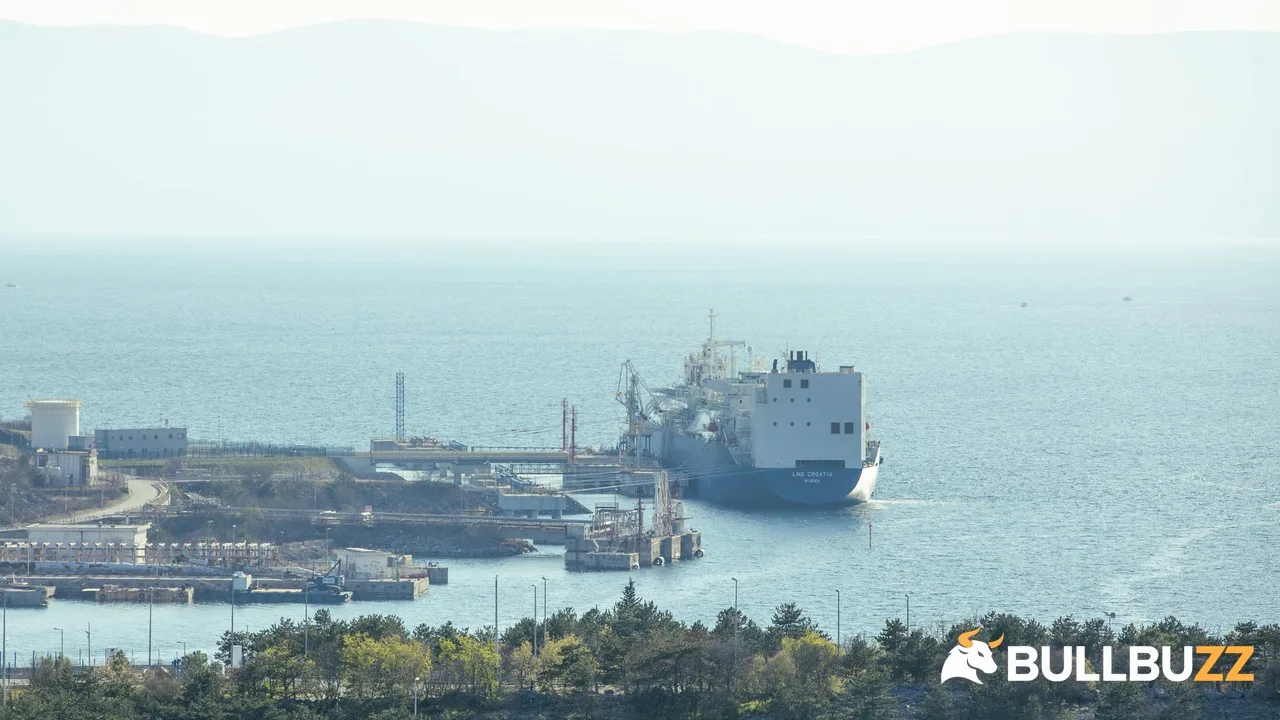
Two oil tankers exploded and caught fire after striking sea mines in the Strait of Hormuz on Friday, 13 November, as United States forces shot down two Iranian attack drones headed for Bahrain, in the sharpest single-day escalation of the Gulf shipping crisis in months.
Iran's Revolutionary Guards Navy said the tankers were trying to cross the strait without coordinating with Tehran and had switched off their radar and positioning systems, according to Iranian state television. One of the vessels was described as a supertanker. The claims have not been independently verified, and Iran provided no further details, Gulf News reported.
United States Central Command said both drones were intercepted before reaching Bahrain, with no injuries or damage. The command also rejected the Guards' claim that its forces had destroyed an American early-warning radar installation in the kingdom, calling the claim false.
"The IRGC launched two one-way attack drones toward Bahrain and both were shot down by U.S. forces. There were no injuries or damage," Central Command said in a statement on Friday.
Iran's official IRNA news agency quoted a Guards statement saying the radar attack followed a US strike on a telecommunications pole in the southern Iranian port of Sirik. It was Iran's first reported targeting of a facility in Bahrain since September, the Associated Press reported.
Strait of Hormuz tanker blasts raise shipping fears
The tanker claims came in two waves on Friday. Earlier in the day, the Guards said a vessel carrying liquefied gas struck a naval mine and exploded in the eastern part of the strait while using a route Tehran calls unauthorised. Hours later came the claim of two oil tankers hitting mines. Neither account had been confirmed by any shipping monitor or independent source by Friday evening, and Britain's United Kingdom Maritime Trade Operations agency, which monitors incidents at sea, had issued no immediate report on the incidents.
Separately, UKMTO said a vessel was hit by an unidentified projectile about 14 nautical miles northwest of Ras Al Khaimah in the United Arab Emirates on Wednesday while leaving the strait, causing a fire in its engine room and the evacuation of its crew.
The International Maritime Organization has counted about 134 maritime security incidents across the wider Middle East region since February, leaving 25 seafarers dead. Shipping through the Strait of Hormuz remains about 65 per cent below pre-war levels, according to a UKMTO report released on Friday.
The strait, between Iran and Oman, is one of the world's most important energy routes, carrying a large share of seaborne crude and liquefied natural gas. Even attacks that do not close the waterway can push up shipping insurance and freight costs and force owners to reroute cargoes.
Houthis claim missile strikes on Saudi Arabia
Yemen's Iran-aligned Houthis said on Friday they had fired two ballistic missiles towards Saudi forces in Al-Tuwal, in Jazan province. The group separately claimed attacks on Riyadh's King Khalid International Airport and a pumping station on Saudi Arabia's East-West oil pipeline, which allows the kingdom to export about four million barrels of crude a day through Yanbu, bypassing the strait. Saudi authorities had not confirmed those claims, and Reuters reported that Saudi Civil Defence had earlier issued an all-clear for the region.
Fighting in Yemen also continues to threaten Bab Al Mandab, another strategic maritime passage linking the Red Sea and the Gulf of Aden.
Oil holds near $96 as traders weigh supply risk
Brent crude settled at $95.84 a barrel on Friday, while US West Texas Intermediate closed at $88.56, Reuters reported. Both benchmarks fell about 2.5 per cent during the week as investors weighed signs of improving global supplies against the continuing Middle East security risks, with the International Energy Agency pointing towards a growing global oil surplus.
Oil had already climbed sharply in recent weeks as the shipping crisis deepened, and BullBuzz reported last month that crude jumped to its highest settlement since late April after a tanker was attacked in the strait. Rising energy costs are also feeding into US inflation, with wholesale prices running at their fastest annual pace since 2022.
US Secretary of State Marco Rubio said on Friday that further military action against Iran was unnecessary, arguing that economic pressure was already weakening Tehran. The disruption is meanwhile spreading beyond shipping: Etihad Airways confirmed passenger and cargo flights between Abu Dhabi and Riyadh and Dammam remain cancelled through 19 November.
Traders and shipowners will now be watching whether any vessel resumes regular transits of the strait, whether Washington answers the drone launches with fresh measures, and whether the diplomatic track that produced this week's prisoner exchange agreed in Abu Dhabi can extend to the Gulf. For now, the waterway that carries the world's oil remains open in name, and avoided in practice by most shipping.