Malaysia will require data-centre investors to pay for electricity transmission upgrades needed to serve their projects, shifting the cost of project-specific grid expansion to the companies creating the new demand.
Investment, Trade and Industry Minister Johari Abdul Ghani announced the policy in the Dewan Rakyat on Thursday. He said Malaysia has sufficient generation capacity, but transmission constraints could emerge as more large data centres seek connections.
The decision adds a direct infrastructure cost to Malaysia's fast-growing data-centre pipeline. BullBuzz reported earlier that 27 projects worth RM225.97 billion had been approved through the federal Data Centre Task Force by July, with 26 still under construction.
Malaysia Data-Centre Grid Upgrades Will Be Charged to Investors
Johari used a hypothetical 1,000-megawatt project to explain the approach. Tenaga Nasional Bhd, or TNB, would assess whether transmission upgrades were required, and the necessary investment would become part of the developer's project expenses, according to Bernama's report of the parliamentary session.
The policy is designed to stop existing businesses and households from carrying the project-specific infrastructure burden created by very large new users. It also gives investors a clearer signal that access to generation capacity does not automatically mean the local transmission network can deliver the requested load.
Operators will also have to pay for electricity capacity reserved for them after their facilities and supply connections become operational. Johari said a company allocated 200MW but using only 100MW would still be charged for the remaining capacity. An operator that failed to pay could be prevented from operating.
Why Reserved Capacity Matters
Data-centre developers often apply for power years before a campus reaches full operation. Reserving more capacity than a project ultimately uses can tie up grid resources and complicate planning for other customers.
Charging for the full allocation creates a financial test for those forecasts. Developers will have a stronger reason to match applications to realistic construction schedules and customer demand rather than secure large blocks of capacity speculatively.
The rule does not mean every data centre will fund a nationwide grid project. Johari's statement applies where a project's requirements trigger transmission-line upgrades. The final cost will depend on TNB's technical assessment, the requested load and the connection work required at the location.
TNB Is Already Expanding the National Grid
The investor-pays policy sits alongside a much larger grid programme. TNB said the RM15 billion National Grid investment in Budget 2027 forms part of its RM43 billion capital programme for 2025 through 2027.
That spending covers security of supply, new demand and the energy transition. An October briefing reported by The Edge Malaysia said 41 data-centre projects were operating with eventual maximum demand of 5.75GW, while another 8.35GW had signed up through TNB's Green Lane Pathway.
Those figures show why transmission has become central to investment decisions. New generation may exist at the national level while a specific industrial zone still needs substations, high-voltage lines or other connection works before a campus can draw power reliably.
Water Recycling and Local Content Stay in the Policy Mix
Johari said the federal government would oversee data-centre energy requirements through the Energy Commission, MITI and the Finance Ministry. He also urged state governments to protect existing water supplies when approving projects and said water-recycling technology is mandatory.
Projects approved through the Data Centre Task Force must meet a minimum local-content requirement of 30%. The government expects that rule to bring Malaysian companies into work involving electrical systems, cooling, systems integration and construction.
Data centres contributed an estimated RM14.1 billion to gross domestic product in 2025, up from RM900 million in 2021, Johari said, citing Bank Negara Malaysia estimates. The rapid increase explains the government's effort to preserve investment while setting clearer limits on who pays for the supporting infrastructure.
What the Rule Means for Malaysia's Data-Centre Pipeline
For developers, grid-upgrade costs now belong in site-selection and financing models from the beginning. A cheaper site may be less attractive if it needs extensive transmission work, while locations near available high-voltage capacity could gain an advantage.
For contractors and equipment suppliers, the requirement could create more demand for substations, switchgear, transformers, cables and engineering services. It also connects Malaysia's data-centre boom to the wider regional semiconductor and AI investment cycle reflected in TSMC's record quarterly profit and 2nm ramp.
The next evidence to watch will be how TNB calculates upgrade requirements, whether new costs alter project timelines and how reserved-capacity charges are enforced. Malaysia is still courting digital infrastructure, but the message to investors is clearer: projects that create exceptional demand must also account for the network needed to serve it.
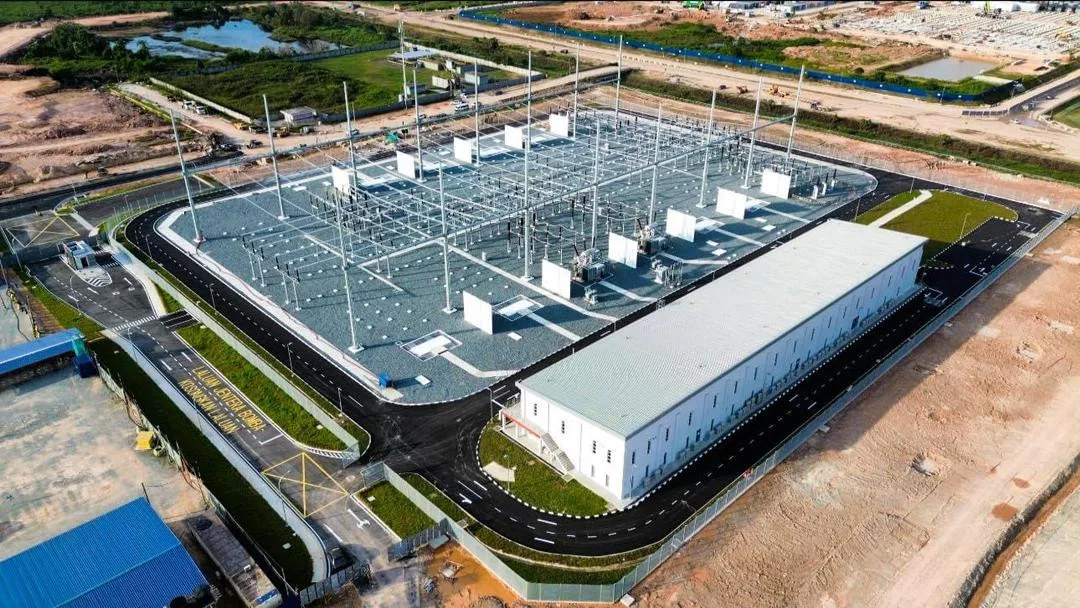
Banner: The 275kV air-insulated substation serving Yondr's data-centre development in Sedenak, Johor. Photo: Active Construction Sdn Bhd project page.