Oil prices climbed on Friday as Houthi missile strikes on Riyadh and two tankers hitting naval mines in the Strait of Hormuz revived fears of supply disruptions, even as both crude benchmarks headed for a third straight weekly loss.
Brent crude futures rose 24 cents, or 0.3%, to $92.22 a barrel by 9:18am MYT, Reuters reported, and extended gains to $92.77 later in the morning as traders reacted to the attacks. US West Texas Intermediate futures for December climbed 19 cents, or 0.2%, to $83.40 a barrel, while the more-active January contract gained 20 cents to $82.64. OilPrice reported Brent trading at $92.67 a barrel and WTI at $83.06 as the rebound took hold.
“Concerns over Middle Eastern crude oil supplies have resurfaced due to attacks on Riyadh by the Houthis, prompting buying,” Satoru Yoshida, a commodity analyst with Rakuten Securities, told Reuters. Yoshida added that expectations that coordinated production cuts will continue at the OPEC+ meeting later this month are also providing support.
Oil prices find support as Hormuz shipping comes under fire
The Iran-aligned Houthi movement fired missiles at Riyadh, striking targets including the city’s financial district and the headquarters of the country’s sovereign wealth fund, as well as a petrochemicals company in Jubail, according to media reports cited by OilPrice.
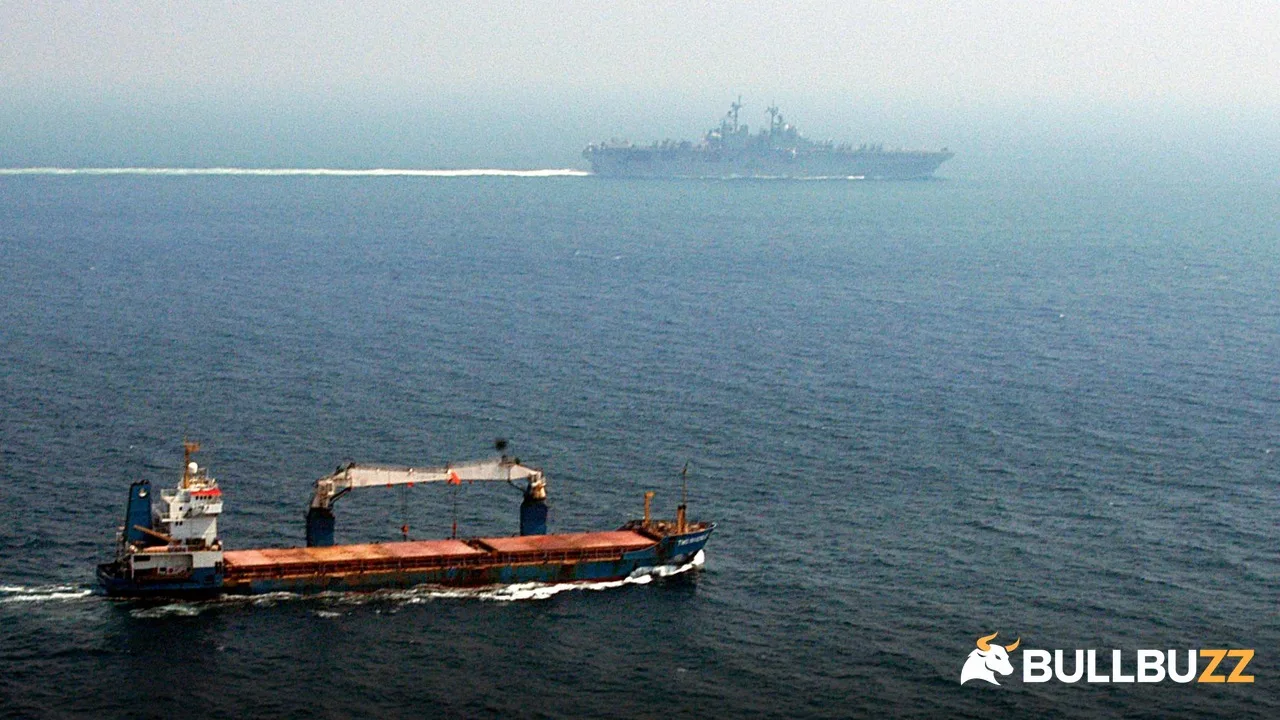
Two oil tankers also hit naval mines in the Strait of Hormuz and “exploded” and “are burning”, Iran’s Revolutionary Guards Navy said in a statement carried by state media on Thursday, Reuters reported. Iran’s Revolutionary Guard Corps said tankers have been striking mines in the strait on a daily basis this month as they try to avoid the Iran-controlled corridor in the waterway, with incidents running at roughly one a day in November.
The Strait of Hormuz is the world’s most important oil chokepoint, and the renewed attacks on shipping there are the reason the market is paying attention even though the price move itself is modest. Each new incident can lift shipping costs and delay loadings, which is why traders treat every report from the strait as a potential turning point.
The disruption is spreading beyond the Gulf. Ukrainian drone attacks have slashed Russian oil refineries’ combined crude processing volumes by 45% since late October, Reuters reported on Wednesday. Separately on Thursday, Russian President Vladimir Putin said Moscow would hit back hard after Ukraine struck the bridge linking Russia and Crimea for a third time this week, and said he was dropping any idea of a moratorium on attacking energy sectors and shipping.
Surplus forecasts cap the rally for oil prices
For all the alarm over supply, the rally has so far been contained. Both benchmarks settled little changed on Thursday, and Brent is set for a 3.5% decline for the week while the December WTI contract is set for an almost 6% weekly drop. The two benchmarks are on course for their third weekly decline in a row, a reminder that the market’s dominant story this month has been oversupply, not shortage.
That surplus story has been building for weeks. Oil prices slid earlier in the week as US crude stocks jumped, and the International Energy Agency has predicted an oil surplus returning in the current quarter and extending into next year. Investment banks have argued the market was already oversupplied as Persian Gulf exports rebounded, and Reuters noted that crude shipments through the Strait of Hormuz have returned to roughly pre-war levels.
OilPrice noted, however, that oil and gas flow trackers have repeatedly disputed that picture, saying exports out of the Persian Gulf have not yet returned to pre-war levels and have in fact declined since a major rebound in September, as Iran stepped up enforcement of its own rules for transiting the strait in October and November. The gap between the two readings is part of why the market is so sensitive to each new incident in the waterway.
The US dollar has climbed to a 19-month high as traders price in a December Federal Reserve rate hike, and a stronger dollar makes oil more expensive for buyers using other currencies. Gold has crashed to a 14-month low in the same risk-off move, as investors sold holdings across markets to cover losses elsewhere.
The International Energy Agency said on Thursday that the Middle East conflict has caused the biggest disruption ever to global oil and gas trade, and warned it could cut world oil demand by more than 4% by 2035 if governments accelerate electrification, efficiency and fuel-switching measures in response.
Traders watch OPEC+ and the strait
Attention now turns to OPEC+ ministers, who will hold a series of meetings on 29 November to decide their 2027 output policy. The group comprises the Organization of the Petroleum Exporting Countries and allies such as Russia, and traders expect the meeting to signal whether coordinated production cuts will continue into next year.
Until then, the market’s direction is likely to be set by events in the Gulf rather than by forecasts. If tanker incidents continue at the current pace, or the strikes on Saudi Arabia escalate, the supply premium could build quickly. If shipping steadies and the surplus forecasts prove right, the rally is likely to fade, and Brent’s third weekly decline will stand as the week’s real story.