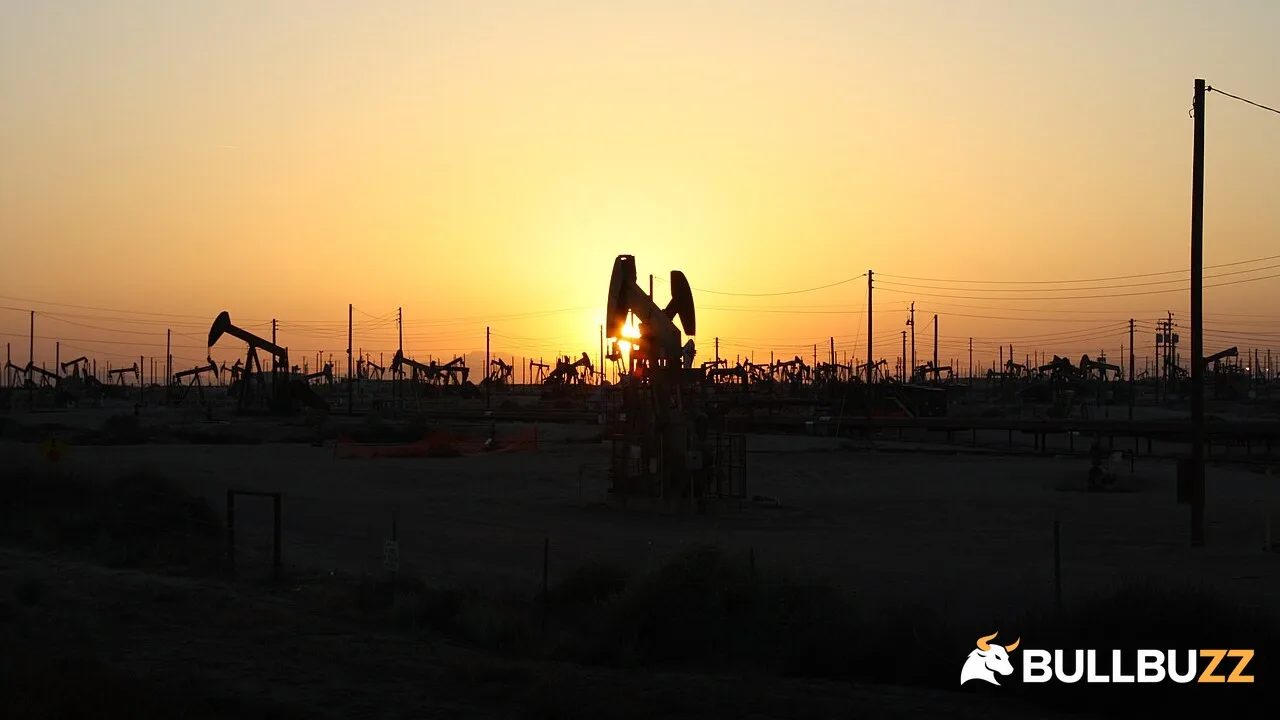
Oil prices fell sharply on Wednesday after US crude inventories rose by 3.4 million barrels, far more than analysts expected, deepening a November slide that has already wiped about a fifth off both global benchmarks. Brent crude settled at $91.95 a barrel, down $1.19 or 1.28%, while US West Texas Intermediate fell $2.75, or 3.2%, to $83.26, its lowest since 26 August.
Business Recorder reported that the US Energy Information Administration put crude stocks at 417.8 million barrels in the week ended 13 November, against a Reuters poll forecast of a rise of just 58,000 barrels. Gasoline inventories rose 5.2 million barrels to 215.9 million, well above the 1.6 million build analysts expected, while distillate stocks, which include diesel and heating oil, rose 1.6 million barrels to 104.9 million.
Pakistan Today reported that Brent fell more than $2 during the session and WTI lost more than $4 at one point before both benchmarks steadied. The scale of the miss mattered: the American Petroleum Institute had already estimated a 5.3 million barrel build, but traders had positioned for a far smaller official figure, and the EIA number confirmed the surplus instead of easing it.
Oil prices pressured as surplus fears grow
The inventory build landed on a market already braced for oversupply. The International Energy Agency has warned of a global surplus from the fourth quarter as Middle East output recovers faster than demand, and both Brent and WTI are on track for declines of about 20% in November. Rising exports from the Middle East, signalled by falling shipping rates, have added barrels even as demand growth cools.
Analysts at Gelber & Associates said the stock increases had renewed selling pressure. Attacks involving Iran and commercial shipping still threaten deliveries through the Strait of Hormuz, they said, but those risks have provided limited support against the growing expectation of a global surplus. The message from the market is that barrels in storage now matter more than barrels at risk.
The gap between the two benchmarks widened too. The Brent-WTI spread traded at its widest in about two weeks, with WTI falling harder than Brent. June Goh of Sparta Commodities said WTI arbitrage trades to Asia and Northwest Europe had shut, so WTI correcting more than Brent was the expected move to reopen the arbitrage window, adding that rising US Gulf Coast crude stocks were adding to the pressure.
Hormuz attacks limit the decline
War risk kept a floor under prices. Iran said it attacked US drone and missile sites in Kuwait overnight after the US struck a missile site on Qeshm Island in the Strait of Hormuz, and Bahrain said it intercepted Iranian attacks. ADNOC L&S of the United Arab Emirates said one crew member was missing and 11 injured after one of its vessels was attacked in the strait on Tuesday, while an LPG tanker was struck by a projectile off the coast of Oman on Monday and its crew evacuated.
Iranian media also reported that three oil tankers east of the Strait of Hormuz were disabled by mines, and Yemen's Houthis said they launched five drones toward two pumping stations along Saudi Arabia's East-West pipeline, which is used to bypass the strait. LSEG analysts said vessel data suggested normalisation of flows through Hormuz was still not possible under current conditions, even as talks continued between Iran and mediators from Oman and Qatar.
Dollar strength adds to the pressure on oil prices
The sell-off also reflects the stronger dollar. Minutes of the Federal Reserve's October meeting, released at 3am MYT on Thursday, showed almost all officials expect further rate rises, and traders now price a December hike at about 90%. A firmer dollar makes oil more expensive for buyers using other currencies, and it has weighed on every dollar-priced asset this week.
Gold fell more than 3% to a 14-month low on the same repricing, and Bitcoin slid to a four-month low near $62,000 as risk appetite faded across markets. When bullion, equities and crypto fall together, the common factor is the cost of money rather than anything specific to oil, and crude has not escaped it.
What oil traders are watching next
Brent steadied in Asia on Thursday, trading near $92.12, up about 0.2% from Wednesday's settlement, as traders weighed the surplus case against the Hormuz risk. FinanceFeeds reported the early Asian level, with $96 above and $88 below as the near-term reference points.
OPEC+ ministers meet on 29 November to set output policy, and the market will watch whether the group responds to a month in which prices have fallen by a fifth. Closer in, US weekly jobless claims are due at 9:30pm MYT on Thursday, the next data point for a market trying to judge whether the Fed will follow through on the December hike traders have now almost fully priced in.