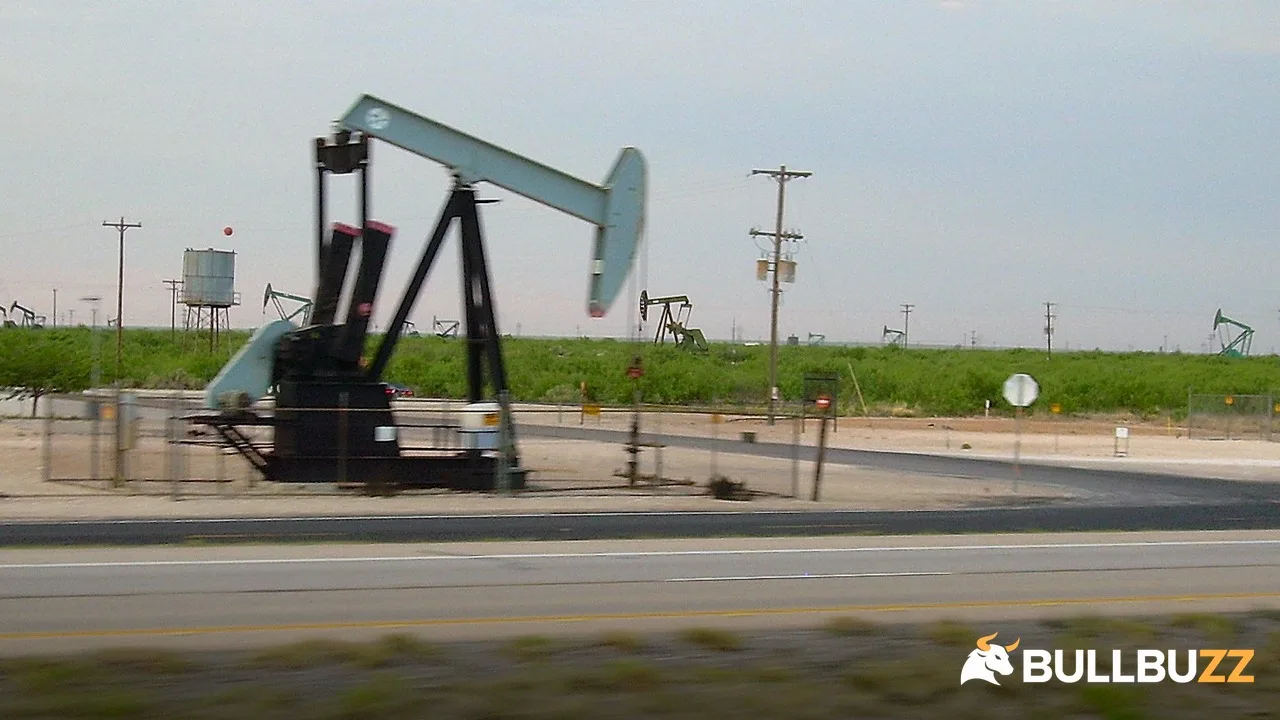
Oil prices crashed on Wednesday as Brent crude settled 8.7% lower at $94.62 a barrel and US West Texas Intermediate fell 8.3% to $88.12, their lowest settlements in more than two months, after voters handed Democrats control of Congress and traders bet the midterm rebuke could hasten an end to the US-Iran war, according to Reuters reporting.
The sell-off extended into Thursday. Reuters reported Brent testing $93.50 in Asia morning trade, while early Thursday market coverage put Brent near $93.90 and WTI near $87, a fourth consecutive session of declines. Brent has dropped about 20% so far this week, from around $118 late last week, and if the fall holds through Friday's close it would be the largest weekly drop since April 2020, when US crude briefly traded below zero.
The scale of the move matters beyond the energy market. Oil had carried a large war premium for months, and its rapid unwinding is already feeding into bond yields, the dollar and inflation expectations, even though no peace deal has actually been signed.
Oil prices: why the midterm result moved crude so fast
The trigger was political. Democrats won both chambers of Congress in Tuesday's midterms, and President Donald Trump acknowledged on Wednesday that the Iran war had played a role in his party's defeat. Vice President JD Vance was blunter on X, writing that the reason Republicans lost was the war. Trump had already told the Financial Times on Tuesday that the United States had no immediate plans to strike Iran.
Traders read that sequence as a constraint on escalation. A Democratic Congress can use funding, hearings and war-powers resolutions to check military plans, and a weakened White House has a stronger incentive to seek a negotiated exit, Reuters reported, citing sources close to Gulf government circles. Dennis Kissler of BOK Financial said larger Middle East exports and Trump's comments were adding to pressure on crude, while Qatar stepped up mediation efforts to avert a renewed escalation.
Gulf exports of crude, condensate and refined products averaged 17.1 million barrels per day in October, according to ship-tracking data from Vortexa cited by Reuters, down from 18.9 million in September but still roughly three-quarters of pre-war levels. The United Arab Emirates is also considering a third pipeline to move crude outside the Strait of Hormuz, Bloomberg reported, a step that would further reduce dependence on the waterway if it goes ahead.
Why the oil sell-off does not yet mean peace
The market is pricing in a settlement that has not happened, and the gap between price and reality is the main risk in the trade. A senior Iranian official told Reuters on Tuesday that Iran and the United States remain far from a deal to end their war, and Supreme Leader Ayatollah Mojtaba Khamenei said in a written statement that US hostility would persist regardless of which party controls Congress.
The physical backdrop has not eased either. The Strait of Hormuz remains largely closed to commercial shipping, and earlier talk of a reopening has not translated into normal flows. US crude inventories fell 865,000 barrels to 409.8 million barrels in the week ended 30 October, the Energy Information Administration said, against analysts' expectations for a rise of 877,000 barrels, a reminder that physical supply remains tight even as futures fall.
That tension is why some traders are cautious. Carl Larry of Enverus told Reuters he was more concerned about an escalation in Iran than a resolution, warning that an agreement allowing Iran to claim a clear victory could provoke recklessness as readily as restraint. Commercial oil inventories in major consuming nations are also near 15-year lows, according to market coverage, leaving little buffer if the diplomatic opening closes.
What to watch next for oil prices
Three things will decide whether Wednesday's crash holds. The first is language from Washington and Tehran: any concrete sign of talks, or any fresh military threat, will move prices faster than inventory data. The second is shipping through the Gulf: a genuine reopening of normal flows would confirm the market's bet, while continued disruption would argue the fall went too far. The third is Friday's close, which will confirm whether this really is the steepest weekly drop in more than six years.
For traders, the contrast with the earlier oil plunge on 3 November, when peace-talk hopes first knocked prices down by more than 7%, is instructive. That fall was driven by diplomacy; this one is driven by an election result changing the politics of the war itself. Both moves show how quickly a war premium can come out of crude, and how quickly it can return if the politics change again.
For now, the message from the market is clear: investors are betting that a Democratic Congress makes a negotiated exit from the Iran war more likely, and they are selling oil on that bet. Until a deal is actually reached, however, that remains a bet on politics, not a fact on the ground, and crude's next move is as likely to be set in Washington and Tehran as in any trading room.