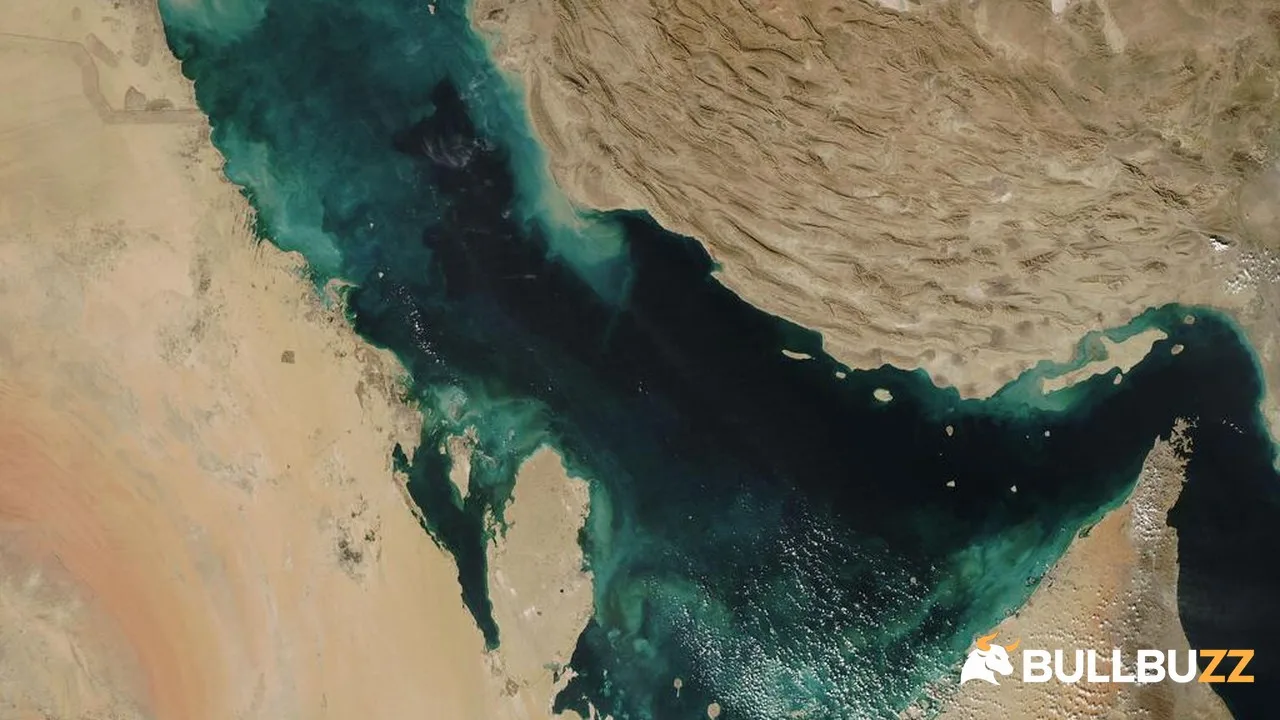
Iran says the Strait of Hormuz could reopen within two days under a plan worked out with Qatari mediators, but only if the United States first meets Tehran's conditions. Foreign Minister Abbas Araghchi told Al Jazeera on 31 October that reopening the waterway was not a complicated matter, and that Iran would act immediately if it concluded there was a genuine will to end the war and find a solution. The offer is the clearest timeline Tehran has given for restoring traffic through the world's most important oil chokepoint, yet it comes with no announced agreement, no date for reopening, and no direct talks with Washington planned.
The distinction matters for oil markets. A proposal is not a reopening, and Araghchi's own framing ties the two-day timetable to a political judgement — that Washington genuinely wants to end the war — rather than to a signed deal. Reporting of the same interview by news agency ANI adds detail on how the timetable was reached: Qatar first proposed shortening the implementation period to five days, and the sides then arrived at a proposal that cuts it to two. That version, carried by ANI, is the source for the most specific account of Tehran's conditions.
Strait of Hormuz reopen: what Tehran says it wants first
According to ANI's account, Araghchi listed lifting sanctions imposed after the collapse of the Islamabad memorandum, reducing United States forces in the region, restoring oil waivers, and releasing frozen Iranian funds, including funds held in Qatar. Tehran has also sought recognition of a shipping route discussed with Oman and the closure of other routes, ANI reported. Iran's top security official, Mohsen Rezaei, has separately said the strait will remain closed unless seven conditions announced by Tehran are met, a reminder that the two-day figure is conditional, not a promise to open the strait on a set day.
Araghchi also said Iran had studied a letter from United States Vice President JD Vance in high-level meetings and described Washington's outreach as a positive step. He declined to go into the letter's details, and Al Jazeera reported that the outreach had come through intermediaries, not directly. An Iranian delegation led by Deputy Foreign Minister Saeed Khatibzadeh travelled to Doha, but Araghchi stressed that this did not mean direct talks with the United States. As of Sunday, discussions with Qatari mediators were continuing, with no final outcome reached.
Washington's public position has been more cautious. United States Secretary of State Marco Rubio has said the United States is open to a diplomatic solution, while officials have also said no decision has been made on renewed military action.
Qatari LNG carrier struck as talks continued
The diplomacy unfolded against fresh attacks on Gulf shipping. Qatar Gas Transport Company, known as Nakilat, said its liquefied natural gas carrier Al Mayeda was struck by unidentified objects while transiting the Gulf on the evening of 30 October. No crew member was injured, there was no environmental damage, and the vessel remained safe and operational while damage was assessed. Nakilat did not say what struck the ship, who launched the objects, or exactly where it was sailing, and no group has claimed the attack.
Qatar's foreign ministry strongly condemned the attack as a dangerous act threatening maritime navigation and global energy supplies, and said investigations were under way. The Gulf Cooperation Council's secretary-general, Jasem Mohamed Albudaiwi, also condemned the targeting of the carrier, calling it a dangerous escalation that threatens regional security and the steady flow of energy. The strike on a Qatari vessel is especially sensitive because Qatar is both a major LNG exporter and the mediator in the Hormuz contacts.
Why the two-day claim matters for oil prices
Brent crude ended last week elevated, with the December contract settling at $117.64 a barrel on Friday after a tanker attack in the Strait of Hormuz sharpened fears about supply through the chokepoint, while the January contract traded near $113. On Sunday, OPEC+ held December output targets steady for a third month, leaving the market to price war-related disruption rather than a change in official quotas. A credible path to reopening the strait would ease that risk premium; a breakdown in talks, or renewed strikes after the United States midterm elections on Tuesday, 3 November, would push it higher.
That calendar is why the next few days matter more than the headline timetable. If Washington and Tehran cannot bridge the gap between Tehran's conditions and Washington's position, the two-day proposal will lapse without effect, and shipping risk will remain the dominant driver of crude. If they can, the sequence Araghchi described — United States steps first, then reopening, then negotiations — would still need to be verified vessel by vessel, not taken on trust from a single interview.
For now, the verifiable facts are narrow: Iran has publicly offered a two-day reopening tied to its conditions, Qatar is mediating, a letter from Washington has been studied but not disclosed, a Qatari gas carrier was hit on 30 October without injury or environmental damage, and no agreement has been announced. Everything beyond that — the exact conditions list, the timing, and whether the United States will accept the framework — remains unconfirmed, and BullBuzz will update this story when either side confirms a deal or the strait actually reopens.