Oil prices rose on Wednesday, 11 November, after Yemen's Houthis claimed fresh missile and drone strikes on Saudi Arabia's East-West crude pipeline, Riyadh airport and an Aramco facility, putting Gulf energy supplies back at the centre of traders' attention.
Brent crude futures rose 0.75% to $92.18 a barrel by 11:30am MYT, while US West Texas Intermediate climbed 0.48% to $86.45, AGBI reported. The rebound followed a fall of more than $3 a barrel in the previous session, after the United States ruled out the need for further strikes against Iran. Brent had slipped below $90 a barrel on Tuesday for the first time since August, before the latest claims pushed prices back above $92.
Houthis claim fresh strikes on pipeline and airport
Houthi military spokesman Yahya Saree said in a social media post that the group had carried out new strikes on King Khalid International Airport in Riyadh, several pumping stations along the East-West pipeline, an Aramco facility in Abqaiq and military posts in Yemen, AGBI reported. Saudi Arabia has not confirmed the latest attacks.
Saree also claimed fresh attacks on the Riyadh financial district and said the group had targeted Saudi troop concentrations in Yemen, OilPrice reported. It is not clear whether the financial district claim refers to a new strike or to the weekend attack that damaged an Aramco office building in the capital.
The Saudi-led coalition said its air defences had intercepted and destroyed several missiles launched towards southern Saudi Arabia and Riyadh, as well as a drone over the kingdom's oil-rich Eastern Province, according to OilPrice.
The claims follow a wave of attacks over the weekend. On Saturday, 7 November, the Houthis claimed six missile and drone operations against Saudi targets, and on Sunday falling shrapnel caused minor damage to an administrative Aramco building in Riyadh, Saudi Arabia's energy ministry said, with no injuries reported. The Aramco Tower in the Riyadh financial district was damaged in that earlier round of strikes.
Saudi confirms pipeline fire near Medina
The Saudi energy ministry confirmed that an attack on the East-West pipeline in the Medina region on Monday, 9 November, caused a limited fire that emergency crews extinguished, with no injuries and pipeline operations unaffected. The ministry did not name an attacker.
The Houthis have since denied hitting the line near Medina, claiming instead that their strikes hit pumping stations near Riyadh, an account Riyadh has not confirmed. The result is two conflicting accounts of where the pipeline that now carries the bulk of Saudi crude exports was hit.
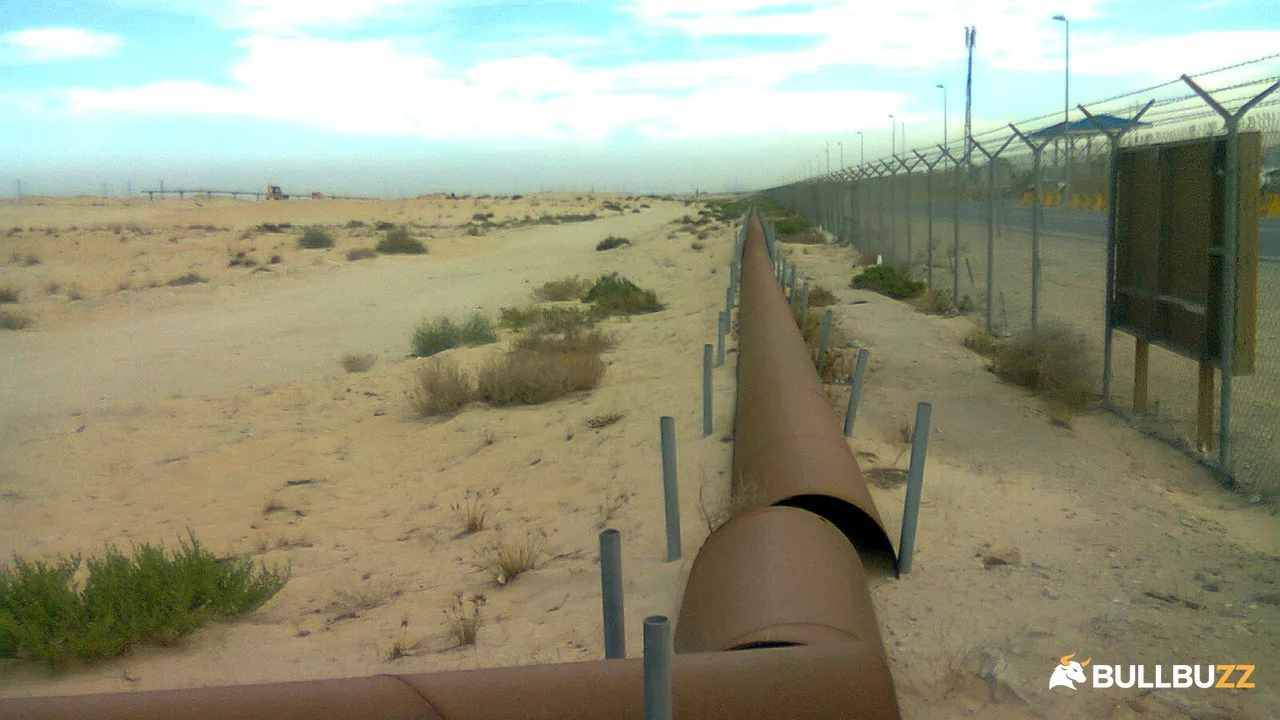
The pipeline matters because Aramco has been pumping 4 million barrels per day of exports through it in recent months to replace volumes unable to exit the Strait of Hormuz, AGBI reported. The 1,200-kilometre line carries crude from Abqaiq to the Red Sea port of Yanbu, and any confirmed disruption to it would matter far more to the oil market than the claims alone.
Tanker hit in UAE waters as Hormuz attacks continue
Abu Dhabi-listed Adnoc Logistics and Services confirmed that one of its vessels was damaged in an attack in the UAE's territorial waters in the Arabian Gulf on Tuesday, 10 November, the state-run Wam news agency reported. Ten attacks on vessels in the Strait of Hormuz and surrounding waterways had been recorded so far in November, compared with 37 in October, according to Reuters figures cited by AGBI.
In Tehran, the Islamic Revolutionary Guard Corps unveiled a new missile city on Tuesday, showcasing advanced missiles, Iran's state-run IRNA reported. Iran's Supreme National Security Council secretary, Mohsen Rezaei, denied Washington's claim that peace talks were taking place in Qatar, saying: "We are not conducting any negotiations with the Americans."
What traders are watching next
The market reaction has been measured so far, with no confirmed supply disruption from any of the claimed strikes. Gulf stock markets rose on Tuesday, with the Dubai exchange closing 1.4% higher, Abu Dhabi up 0.8% and Saudi Arabia's index climbing 0.6%, suggesting investors are not yet pricing in a wider disruption.
But the pattern is what worries traders: the attacks are now coming almost daily, and the pipeline carrying the bulk of Saudi exports is the target. For oil traders, the watchpoints are whether Saudi Arabia confirms damage to any pipeline pumping station, whether Aramco reports any operational interruption, and whether shipping through the Strait of Hormuz is disrupted further.
With no sign of an off-ramp in the conflict, the risk premium in crude is unlikely to fade quickly, even as the wider market keeps one eye on the Federal Reserve, after hot US inflation data locked in expectations of a December rate hike.