Oil prices surged to their highest in weeks on Friday as a strike on a Saudi Aramco refinery and mine attacks on tankers in the Strait of Hormuz revived fears of a supply disruption from the world's most important oil-exporting region.
Brent crude, the global benchmark, climbed as high as $97.30 a barrel during Friday trading, its highest since 9 November, before settling at $95.44, down 1.2 per cent on the day. US West Texas Intermediate settled at $83.08 a barrel. Brent still gained about 3 per cent on the week, its first weekly rise in November and the end of a three-week losing streak.
Oil prices had plunged by about a quarter in the three weeks since the start of November as traders focused on a looming global surplus, before the attacks forced the market to price in the risk of lost Gulf exports.
Saudi Aramco's Jazan refinery temporarily halted some operations after a projectile struck it on Thursday, killing a Nepalese worker and wounding several others, Saudi Arabia's Energy Ministry said in a statement. The strike was the latest blow to key Saudi facilities, a day after Yemen's Iran-aligned Houthis claimed attacks on Ras Tanura, the kingdom's largest refinery and a major crude export hub, and on Riyadh's financial district.
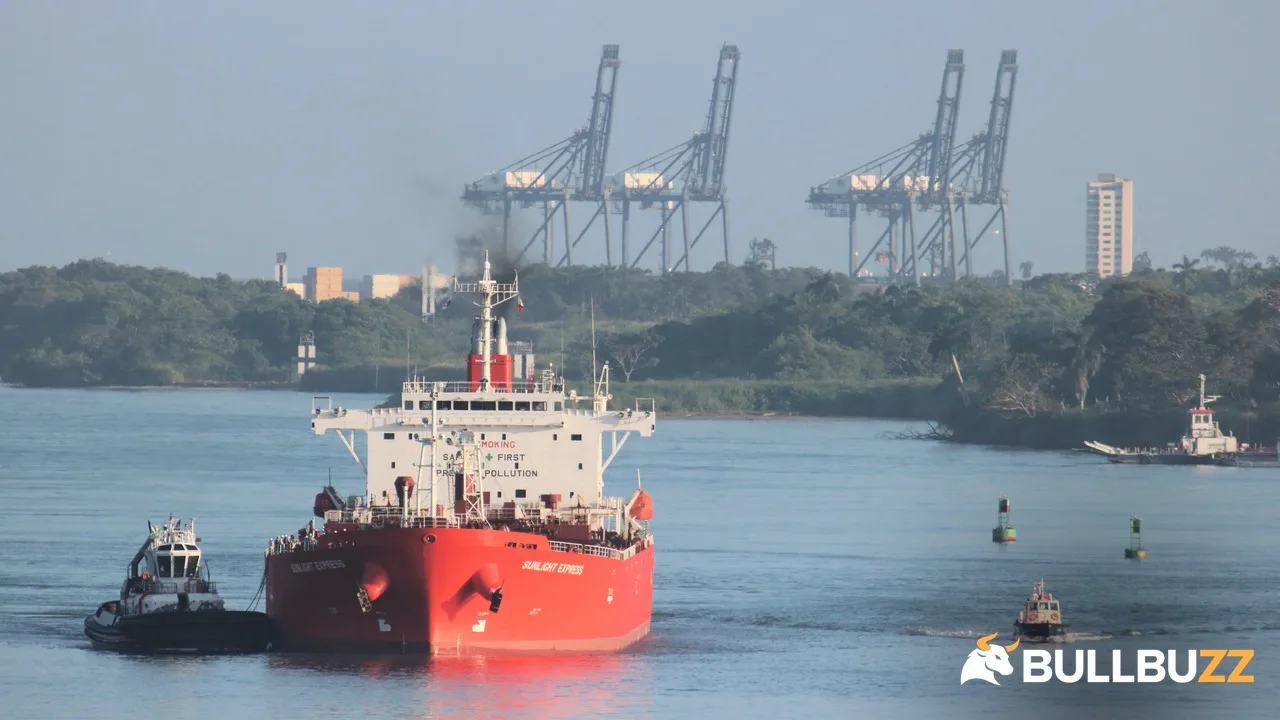
At the same time, shipping through the Strait of Hormuz, the narrow waterway that carries about a fifth of the world's oil, has been disrupted. Iran's Revolutionary Guards said on Thursday that two tankers had exploded and caught fire after hitting sea mines north of Oman's Khasab port while attempting to cross the strait. One of the vessels was a supertanker carrying more than 2 million barrels of crude, according to the Guards.
The US military said on Friday it had disabled a commercial ship on Thursday after it attempted to run the US blockade of Iran, while an adviser to Iran's supreme leader said Tehran would keep the Strait of Hormuz shut while vowing to break the embargo. Flows through the strait had been recovering towards the levels seen before the US-Israeli war on Iran, and analysts said the latest incidents threaten to halt that recovery.
Oil prices rebound after three-week slide
Brent settled at $96.57 a barrel on Thursday, up 2.1 per cent and its strongest close since 6 November, after rising 3.5 per cent on Wednesday. The three-session gain of about 8 per cent from Monday's lows was the market's sharpest move in weeks, and it came even as US crude inventories rose.
"Attacks on Middle Eastern energy facilities and tankers have brought supply disruption back into focus," Mark Schaefer, a director at brokerage Liquidity Energy, told Reuters. Prices had retreated in recent weeks as investors were relieved that US President Donald Trump did not step up military action against Iran after the midterm elections.
ANZ analysts Brian Martin and Daniel Hynes said in a research note that Brent could still push above $100 a barrel without another major escalation in the Middle East, "but that increasingly requires evidence of constrained deliverable supply."
The rebound in crude has also fed into the wider inflation picture. Tokyo's core inflation hit 2.9 per cent in November, its fastest in 16 months, keeping a December rate rise by the Bank of Japan in view, while traders are almost fully pricing in a December rate rise by the US Federal Reserve after hotter-than-expected American inflation data. Gold has also recovered sharply, with Malaysia's Kijang Emas price tracking the global rebound, and Wall Street capped its best week since 2022 as risk appetite returned.
OPEC+ meets on Sunday as Iraq seeks higher ceiling
Attention now turns to Sunday, when OPEC+ ministers meet to decide the group's output policy for 2027. Three people with knowledge of the talks told Reuters the group, which includes Saudi Arabia and Russia, is set to keep first-quarter 2027 output targets unchanged.
Iraq is in negotiations with OPEC to raise its production ceiling as the country looks to develop its energy sector, oil minister Basim Mohammed Khudair said on Friday ahead of the meeting. The group faces a difficult balance: higher prices ease the pressure on producers' budgets, but a rising geopolitical risk premium risks deepening the inflation pressures that central banks are still fighting.
Supply risks are not confined to the Gulf. Ukraine has intensified drone attacks on Russian oil refineries since the end of October, with the latest incident causing a fire at the Slavyansk ECO refinery in Russia's southern Krasnodar region. Separately, fires disrupted activity at Thailand's Bangchak refinery and Venezuela's Amuay refinery on Thursday.
US crude stocks rose by 1.1 million barrels to 418.9 million barrels in the week ended 20 November, the Energy Information Administration said, less than the 1.5 million barrels analysts had expected.
The market's next test comes on Sunday. If OPEC+ holds output steady, traders will be watching whether the attacks on Gulf shipping escalate — and whether the flow of crude through the Strait of Hormuz, the chokepoint behind the rally, starts to recover or tightens again. The last time Houthi strikes and Hormuz tanker blasts hit the headlines, oil prices climbed sharply before easing back; this time, with a worker killed at Jazan and a supertanker ablaze in the strait, the market is treating the threat as harder to dismiss.