Strait of Hormuz oil shipments are back at the centre of market anxiety after a tanker attack in the waterway helped push Brent crude to its highest level since April. Brent settled up 2.4% at $117.64 a barrel on Friday, while US West Texas Intermediate rose 2.1% to $104.12, Reuters reported, capping a month in which Brent gained 13.6% and WTI 15.2%. The rally was driven by fear that the world's most important oil chokepoint is becoming harder and more expensive to use.
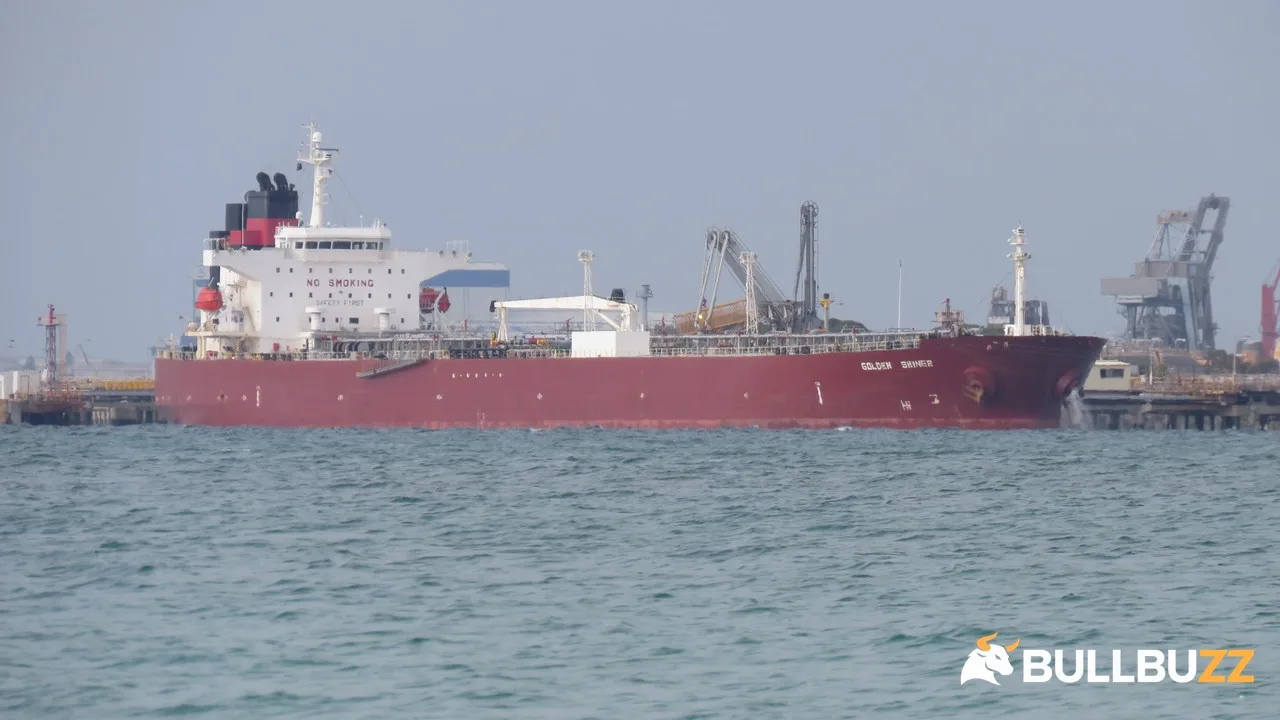
The immediate trigger was confirmed by Britain's maritime security agency. The United Kingdom Maritime Trade Operations centre said a tanker in the Strait of Hormuz was hit on Friday by explosive devices attached by a small boat. Maritime sources told Reuters it was the first known successful limpet-mine attack, using explosives clamped directly onto a hull, in the waterway since the US-Israeli war with Iran began in February. Who carried out the attack has not been established.
A day earlier, a similar attack had already put shipping on alert. Three maritime security sources identified the vessel struck on Thursday, about 25 nautical miles northeast of Khasab in Oman, as the Panama-flagged crude tanker Louise 1. A small boat attached two limpet mines to its hull, starting an engine-room fire that temporarily disabled the ship. All 27 Indian seafarers on board escaped unhurt, the fire was put out, and the vessel resumed its voyage.
Strait of Hormuz oil: what Iran claims, and what is disputed
Iran's account goes much further, and it remains unverified. The Revolutionary Guard said on Friday that three oil tankers, including a supertanker carrying more than two million barrels of oil, exploded and caught fire after striking naval mines on what Tehran calls unauthorised routes, Iranian state media reported. Iran later claimed a fourth tanker had been hit. The Associated Press reported it could not verify those claims, and Iran did not identify the vessels.
The United States military disputes the mine claims. US Central Command said all internationally recognised, primary transit routes through the waterway have been cleared of sea mines by US forces. Until independent evidence settles the question, the market is pricing the risk, not a confirmed fact.
Oman's Maritime Security Centre added a further, separate report on Friday, saying it had evacuated 25 crew members from a Panama-flagged tanker that caught fire in the strait, 1.6 nautical miles off Musandam Governorate. It is unclear whether that vessel is among those described by Iran.
Attacks widen beyond the strait
The pressure is not confined to Hormuz. Yemen's Houthi movement said on Thursday it had attacked several Saudi Arabian energy facilities, including the Ras Tanura and Rabigh refineries and an Aramco production facility at Abqaiq. Saudi Arabia separately said it intercepted a drone near Mecca, which the Houthis denied targeting.
Diplomacy has not eased the tension. Qatari mediators returned to Tehran on Friday for talks with Iranian officials, days after US Vice President JD Vance sent a letter to a senior Iranian security official. Diplomats told the Associated Press that US officials have told regional allies to be prepared for potential renewed military action against Iran after next week's US midterm elections, on 3 November.
Corporate behaviour is already reflecting the risk. TradersUnion, citing Reuters, reported that ExxonMobil and Chevron cancelled plans for executives to attend a major energy industry conference in the United Arab Emirates next week.
Why the Strait of Hormuz oil route moves every market
About a fifth of the world's oil normally passes through the Strait of Hormuz, along with roughly a fifth of global liquefied natural gas. Gulf crude exports have at times recovered to or exceeded pre-war levels, yet shipping remains more dangerous and more expensive, with higher insurance and freight costs adding to the cost of moving crude even when the oil itself keeps flowing.
That combination explains the month's extraordinary gains. Brent and WTI have now risen for four consecutive months, and the oil surge has already pushed gold below $3,900 to a one-year low. Saxo Bank's Ole Hansen told a briefing in Singapore that crude could become even more volatile in the next two weeks because of Israel's parliamentary vote and the US midterms, and that he expects crude to trade at $70 to $90 a barrel even after the conflict ends, compared with $60 to $70 before the war.
The calendar gives traders little time to relax. Members of seven core OPEC+ countries are set to meet online on Sunday and are likely to keep their December output targets steady, sources told Reuters, while the US midterm vote on Tuesday and the Federal Reserve's December rate decision will shape how much of the oil shock feeds into inflation expectations. The week's other big easing of tension, the Trump-Xi trade deal that cut China tariffs to 47%, shows how quickly one risk can fade while another flares.
For now, the signal from Hormuz is clear even if the details of each attack are not. A small boat was able to approach a tanker in transit, attach explosives to its hull and withdraw in one of the world's most congested shipping lanes. Until that stops, every transit through the strait carries a risk premium, and oil prices will keep reflecting the danger of the route, not just the barrels moving through it.