US President Donald Trump says new military strikes on Iran “won’t be necessary” as quiet US-Iran talks mediated by Qatar gather pace, offering the clearest sign yet that diplomacy could avert another round of fighting in the eight-month-old conflict.
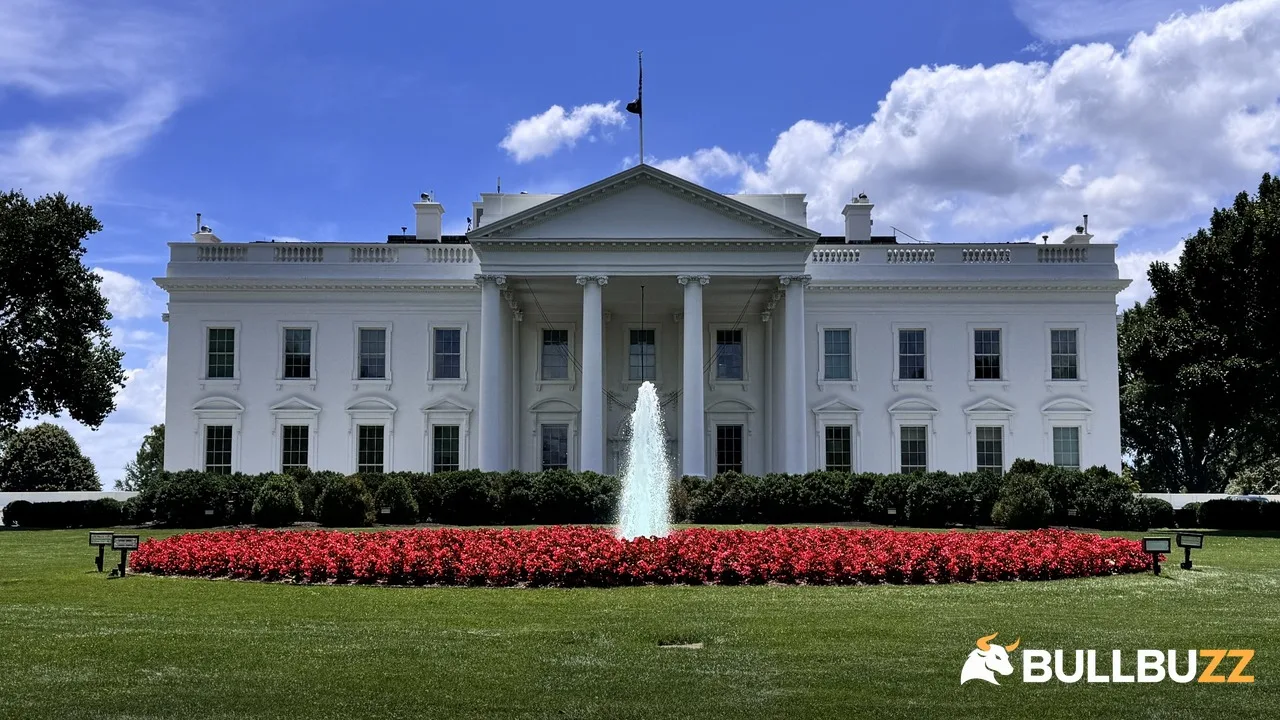
Trump told CNN on Sunday that renewed attacks were “highly unlikely” if Tehran made progress toward an agreement on its nuclear programme and reopening the Strait of Hormuz. He went further on Monday after meeting Qatar’s prime minister, Sheikh Mohammed bin Abdulrahman Al Thani, at the White House, telling reporters during a surprise appearance in the briefing room: “At this point, it won’t be necessary, taking the military action.”
The president was careful to keep the military option open. “Should there be any change with respect to developments in the Middle East, the United States of America is fully locked and loaded,” he said. “We don’t think there’ll be any reason to use it.” He added that he saw “momentum toward the end of this conflict” and believed it would end “fairly soon”.
What the US-Iran talks are actually about
The two sides have been negotiating quietly for weeks, possibly months, with Qatar mediating and circulating a framework document that both Washington and Tehran are amending. Diplomatic activity has accelerated since last Tuesday’s midterm elections, but both sides have revealed little about the substance of the discussions.
On paper, their demands are far apart. Trump wants to eliminate Iran’s nuclear programme, which Tehran regards as a matter of national sovereignty. Hundreds of kilograms of highly enriched uranium remain hidden somewhere in Iran, and Washington wants the stockpile diluted or transferred to another country for safekeeping. Iran insists its programme is for generating energy, not military purposes.
Tehran, for its part, is pressing seven preconditions before it will negotiate over the programme or reopen the Strait of Hormuz, including an end to the war on “all fronts” and the lifting of a maritime blockade. It also wants relief from US sanctions that have made it increasingly difficult to sell its crude on global markets, the release of billions of dollars in frozen assets, and compensation for the killing of Supreme Leader Ali Khamenei and his top military commanders in the February airstrikes that opened the war.
Washington has tempered hopes of a quick breakthrough. Secretary of State Marco Rubio said on Sunday that he “wouldn’t say we’re on the verge of a breakthrough”, describing Iran’s demands as “simply not just unacceptable, but in some cases outrageous and ridiculous and really not realistic”.
Midterms changed the politics of the war
The election results have added a new dimension to the negotiations. Vice President JD Vance said afterwards that the war was among the reasons Republicans lost both houses, and Trump told CBS’s “60 Minutes” that he did not disagree with that assessment, acknowledging that voters “didn’t like the war”. He defended the decision to attack Iran, saying that if he had to make it again, his answer would be “an emphatic yes”.
Iran has sought to use the result to press its position. “American voters have made their choice. Time for the White House to make its own,” Foreign Minister Abbas Araghchi said on Sunday. But Tehran’s trust in Washington has almost vanished — the conflict began while nuclear talks with the US were already under way — and Iranian hardliners are demanding a steeper price for an exit.
Markets took the signal: oil down, Gulf stocks up
Financial markets treated Trump’s remarks as a genuine de-escalation signal. Reuters reported Brent crude fell 5.71% to $92.71 a barrel on Monday, its lowest in weeks, while US crude dropped 5.11% to $86.19, as traders priced in a lower risk of supply disruption through the Strait of Hormuz.
Gulf stock markets rose in early trading on Monday, with Dubai’s main index up 0.8%, Abu Dhabi up 0.8% and Qatar’s index adding 0.4%. The same softer-oil backdrop powered Wall Street’s best day since April and helped gold reclaim $4,100 an ounce.
Why a deal is still far away
Despite the softer tone, the obstacles remain formidable. A senior Emirati official, Anwar Gargash, warned on Monday that the region should prepare for a long period of instability, saying neither a decisive resolution nor a stable regional order could be taken for granted. Shipping near the Strait of Hormuz continues to come under attack, though both sides have played down recent incidents.
The war’s regional spillover has not stopped either. Saudi authorities lifted an alert in Riyadh on Monday, a day after a Houthi attack damaged an Aramco office building in the city. Washington is also still intensifying pressure: it is offering a reward of up to $20 million for information on Iran’s nuclear programme and has launched a task force to stop Tehran moving advanced weapons overland.
The New York Times has indicated Iran is willing to re-engage in nuclear negotiations, but there has been no independent confirmation of a breakthrough. No agreement has been announced, no text has been published, and no date has been set for a settlement. For now, the market has priced in a pause in the war — not its end.