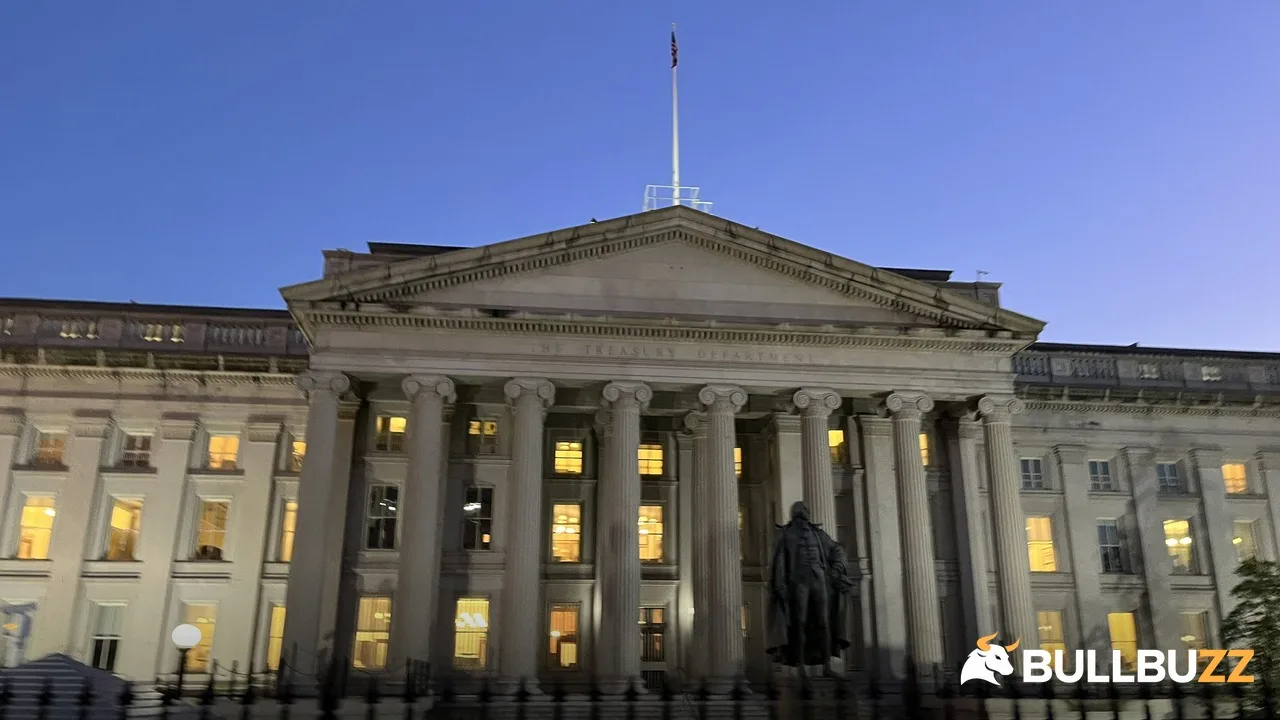
The United States Treasury has cut crypto exchange MEXC Global off from the American banking system, accusing the platform of moving at least $16 billion in illicit funds tied to sanctions evasion by Iran, North Korea and Russia, and to cybercrime.
The Financial Crimes Enforcement Network (FinCEN) issued the order on Friday, 6 November, as part of Operation Economic Outcast, a Treasury campaign against sanctions evasion through crypto. The order bars US financial institutions from processing any funds transfers involving MEXC Global, according to FinCEN and the Treasury's press release.
"Financial institutions cannot have it both ways: Either you support the Iranian regime, or you have access to the U.S. financial system," said Secretary of the Treasury Scott Bessent. "Treasury will continue to sever the Iranian regime's economic lifelines and thwart its desperate attempts to circumvent U.S. sanctions using digital assets."
MEXC's $16 Billion Trail Runs Through Russia and Iran
Between May 2021 and May 2026, MEXC Global facilitated the movement of at least $16 billion in funds connected to sanctions evasion, cybercrime and other illicit activity, Treasury said. Nearly $1.5 billion of that was linked to Russian sanctions evasion, including $232 million in direct transactions with US-, EU- and UK-sanctioned entities.
The exchange was still processing transactions with sanctioned Russian entity Garantex, and its successor Grinex, as recently as June 2026, more than four years after Garantex was designated by Treasury's Office of Foreign Assets Control in April 2022. MEXC also facilitated at least $26 million in transactions benefitting the Russia-based, OFAC-sanctioned A7 sanctions evasion network, and processed almost $200 million in transactions connected to the A7A5 stablecoin, a store of value used by the A7 network to help clients evade sanctions.
The Iranian trail is just as long. In the same five-year period, MEXC sent or received approximately $1 billion in direct transactions with more than 40 identified Iranian crypto exchangers, some of which are subject to US and international sanctions. It also facilitated about $22 million in transactions for the Central Bank of Iran and the Islamic Revolutionary Guard Corps and its Qods Force, both under sanctions, Bitcoin Magazine reported.
How Big MEXC Is, and What the Order Does Not Do
MEXC Global was founded in 2018 and is incorporated in the Seychelles. As of September 2026 it processed more than $1 billion in daily transactions and held approximately $5 billion in reserves, making it one of the 20 largest crypto exchangers in the world. The platform offers trading in more than 50 currencies and access to more than 3,000 cryptocurrencies and tokenised assets, and operates in more than 170 countries, according to Lipi.
Despite its scale, the order is not a sanctions designation. MEXC was not added to OFAC's SDN list, no property is blocked, and the order does not shut the exchange down or tell users to move their balances. MEXC said overnight that it had noted the order and that its legal and compliance teams are reviewing it, and that user withdrawals continue without interruption.
The transfer ban itself is not immediate. It takes effect 30 days after the order is published in the Federal Register, a step that had still not happened on the morning of Saturday, 7 November, so no date for the ban to bite is fixed yet. Once in force, the prohibition has no end date, and violations may result in civil or criminal penalties, ETHNews reported.
Crypto Markets Already Under Pressure as the Crackdown Lands
The action lands in a brutal week for digital assets. Bitcoin has fallen below $76,000, its lowest level in seven weeks, as US spot Bitcoin and Ethereum exchange-traded funds recorded about $530 million in net outflows and more than $1 billion in bullish derivatives positions were liquidated in a single day. The sell-off followed a tech-led rout on Wall Street and a stronger-than-expected US jobs report, with 165,000 hires in October against 65,000 expected, which raised expectations that the Federal Reserve could move back towards rate hikes.
The MEXC order adds a regulatory shock on top of the market one. Issued under section 9714(a) of the Combating Russian Money Laundering Act, it uses the strongest of the six special measures the law allows - a full ban on funds transfers - and Treasury framed it as a warning to the rest of the industry: platforms that keep the door open to sanctioned regimes risk losing access to the dollar system altogether.
What to watch now is the Federal Register. Publication starts the 30-day clock, and only then will banks have a fixed date to stop moving money for MEXC. Traders will also be watching MEXC's formal response, and whether Operation Economic Outcast turns next to other exchanges that handled the same sanctioned flows. For now, the message from Washington is blunt, and one of the world's biggest crypto exchanges has 30 days to feel it.