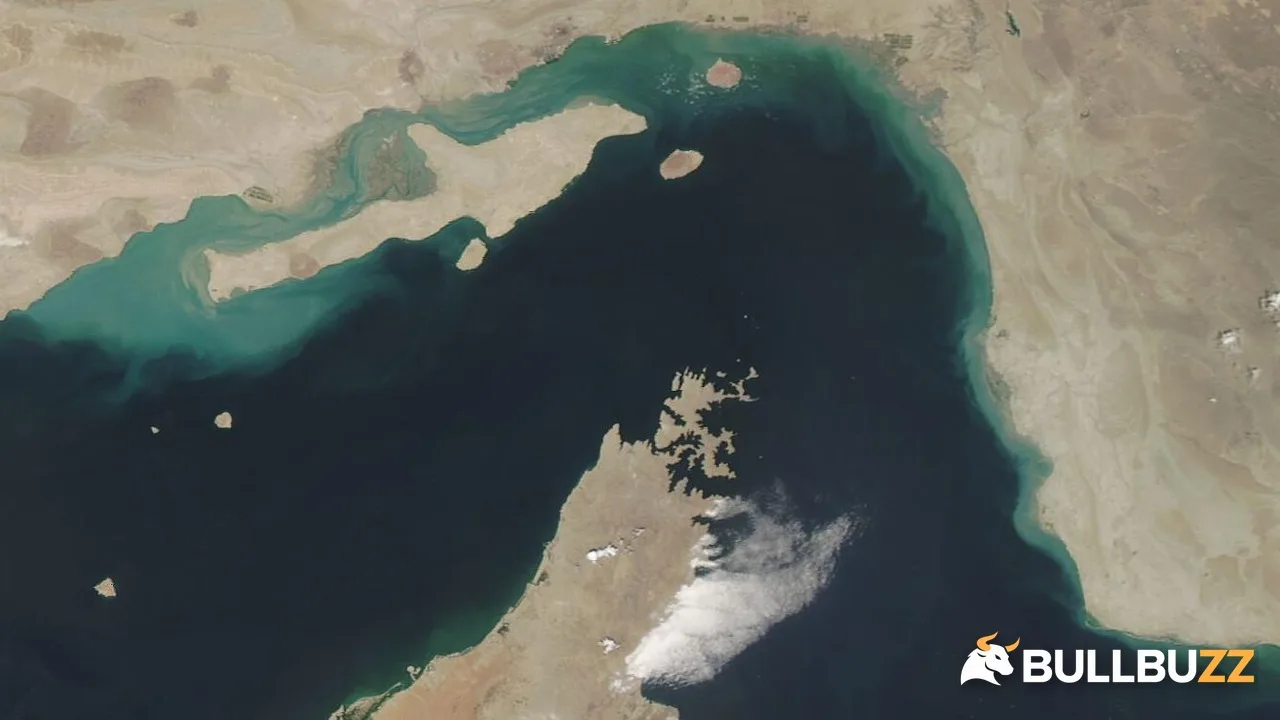
The United States carried out limited strikes on Iran's Qeshm Island on Monday, US officials said, describing the operation as defensive and aimed at protecting US assets in the Strait of Hormuz. The strikes, first reported by The Wall Street Journal and confirmed to CNN by three US officials, were not publicly announced by Washington and were not presented as a return to large-scale combat.
Iranian state media reported several explosions on Qeshm Island, which sits at the mouth of the Strait of Hormuz, in the early hours of Tuesday local time. Iran's state-affiliated Fars News Agency said the blasts were also heard by residents of nearby Hengam Island and in the port city of Bandar Abbas, CNN reported. The precise targets, damage and any casualties have not been independently confirmed, and US Central Command did not immediately respond to requests for comment.
One US official told CNN the attack came in response to Iran firing at a US aircraft. Another put it more directly: "This was a defensive measure for Iranians using surface-to-air missiles against US assets." Reuters, reporting the Journal's account, said the attack was the latest in a series of limited strikes carried out by Washington in recent weeks, kept small and secret so as not to signal any intent of resuming its major military campaign against Iran.
US strikes Iran: what happened on Qeshm Island
The Journal reported two confrontations on Monday that officials linked to the strikes. In one, Iran's Islamic Revolutionary Guard Corps fired a surface-to-air missile at a US fighter jet, which returned fire in self-defence. In a separate incident the same day, US forces intercepted a missile launched from Qeshm that was targeting commercial shipping, one official told the Journal. Washington has not publicly announced the recent smaller strikes, and one official said the campaign was being kept quiet deliberately.
Officials described the Qeshm strikes as limited and defensive, meant to stop Iran from having the freedom to attack commercial ships in the Strait of Hormuz, rather than as the opening of a new bombing campaign. CNN reported that the action did not appear to be the kind of major combat operation officials have contemplated.
Separately, the Revolutionary Guard claimed late on Monday that it had shot down two US reconnaissance drones over Qeshm Island, though it was unclear whether that incident was related to the strikes. Iranian Deputy Foreign Minister Kazem Gharibabadi said Tehran reserved the right to defend itself, while appearing to downplay the incident as part of an "ongoing war". Washington and Tehran have been at war since 28 February, according to Reuters.
Why Qeshm Island matters for Strait of Hormuz oil
Qeshm is the largest island in the Persian Gulf and lies about 14 miles from Bandar Abbas, directly overlooking the Strait of Hormuz. The Journal reported that the island is home to a large underground missile site, a naval base and a major desalination plant, and that the US has previously targeted it during the fighting. Its position is why a limited strike there carries weight far beyond the island itself: the strait carried about 20 million barrels of oil a day before the war, according to CNN, and remains the chokepoint through which much of the region's crude and liquefied natural gas must pass.
Oil markets reacted before they had full details. Brent crude futures rose 48 cents, or 0.5%, to $105.25 a barrel in early Asian trade on Tuesday, while US West Texas Intermediate rose 47 cents, or 0.5%, to $96.93, Reuters reported. That bounce came after Brent had settled $8.66, or 7.63%, lower at $104.77 on Monday, when hopes of diplomacy had driven prices down sharply, as covered in BullBuzz's report on oil's plunge on peace-talk hopes.
Diplomacy continues as Hormuz reopening terms stay unresolved
The strikes landed in the middle of a diplomatic effort, not after it had broken down. President Donald Trump said on Monday that a deal with Tehran could happen, and when asked by reporters whether he was considering striking Iran after Tuesday's midterm elections, he replied "no", Reuters reported. Vice President JD Vance told reporters on Monday that the two sides had made some progress toward an off-ramp to the war.
Iranian and Qatari negotiators had shuttled between their capitals over the previous week to discuss a proposal to end the war, and Qatari mediators were expecting responses from the US and Iran within two days on the latest suggestions, CNN reported, citing diplomats briefed on the talks. Hours later, Iran's top security official Mohsen Rezaei said a US response to Tehran's demands was "not satisfactory".
Those conditions, as reported by Iranian media, include the US lifting its maritime blockade, releasing Iran's frozen assets and ending the war on all fronts. Iran has said it can reopen the Strait of Hormuz within two days if Washington meets its terms, as covered in BullBuzz's report on Iran's Hormuz reopening terms. The US rejects Iran's claimed authority over the waterway.
Iranian parliamentary speaker Mohammad Bagher Ghalibaf, who is leading negotiations with the US, warned early on Tuesday that Iran would not surrender to threats and military actions and that its response to any miscalculation would be unpredictable. For now, officials describe Monday's operation as a contained defensive response, while the diplomacy that could settle the strait continues in parallel.