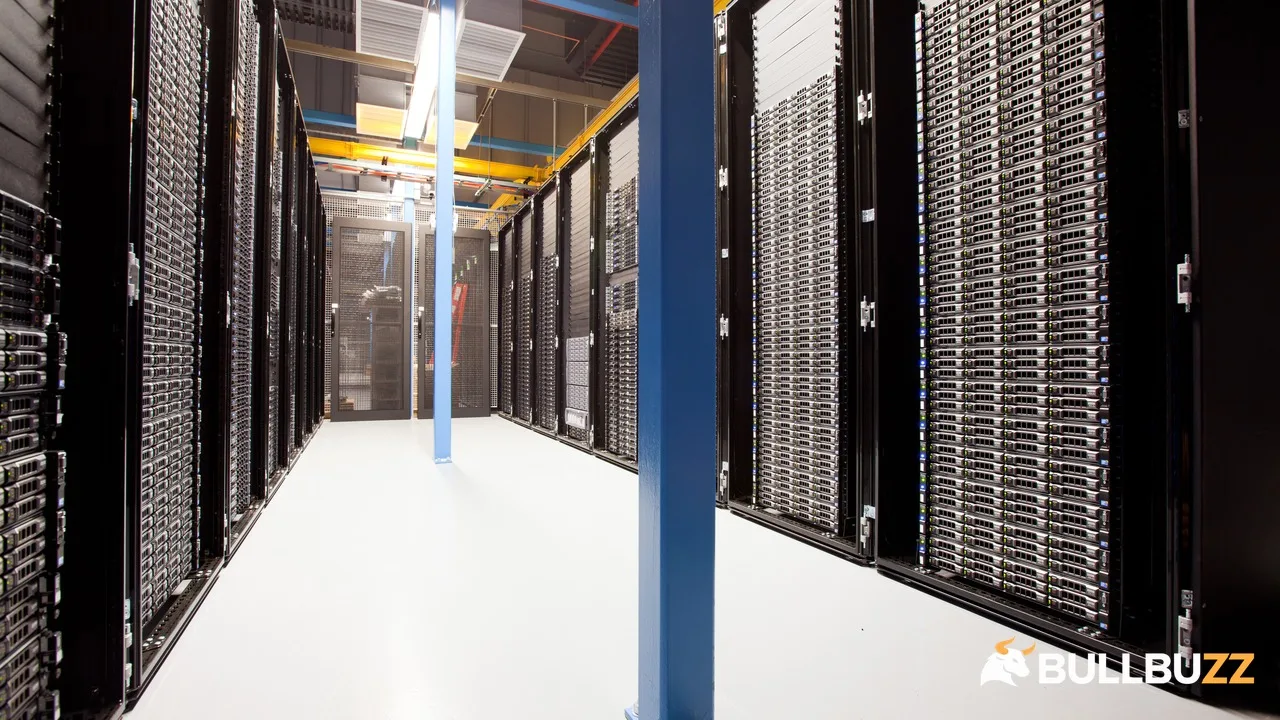
The United States has moved to close the last major loophole in its AI chip export controls, issuing a rule on Monday, 16 November, that stops Chinese companies renting the computing power they are barred from buying. The Commerce Department's Bureau of Industry and Security (BIS) said the interim final rule requires a licence before advanced American chips can go to any data centre, anywhere in the world, that rents large-scale computing power to firms based in China or other countries of concern.
"The rule is designed to ensure that existing restrictions on access to sensitive American technology cannot be circumvented through remote computing arrangements involving data centers in third countries," the department said in a statement, Reuters reported. It comes as President Donald Trump departs for Asia to meet Chinese President Xi Jinping, days before the first-ever Xi-Trump-Putin summit in Shenzhen on 19 November.
Chinese firms have long rented computing time from South-East Asian data centres to train large AI models remotely, despite a four-year ban on buying the chips themselves. The rule names Malaysia as one of five countries now facing tougher licence requirements for advanced chip shipments.
What the new AI chip export controls cover
The rule, titled "Addressing Remote Access to Advanced Semiconductors", creates a new end-use control on data centres. A licence is now required when an exporter knows the chips are headed for a data centre that will provide more than 12 million aggregate total processing performance, or TPP, to companies headquartered in Macau or a Country Group D:5 destination, including China, Russia, Iran and North Korea, or whose ultimate parent is based there. The threshold is roughly the computing capacity of about 750 of Nvidia's H100 or H200 processors.
The rule also adds a licence requirement for advanced semiconductor exports to or within Indonesia, Malaysia, Singapore, Thailand and Brazil, which BIS says carry a higher-than-normal diversion risk.
The rule takes effect on publication in the Federal Register, with 60 days for public comment, and data centres already supplying significant capacity to covered companies have 90 days to obtain a licence. It also formally rescinds the Biden-era AI Diffusion Rule, which BIS says was never enforced. Unusually, the rule says it was written at the direction of the Treasury Department and the National Security Council, and is signed by Under Secretary Jeffrey I. Kessler.
The Megaspeed scandal behind the rule
The spark was a scandal at Megaspeed, a Singapore-based data centre firm. It emerged that former Nvidia chief executive Jensen Huang had an inappropriate relationship with Alice Huang, a former Megaspeed executive whom US authorities suspect of ties to Chinese intelligence, and signs surfaced that hundreds of thousands of advanced processors were smuggled into China, Chosun Biz reported. The New York Times reported in October 2025 that US authorities were investigating whether Megaspeed helped Chinese customers obtain Nvidia chips subject to export controls; China denies the allegation, and Megaspeed has not been found to have violated the rules.
Pressure had been building. Senator Maria Cantwell, the top Democrat on the Senate Commerce Committee, wrote to Commerce Secretary Howard Lutnick on 15 November accusing the department of failing to stem the flow of AI chips to China, while Treasury Secretary Scott Bessent said the Treasury, the Pentagon, the State Department and the US Trade Representative's Office had favoured blacklisting Megaspeed for months. CNBC reported that the rules were drafted by the Treasury Department and the National Security Council, a sign that Bessent and Secretary of State Marco Rubio effectively bypassed Lutnick. The scandal has already reshaped Nvidia: Huang resigned as chief executive last week, and Huang is now weighing a comeback as Bessent demands an outside CEO.
Chip stocks slide as the AI trade wobbles
Investors sold chip stocks on the news. Nvidia fell 4.1 per cent in US trading on Monday, and the Philadelphia Semiconductor Index dropped 5.3 per cent. The selling carried into Asia on Tuesday, with Japan's Nikkei 225 down 1.15 per cent, South Korea's Kospi down 1.92 per cent and Australia's S&P/ASX 200 down 1.48 per cent. SoftBank fell 4.68 per cent, and SK Hynix and Samsung Electronics lost 1.4 per cent and 2.2 per cent.
Asian tech stocks plunged on Monday as Nvidia's earnings put the AI trade on trial, and the chipmaker reports its quarterly results after the US market closes on Tuesday, early on Wednesday, 18 November, in Malaysia. That report is the next big test of whether the AI spending boom can survive a leadership vacuum at Nvidia and a tightening US export regime, as China's factory output and retail sales both missed forecasts in October.
Experts said the move will significantly constrain China's AI development. Sam Bresnick, a researcher at Georgetown University's Center for Security and Emerging Technology, told Politico that if remote access is banned, Chinese companies will struggle to secure large numbers of high-performance Nvidia processors. Trump, however, suggested the pace of semiconductor regulation may need moderating in light of trade talks, telling reporters as he departed for Asia: "We have a very good relationship with China, and I understand both sides." For Malaysia, the rule cuts both ways: it is one of five destinations facing new licence requirements, which could slow chip shipments into its data centre hubs, but the controls may push AI computing demand towards facilities that can demonstrate clean compliance.