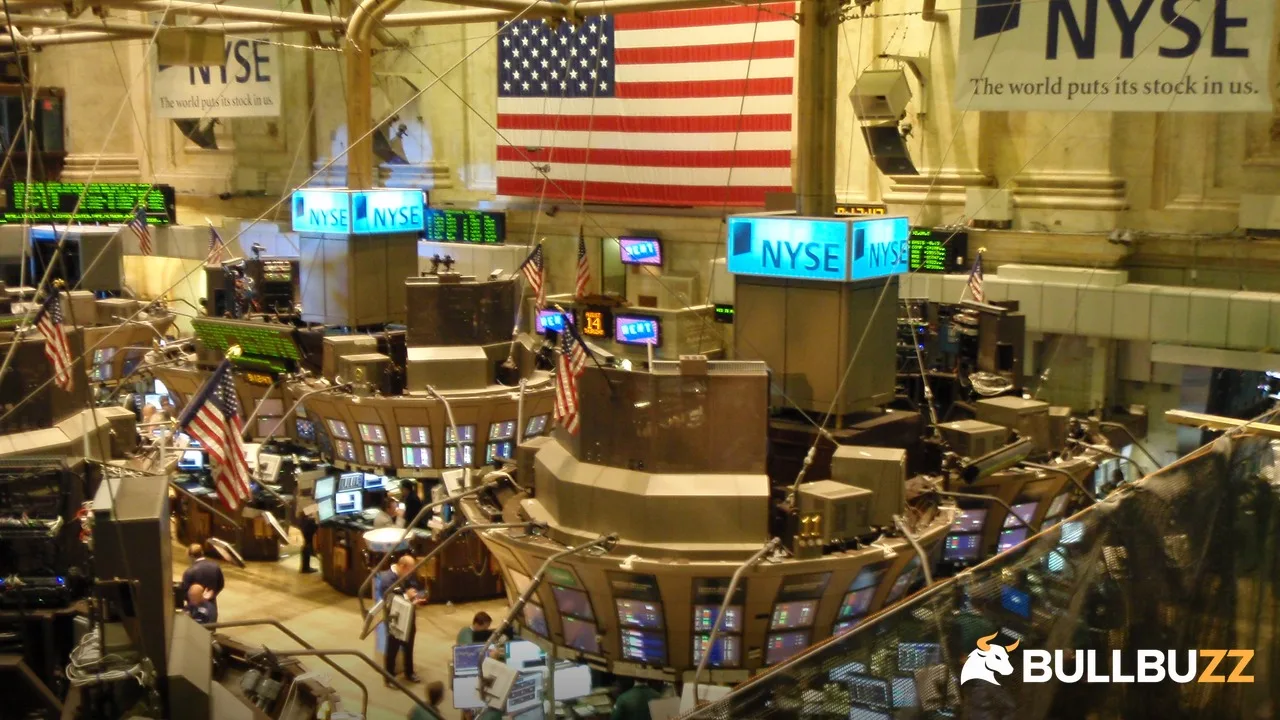
Wall Street staged a dramatic recovery on Wednesday as dip buyers stepped in after a brutal morning selloff, with the S&P 500 clawing back from a 3.2% plunge and the Nasdaq 100 escaping bear-market territory, even as hotter-than-expected inflation data locked in a December Federal Reserve rate hike.
The S&P 500 sank as much as 3.21% in early trading, dropping below 7,000, before substantially trimming its losses to close down just 0.35%. The Nasdaq Composite fell as much as 4.7% intraday and finished 0.62% lower, while the Nasdaq 100 briefly touched bear-market territory before recovering to a 0.64% loss. The Dow Jones Industrial Average clawed its way back into positive territory around midday and closed 0.33% higher. Cboe reported the wild session, noting that dip buyers eventually stepped in and pulled stocks off their deep morning lows.
The trigger for the morning rout was the October inflation data, released at 9:30pm MYT on Wednesday. The Federal Reserve's preferred inflation gauge, the core personal consumption expenditures (PCE) price index, rose 3.3% from a year earlier, up from 3.1% in September and above the 3.2% economists had expected, marking its highest reading since November 2023. Headline PCE inflation increased 3.8%, up from 3.7% in September. Barron's reported that the three-month annualised rate of core PCE inflation climbed to 3.6% in October, from an upwardly revised 3% in September.
Hot PCE and Strong GDP Put a December Fed Hike Beyond Doubt
The same morning brought a second estimate of third-quarter growth that was far stronger than first reported. The US economy grew at a 4.3% annualised rate in the third quarter, the Bureau of Economic Analysis said, up from the 3.4% initially reported and the fastest pace in three years. Consumer spending was revised higher too, suggesting demand has not faded as quickly as policymakers had hoped.
Together, the two releases gave the Fed more fuel to keep interest rates higher. Markets are now pricing in a 98% chance of a 25-basis-point rate hike at the Fed's 9 December meeting, and the CME FedWatch tool shows a 59% probability of another 25-basis-point increase in January, down from 70% a week ago. Treasury Secretary Scott Bessent has warned that a December hike risks a policy mistake, but the data released on Wednesday pointed firmly in the other direction.
Nvidia Slides Again as S&P Questions Its Governance
Nvidia was again at the centre of the selloff. The chipmaker finished 3.9% lower, and Anthropic tumbled nearly 10% from Tuesday's close, briefly pushing its market capitalisation below $1 trillion, before dip buyers stepped in and lifted it to a 1.08% gain on the day. The two stocks have become the lightning rods for doubts about the artificial-intelligence trade, with investors questioning whether the massive spending on AI infrastructure and data centres will generate enough returns.
The pressure on Nvidia intensified after S&P Global Ratings put the company's senior unsecured debt on CreditWatch with negative implications, questioning the effectiveness of its management and governance, citing board independence and key-man risk. CreditWatch does not mean the debt has been downgraded, but it is on review for one. Last week, Moody's Ratings took a similar step, lowering Nvidia's credit-rating outlook from positive to stable, also citing governance and the lack of a formal succession plan.
The moves matter because they could influence how Nvidia continues its circular financing across the AI ecosystem, where the company has invested in and provided financial support to a number of other firms. The euphoria that followed Jensen Huang's reinstatement as chief executive has faded fast: while his return soothed fears of a leadership vacuum, concerns over spending and rising borrowing costs continue to raise doubts about the sector.
Bonds Rally as Investors Seek Safety
The yield on the 10-year Treasury fell to about 4.85% as the rush into bonds continued, marking its eighth straight daily decline, the longest run since 2024. Bloomberg reported that most S&P 500 companies actually rose on the day, with the selling concentrated in technology while money rotated into other sectors.
Volatility remained elevated. The Cboe Volatility Index, Wall Street's fear gauge, climbed sharply in early trading before cooling somewhat as the selloff moderated, closing just above 28. Options pricing suggested an implied daily move of about 1.8% in the S&P 500, a sign that traders expect more large swings ahead.
Elsewhere, the Federal Reserve's Beige Book, released at 3:00am MYT on Thursday, showed moderate growth across the US economy with an uptick in wage pressures. Gold swung sharply, dipping below $3,500 an ounce after the inflation data before recovering to $3,575 by the close. West Texas Intermediate crude rose 2.5% to $84.13 a barrel, while Bitcoin climbed 0.7% to $60,237, moving back above $60,000 after slipping below that level earlier in the week.
What Comes Next for Wall Street
US markets are closed on Thursday for Thanksgiving, with a half-day session on Friday, and thin holiday volumes can make moves look more dramatic than they really are. The selloff was not confined to the US: in Asia on Wednesday, South Korea's KOSPI closed 6.16% lower and Taiwan's TAIEX lost 4.8%, as the AI rout spread across the region's chip-heavy markets. All eyes are now on the Fed, with the December meeting less than two weeks away and traders bracing for more volatility before the week is out.