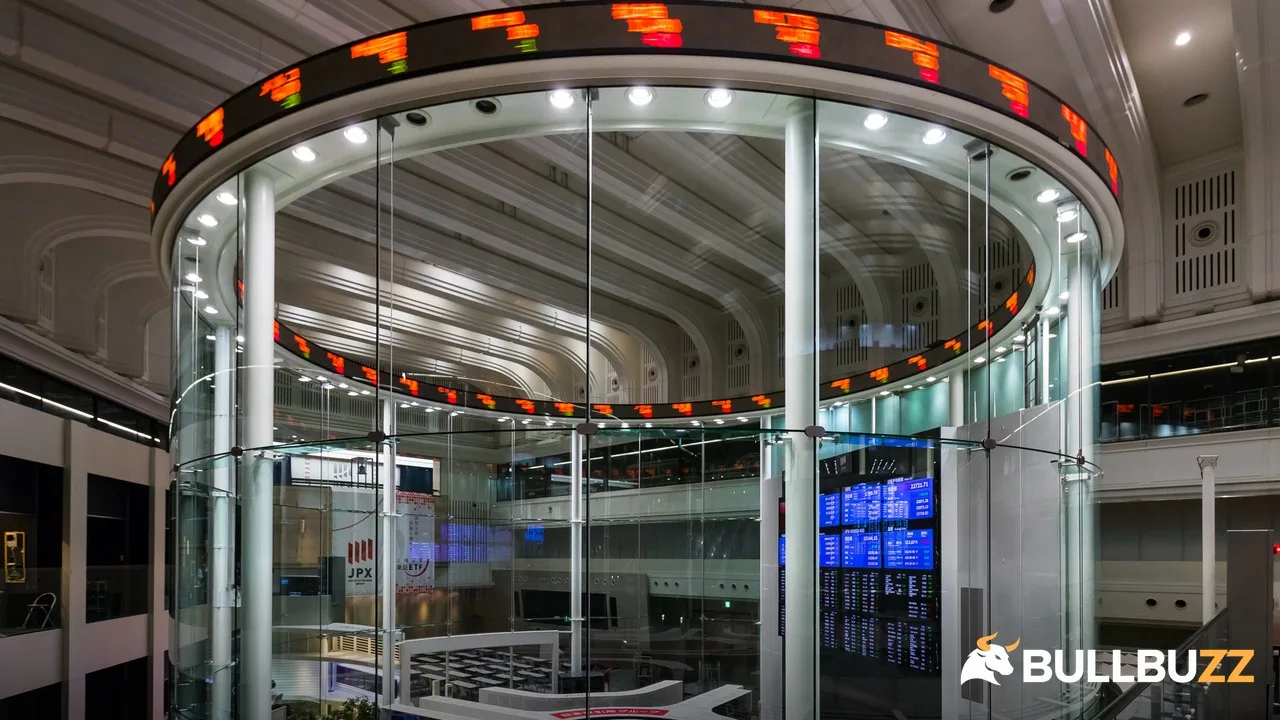
Japan's Nikkei 225 entered a bear market and South Korea's Kospi plunged more than 8% on Friday, triggering a trading halt, as Asian stocks crashed after the rout in artificial intelligence shares that hammered Wall Street.
South Korea's Kospi fell 8.55% in morning trading to 4,923.47, dropping below the 5,000 level and tripping a Level 1 circuit breaker that halted trading for 20 minutes, Reuters reported. Samsung Electronics fell about 10% and SK Hynix, the memory-chip maker, dropped about 12%, according to market data. Japan's Nikkei 225 slid about 6%, breaking below 60,000 for the first time since May, while Taiwan's Taiex fell about 8%, CNN reported.
The Nikkei's slide pushed the index more than 20% below its record high of 72,831.73, set on 22 June, putting it in bear market territory, with the index falling as low as 57,683 during the session. The MSCI Asia Pacific Index fell 4.7%.
Asian Stocks Crash as AI Rout Crosses the Pacific
The selling followed a brutal session on Wall Street. The Nasdaq Composite fell 5.5% on Thursday, the S&P 500 lost 4.4% and the Dow Jones Industrial Average dropped 3.4%, the steepest declines since the tariff-driven rout of April 2025. The tech-heavy Nasdaq 100 plunged 6.4% in its worst day since 2020. The Philadelphia Semiconductor Index slumped 12.2%, and about $3 trillion was wiped off the value of S&P 500 companies, Reuters reported.
Chip stocks bore the brunt on both sides of the Pacific. In the United States, Micron and Western Digital each fell more than 17% and SanDisk crashed more than 22%, while Nvidia lost more than 9% and the "Magnificent Seven" group of mega-cap technology stocks shed more than $1 trillion in market value in a single day, CNBC reported. In Tokyo, Advantest plunged 12%, SoftBank Group lost 11% and Tokyo Electron fell nearly 9%.
The trigger is political. Democrats won control of both chambers of Congress in Tuesday's midterm elections, and investors fear the new Congress will tighten regulation of artificial intelligence and slow construction of the vast data centres that have powered the AI boom. Data-centre spending became a leading election issue as communities pushed back against the energy use, water demand and local disruption of new facilities, while lawmakers raised antitrust questions about the "hyperscaler" technology giants building them. Weak results from Qualcomm added to the gloom.
"It's pretty clear there's been a real shift in sentiment," Michael McCarthy, chief executive for Australia and New Zealand at online brokerage Moomoo, told Reuters. "Market turning points are often accompanied by strong disagreement, and that shows up in the market by huge swings in either direction. That's what we appear to have had — and last night's emphatic sell-down suggests that is the direction that we're now headed in."
Nick Ferres, chief investment officer at Vantage Point Asset Management in Singapore, told Reuters that government bonds could rally much further. "And I suspect it will be an ugly day for semiconductor and memory (stocks)," he said.
Investors Rush to Havens as Gold Heads for Best Week Since August
The rush out of equities sent investors towards havens. The dollar slipped against the yen and the Swiss franc, government bonds were poised to gain, and gold traded around $4,090 an ounce, on course for its best week since August as a weaker dollar and lower Treasury yields lifted demand for the metal, according to market reports.
Brent crude rebounded to around $98 a barrel after renewed tanker incidents in the Strait of Hormuz and uncertainty over US-Iran negotiations, partly reversing the 9% crash in oil prices earlier in the week.
Attention now turns to Friday's US jobs report, due at 8:30 a.m. in New York — 9:30 p.m. in Kuala Lumpur. Economists expect payrolls to have risen by about 59,000 to 65,000 in October, after just 29,000 in September, with unemployment holding at 4.2%. Private employers added 86,000 jobs in October, according to ADP, and jobless claims fell to their lowest since July, but a weak official reading would deepen doubts about the economy just as the Federal Reserve weighs a December rate rise. Traders see about a 67% chance of a quarter-point increase at the Fed's 9 December meeting, according to CME FedWatch.
Central banks elsewhere are moving in the opposite direction. The Bank of England raised its Bank Rate to 4% on Thursday, its first increase since August 2023, as it warned inflation could reach 5% by mid-2027.
Whether Friday's rout marks the end of the AI trade or a sharp correction will depend in part on the jobs data and on how far the new Congress pushes AI regulation — two questions the market will not have answers to for weeks. For now, the trade that carried global stocks to record highs in June is unwinding at speed, and Asia's chipmakers are standing directly in its path.