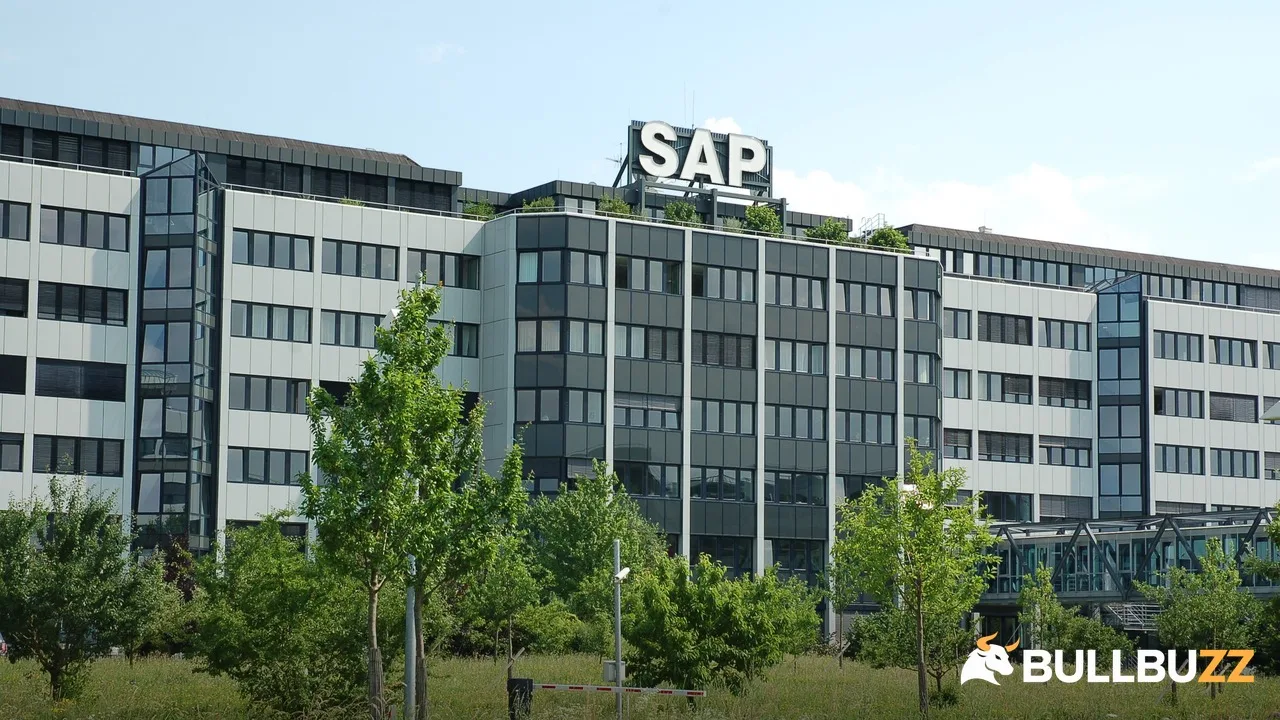
SAP is considering eliminating at least 10,000 positions as it reshapes its software business for the artificial intelligence era, in what would be the German company's second major round of SAP job cuts in less than three years.
Business Standard reported, citing Bloomberg News and people familiar with the matter, that SAP is preparing a plan to cut at least 9% of its global workforce of more than 110,000 people. Reuters reported the same Bloomberg account on Thursday, while noting it could not independently verify the report.
The plan is not final. The total number of roles affected has not been decided and could still change after negotiations with employee representatives, the people said. CNA reported that the proposals have yet to be put to employee representatives at all.
SAP declined to confirm the cuts. In a statement, the company said it "continuously reviews its organization to ensure it remains aligned with its strategy and customer needs," without commenting on whether any job cuts are planned. In a separate response to CNA on Friday, SAP said it was "continuously reviewing how our organisation and workforce need to evolve to remain successful," adding that "beyond this, no decisions have been made regarding any further measures" and that it does not comment on speculation.
Why the cuts are on the table now
The reported restructuring sits at the centre of chief executive Christian Klein's push to turn SAP into an AI-first company, embedding artificial intelligence more deeply into the enterprise software it sells. All departments have been asked to identify areas for potential reductions, with product development, engineering and sales in particular focus, according to the people familiar with the discussions.
SAP has already reorganised its executive board twice this year as part of that push. Two of its six board members will leave in March, Klein has taken over most of the responsibilities of product lead Muhammad Alam, whose contract ends in March, and sales chief Thomas Saueressig said last week he will leave to become chief executive of Ionos Group.
The signal from the finance chief has been blunt. "Our headcount has increased a little bit over the course of the year," chief financial officer Dominik Asam said at a Morgan Stanley conference last week, adding that he "would be really surprised" if that trend did not reverse.
SAP has done this before
If the plan goes ahead, it would echo SAP's last major restructuring in 2024, when around 10,000 positions were eliminated at a cost of about €3 billion ($3.3 billion) over more than a year. That effort was handled mainly through voluntary departures and retraining, and fresh hiring since then has pushed headcount back up to about 113,000.
Workers in Germany, where SAP employs its largest number of staff, have some protection: the labour council negotiated an employment guarantee running through 2028. But that guarantee does not rule out restructuring elsewhere, and SAP has historically announced its major reorganisations in late January, alongside its full-year results — which points to the timing traders should watch.
The reported cuts come despite solid trading. NDTV Profit reported that third-quarter revenue rose 13% year on year to €10.3 billion, with cloud revenue of €6.7 billion and post-tax profit up 11% to €2.3 billion. SAP shares still rose more than 2% in Frankfurt trading on Thursday after the report emerged, although the stock is down about 6% over the past year as investors worry about how AI could disrupt established software business models.
SAP job cuts: what happens next
Three things will decide how this plays out. First, the talks with employee representatives, which have not yet begun — the final number of cuts will depend on those negotiations. Second, SAP's full-year results in late January, the window in which the company has historically confirmed major restructurings. And third, whether the AI-first reorganisation delivers the efficiency gains Klein is chasing without damaging the product development teams that build the software SAP sells.
The wider pattern is hard to miss. Nvidia has halted AI server shipments to four Southeast Asian nations under US chip curbs, while the Bank of Korea raised its rate to 3.25% this week as the AI boom fuels growth. Automakers including Volkswagen and BMW have announced deep cuts of their own, and US technology rivals including Microsoft, Oracle and Salesforce have announced thousands of job cuts in recent months, citing AI-driven efficiencies. SAP, Europe's most valuable software company, is now weighing whether to join them — and 10,000 of its people are waiting for the answer.
For now, the plan remains a proposal, not a decision. But with the chief financial officer openly expecting headcount to fall, and the board reshaped around Klein's AI-first strategy, the direction of travel is clear. Wall Street recovered after hot PCE data locked in a December Fed hike, and markets will now watch whether SAP's January results bring confirmation of the biggest restructuring in European software since its own 2024 overhaul.