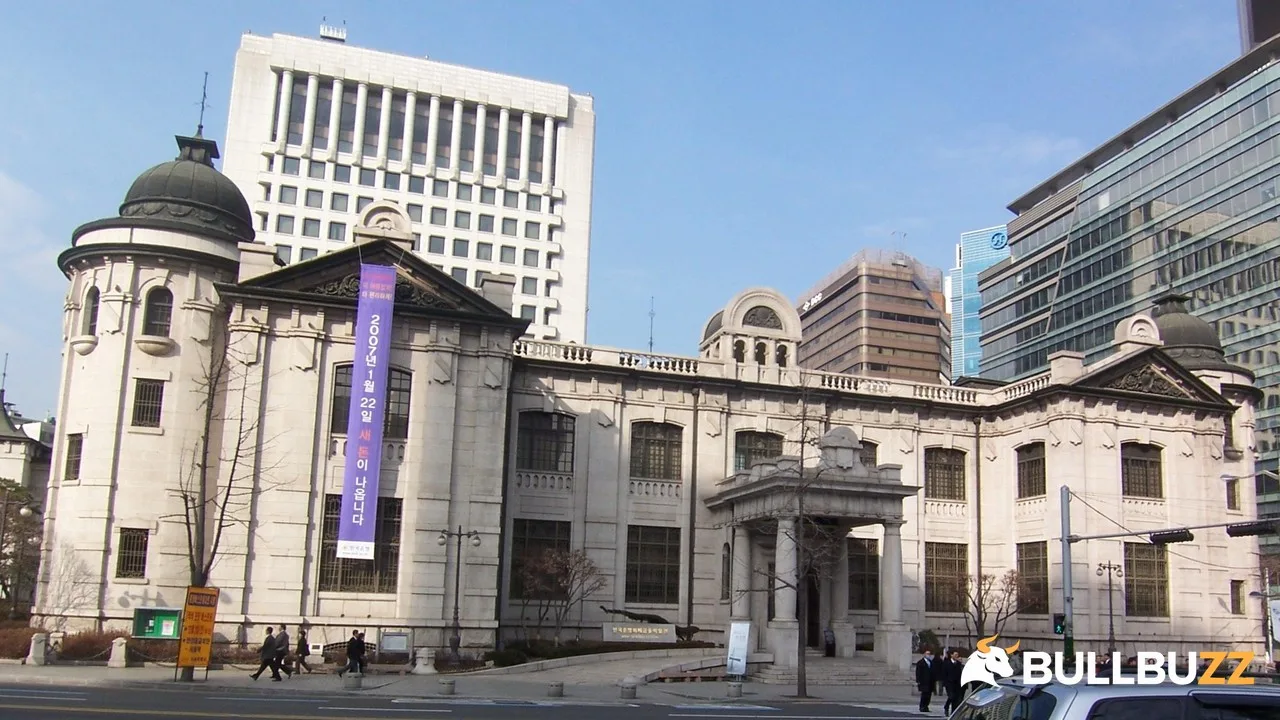
The Bank of Korea raised its benchmark interest rate by a quarter of a percentage point to 3.25% on Thursday, resuming its tightening cycle after a three-month pause as a chip-driven export boom keeps growth strong and inflation above target.
The decision, taken at the central bank’s final policy meeting of the year in Seoul, was the Bank of Korea’s third rate hike of 2026, following back-to-back increases in July and August. The board had held the rate at 3.00% in October to assess the impact of the summer hikes and external risks. The new rate is the highest in two years. Reuters reported the move had been forecast by 32 of 34 analysts it surveyed.
Five of the seven board members voted for the increase. Two members, Hwang Kun-il and Lee Soo-hyung, voted against it and argued for holding the rate at 3.00%, Yonhap reported.
Bank of Korea rate hike driven by growth upgrade
The hike came with a sharp upgrade to the bank’s view of the economy. The Bank of Korea now expects South Korea’s economy to grow 3.9% in 2026, up from 3.3% previously, and 4.1% in 2027, up from 2.9%. That would be the fastest growth since 2021, when the economy expanded 4.7%.
The upgrade reflects an export boom powered by artificial intelligence. South Korean exports topped US$1 trillion last week for the first time, and semiconductors accounted for 49.7% of exports in the first 20 days of November, according to Korea Customs Service data. The economy grew 3.4% year on year in the third quarter, and has already expanded 3.6% in the first nine months of the year, putting annual growth of 3% or more within reach for the first time in five years.
At the same time, inflation remains well above the Bank of Korea’s 2% target. Consumer prices rose 2.8% in October from a year earlier, easing slightly from 2.9% in September and 3.1% in August, while core inflation, which strips out food and energy, picked up to 2.8% from 2.7%. The bank now sees inflation at 2.4% in 2027, up from 2.3% previously.
“Domestic economic growth has further strengthened, inflation is projected to remain above the target level for a considerable time, and financial stability risks persist,” the board said in its statement. Policymakers also pointed to a heated housing market and elevated oil prices, with renewed tension in the Middle East keeping crude under upward pressure.
A dovish signal inside a hawkish decision
The statement carried one notable softening. Where the October statement said the board would decide “the timing and pace of further increases”, Thursday’s version dropped the word “pace”, saying only that it would decide on “the timing of further increases” while assessing inflation, the domestic economy and financial stability.
Even so, the door to more tightening stays open. The bank’s rate projections show all board members leaving room for further increases over the next six months, with the upper end of the six-month outlook rising to 3.75%. Most local brokerages expect the rate to peak at 3.50%.
Governor Shin Hyun-song, who last month said the bank would take a data-dependent approach rather than follow a fixed path, explained the decision at a news conference in Seoul on Thursday morning.
KOSPI rebounds after Wednesday’s rout
South Korean stocks welcomed the decision. The KOSPI jumped 2.5% to close at 4,818 on Thursday, rebounding from a 10-month low after plunging 6.16% on Wednesday to 4,697.51, its weakest close since 13 January. Chipmakers led the recovery: Samsung Electronics advanced 2.81% and SK Hynix climbed 5.83%. Foreign investors were net buyers of 239.6 billion won (US$178 million) of shares, while the won traded a touch firmer near 1,343 per dollar. The Economic Times reported the rebound was driven by bargain hunting after the previous day’s rout and smaller losses among US semiconductor stocks.
The contrast with Wednesday could hardly be sharper. The KOSPI’s 6.2% slide came as global AI and technology stocks sold off and Wall Street endured a wild session on hot US inflation data, with the Nasdaq 100 briefly touching bear-market territory. Seoul also loosened share buyback limits for three months from 24 November to support prices.
What the hike means for the won and traders
For currency traders, the Bank of Korea’s move sharpens the contrast with the US Federal Reserve, which markets now expect to raise rates in December after October core PCE inflation came in at 3.3%. A Bank of Korea that is still tightening while growth runs hot gives the won support, but the currency remains exposed to the same forces that hit it this week: a strong dollar and the AI trade unwind.
South Korea also faces a new external risk. Washington has proposed a 15% tariff on South Korean goods under its Section 301 investigation into industrial overcapacity, part of a package covering 14 economies that names Malaysia among the targets. Nothing is in force yet, with comments due by 5 January 2027, but the proposal adds to the uncertainty facing Asia’s exporters.
For now, the Bank of Korea has chosen to lean against inflation while the economy is strong enough to take it. With growth forecasts raised, inflation still above target and the board’s own projections pointing to a possible 3.75%, traders should expect the bank to keep its options open into the new year.