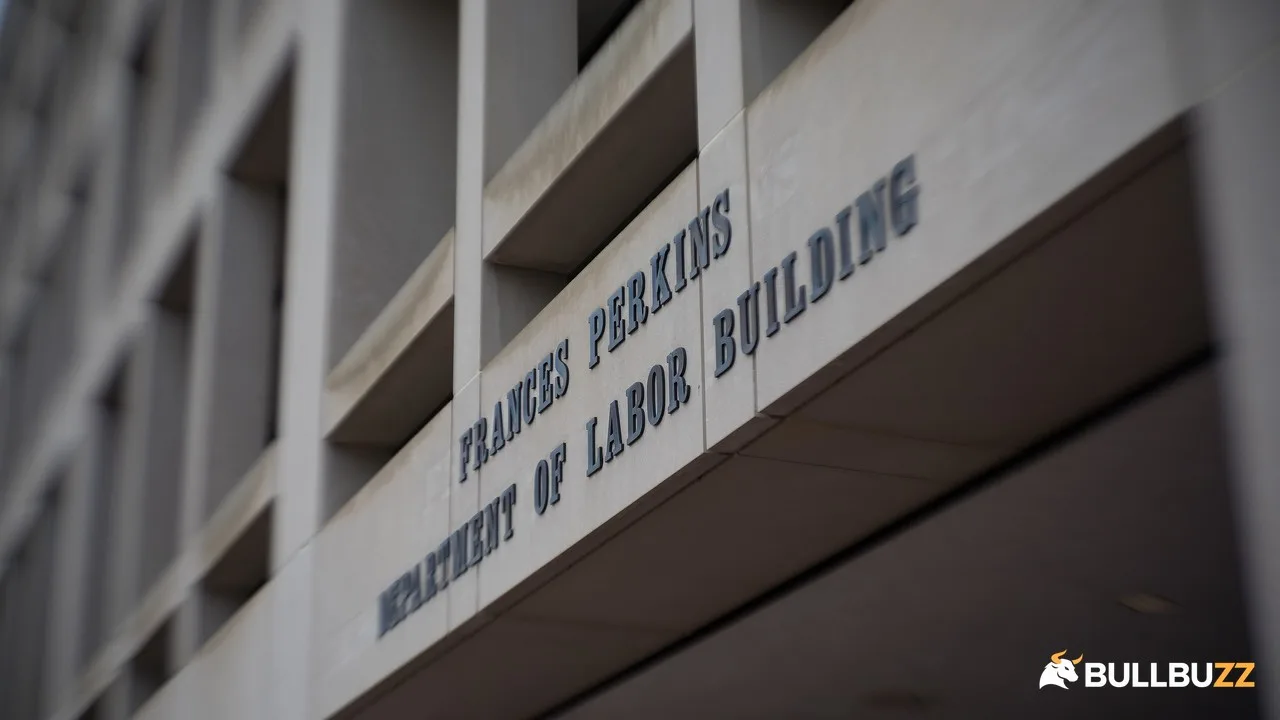
US job openings rose to 7.523 million in September, beating forecasts and pointing to firmer demand for workers than the month's weak payroll gain had suggested. The Bureau of Labor Statistics (BLS) reported on November 3 that openings increased by 333,000 from a revised August figure, while more workers quit their jobs and fewer were laid off, a combination that traders are reading as a sign the US labour market is holding up better than feared.
The headline beat expectations by a wide margin. Economists polled by Reuters had forecast 7.100 million unfilled positions, so the September result came in more than 400,000 above consensus. The job openings rate rose to 4.5 percent from 4.3 percent in August. Yet the BLS itself described openings as "little changed" at 7.5 million on a rounded basis, a reminder that the survey is noisy, subject to revision, and judged by its own statistical tests rather than by the forecast beat alone.
That tension matters for how the report should be read. August openings were revised up by 111,000 to 7.190 million, from 7.079 million previously reported. Reuters reported that economists still describe the labour market as being in a "low-hire, low-fire" state, in which firms are neither hiring aggressively nor cutting staff at scale, with the ongoing US-Israeli war with Iran making some employers hesitant to expand hiring.
US job openings: the numbers behind the headline
The Job Openings and Labor Turnover Survey, known as JOLTS, counts positions open on the last business day of the month, together with hires and separations during the month. In September, hires increased by 131,000 to 5.402 million, lifting the hires rate to 3.4 percent from 3.3 percent, according to the BLS. Total separations were little changed at 5.3 million, with a rate unchanged at 3.3 percent.
Within those totals, the detail was uneven. Openings increased in state and local government excluding education, up 104,000, the BLS said, while hiring rose in accommodation and food services, up 158,000. The report gives no sign of a broad hiring boom: on its rounded measures, openings, hires and total separations were all little changed, even though the unrounded figures beat forecasts.
The survey also carries a health warning. Reuters noted that JOLTS has been plagued by a low response rate, which has fallen considerably since before the COVID-19 pandemic. September's figures are preliminary and seasonally adjusted, and will be revised as more business reports arrive. The next JOLTS release, covering October, is scheduled for December 1.
Quits rise as layoffs ease
The most encouraging part of the release for workers was the quits data. Quits increased by 321,000 to 3.365 million in September, with the quits rate rising to 2.1 percent from 1.9 percent. The BLS said quits rose by 197,000 in accommodation and food services, while falling by 19,000 in arts, entertainment and recreation, and that total quits were up 375,000 from a year earlier. Because quits are generally voluntary, economists treat a rising quits rate as a sign that workers feel confident enough to leave one job for another.
Layoffs and discharges moved the other way. They decreased by 127,000 to 1.641 million, with the rate falling to 1.0 percent from 1.1 percent, Reuters reported. The BLS, on its rounded basis, described layoffs as little changed at 1.6 million, and noted a fall of 70,000 in health care and social assistance. There were 1.06 job openings for every unemployed person in September, up from 1.02 in August, a ratio that still points to a labour market with more vacancies than jobseekers, but not by a wide margin.
That balance helps explain why September's payrolls looked so different. Nonfarm payrolls increased by only 29,000 jobs in September, a tepid gain alongside 7.523 million openings. The gap is not a contradiction: payrolls measure net employment change, while JOLTS measures churn — openings posted, people hired, people quitting and people laid off.
What US job openings mean for the dollar and the Fed
For currency and rates traders, the report lands at a delicate moment. BullBuzz reported that US manufacturing activity strengthened in October, with the ISM index rising to 55.5, while eurozone manufacturing eased to 52.7. A stronger-than-expected JOLTS print would normally support the dollar, yet on Wednesday morning the dollar was softer, not stronger.
CPT Markets reported that the dollar index fell 0.2 percent to 101.7 in early Wednesday trading, while the euro gained 0.2 percent to 1.1212, as investors weighed the emerging US midterm election results alongside the labour data. That cross-current — firmer jobs data on one side, political uncertainty on the other — is why a single JOLTS release rarely settles the rates debate on its own. Wall Street had already split on election day, with the Nasdaq rising and the Dow falling, before the full midterm picture emerged.
The next test arrives quickly. A Reuters survey of economists expects payrolls to have advanced by 65,000 in October, with the unemployment rate forecast unchanged at 4.2 percent, when Friday's jobs report is published. If payrolls confirm the JOLTS signal, the case for the Federal Reserve to keep policy tight for longer strengthens. If payrolls disappoint again, markets are more likely to treat September's openings beat as noise in a survey with a low response rate, rather than as a turning point.