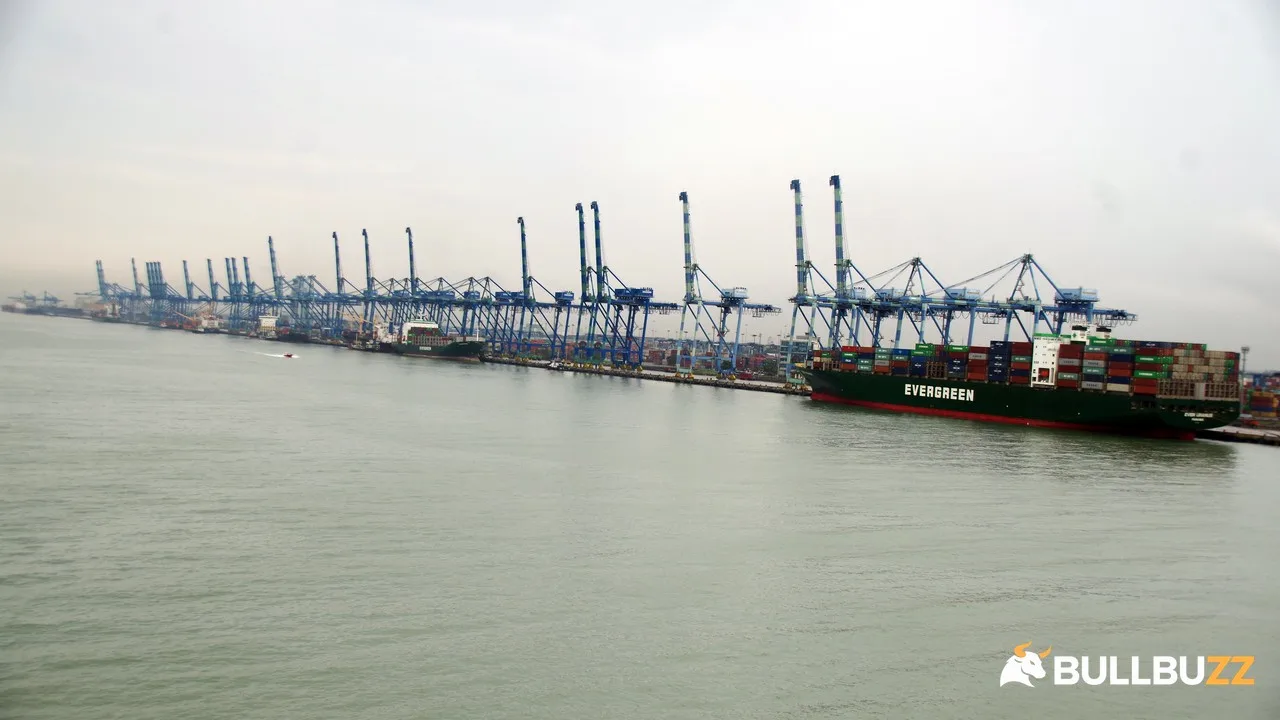
The United States has proposed additional tariffs of up to 18% on Malaysian goods, naming Malaysia among 14 economies accused of industrial policies that create structural excess capacity in manufacturing.
The proposal, announced by the Office of the United States Trade Representative (USTR) on Wednesday, opens a new front in Washington’s trade crackdown — but no new duty takes effect yet. Public comments are due by 5 January 2027, with hearings scheduled to begin on 25 January 2027, and the USTR has announced no effective date. USTR said it had determined that the manufacturing policies of the 14 economies were unreasonable and burdened or restricted US commerce, making them actionable under Section 301 of the Trade Act of 1974.
US tariffs: the proposed rates in full
Vietnam faces the highest proposed rate, at up to 35%, although that could fall to 20% if Hanoi reaches an agreement with Washington. India faces up to 25%, falling to 17% if New Delhi concludes a reciprocal trade deal. China faces up to 20%, Singapore up to 20%, and Bangladesh, Cambodia, Indonesia, Malaysia and Thailand up to 18%. The European Union, Japan, South Korea, Switzerland and Taiwan face 15%. The Straits Times reported that the rates are net of existing Section 301 duties, with exemptions for certain products, and that the final rates could differ from the proposal.
The determinations follow an eight-month investigation opened on 11 March 2026 into 16 economies. USTR has not made determinations on Mexico or Norway at this time. The move also follows the US Supreme Court’s rejection of tariffs imposed under emergency-powers legislation, with the administration rebuilding its tariff structure on the Section 301 statute instead.
Why Malaysia is in the firing line
USTR’s findings against Malaysia centred on four areas: industrial and sectoral plans to expand manufacturing and exports; preferential financing through national funding programmes; insufficient action to address excess capacity linked to imports and foreign investment from non-market economies; and inadequate labour protections. The information and communications technology and automotive industries were singled out as particular areas of concern. Malaysiakini reported that bilateral consultations between Washington and Kuala Lumpur in May failed to resolve the concerns.
Washington also warned that the rate on Malaysian goods could rise to 25% if it finds the outcome of ongoing consultations and Malaysia’s commitments under the US-Malaysia Agreement on Reciprocal Trade unsatisfactory. The Daily Express reported that the proposed 18% rate already takes into account existing duties, the ongoing consultations and the reciprocal trade agreement.
Malaysia disputes the findings. USTR acknowledged Kuala Lumpur’s position that it operates a rules-based, market-driven trade regime and does not contribute to structural excess capacity. Malaysia argues that its manufacturing output responds to genuine global demand, that its exports complement rather than compete with US domestic production, and that its manufacturing ecosystem is critical to global and US supply chains.
Markets and Malaysia react
Asian shares fell on Wednesday as the proposal landed, with South Korea’s KOSPI down 6.2%, Taiwan’s TAIEX down 4.8% and Japan’s Nikkei down 2.8%. Malaysia’s FBM KLCI ended flat at 1,562.3 points, with buying in plantation stocks cushioning the losses. Wall Street later recovered from its own sharp intraday losses as dip buyers stepped in.
Apex Securities said in a note on Thursday that the proposal was a headwind for near-term export sentiment, but not a reason to abandon Malaysia’s longer-term manufacturing and technology investment case. The brokerage flagged heavy US revenue exposure at several Malaysian manufacturers, including Genetec Technology at 75% to 83%, EG Industries at about 81%, Greatech Technology at 65% to 67%, Aurelius Technologies at 52% to 59% and Unisem at about 45%.
Deputy Finance Minister Liew Chin Tong said on Thursday that Malaysia and its ASEAN neighbours needed to strengthen the middle class to boost purchasing power and reduce dependence on a single major consumer market, after launching the Malaysian Institute of Economic Research National Economic Outlook Conference in Kuala Lumpur.
What happens next
Interested parties have until 5 January 2027 to submit written comments and requests to appear at the public hearings, which begin on 25 January 2027 in Washington. Until that process concludes, the proposed rates remain just that — proposals. But with 14 economies in the firing line at once, the announcement marks the broadest US tariff action of the year, and Malaysia’s exporters now have two months to make their case.
For currency traders, the immediate consequence is uncertainty on top of an already hawkish Federal Reserve outlook, with the dollar trading near a 20-month high as markets price in a December rate hike. Tariff headlines have repeatedly moved the ringgit and regional equities this year, and the Section 301 process gives traders a fixed calendar — comments in January, hearings later that month — to trade around.