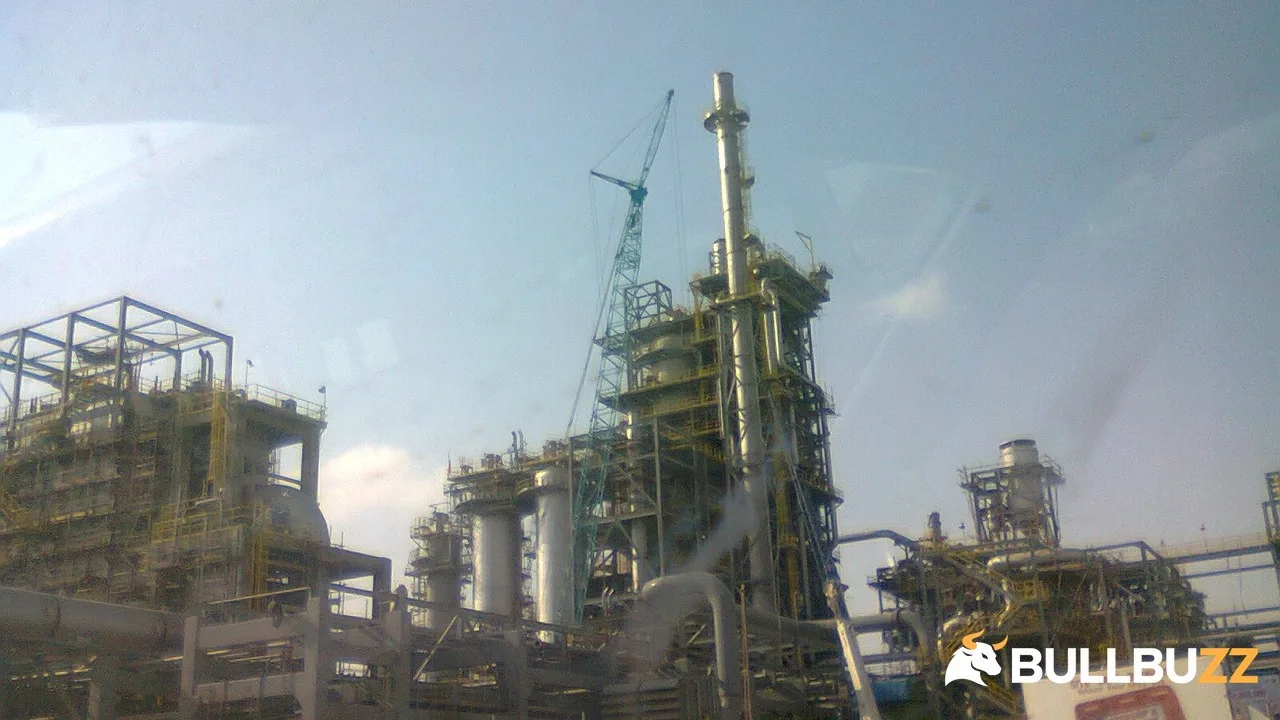
Yemen's Houthis said on Wednesday they had struck Ras Tanura, Saudi Arabia's largest oil refinery, and two Red Sea ports, in the sharpest escalation yet of their renewed campaign against Saudi energy infrastructure — and oil traders responded at once, sending Brent crude 3.5% higher.
Satellite images showed thick black smoke rising over the Ras Tanura complex, and a source familiar with the matter confirmed an attack on the facility, which processes 550,000 barrels of crude a day and sits alongside one of the world's largest oil export terminals. Reuters reported that Brent crude finished Wednesday 3.5% higher, while US West Texas Intermediate gained 2%, as traders priced in the risk to Gulf supply.
Houthi military spokesman Yahya Saree described the strike on the refinery as "accurate and direct" and said it had caused fires to break out at the facility. The Saudi-led coalition fighting the Houthis said its air defences had intercepted and destroyed four drones over Ras Tanura, without saying whether the refinery itself had been hit. Ras Tanura, on Saudi Arabia's Gulf coast, is the kingdom's largest refinery and the centre of a complex that has served as its main oil export terminal.
The group also said late on Wednesday that it had attacked the Red Sea ports of Jeddah and Jazan, in retaliation for coalition strikes on the Yemeni port of Hodeida. The coalition confirmed that a projectile fired by the Houthis fell at Jazan port, causing minor damage but no civilian casualties, and said it was working to determine the type of projectile. There was no immediate confirmation that Jeddah port had been hit. The Houthis had warned that Jeddah and every other Saudi Red Sea port would become targets if the coalition struck Hodeida.
Thursday brings a fresh wave of intercepts over Riyadh
The escalation continued into Thursday, when Saudi Arabia said it had intercepted two ballistic missiles fired towards Riyadh, as the kingdom faced a wave of attacks against its capital, its oil infrastructure and its Red Sea ports. The National reported that air defences also destroyed two drones over the kingdom's Eastern Province, a cruise missile launched towards the western region and a drone near Jeddah's port.
The latest attacks followed a strike on Tuesday on the tallest tower in Riyadh's financial district, which houses the headquarters of the Public Investment Fund, the kingdom's sovereign wealth fund. Saudi civil defence said 11 people were wounded in that strike, and the Houthis claimed responsibility, saying the attack on the capital's financial district had been carried out in three phases. The Times of Israel reported that the group has in recent weeks launched a barrage at Saudi targets including the financial district, airports, energy infrastructure and military sites.
Why the Houthi attack on the Saudi oil refinery moved Brent
Brent crude traded around $94.71 a barrel in early Asian trading on Thursday, with US West Texas Intermediate at $84.03, extending Wednesday's gains as supply concerns intensified. Analysts expect the latest attacks to increase the geopolitical risk premium on oil, with the refinery sitting at the heart of Saudi Arabia's export machine. The move compounds a week of disruption in the Gulf: two oil tankers hit mines in the Strait of Hormuz earlier in the week, an incident BullBuzz covered as two tankers caught fire in the strait, and the Houthis have previously disrupted some of Aramco's operations and forced the cancellation of most international flights to Riyadh.
The campaign is not new, but its tempo has quickened. The Houthis, who control much of western Yemen including the capital Sanaa, have been firing at Saudi airports, oil infrastructure and office buildings since Yemen's frozen civil war reignited in July, in a spillover from the wider US-Iran war. The Institute for the Study of War noted that the group had already claimed attacks on Ras Tanura on 27 and 30 October, and that commercially available satellite imagery confirmed large plumes of smoke over the refinery this time. BullBuzz reported on the October wave when Hormuz tanker attacks lifted Brent above $117 a barrel, and again when the Houthis claimed fresh strikes on a Saudi pipeline.
Saudi Arabia has answered with its own campaign, striking Hodeida port and Houthi military sites in Sanaa in an effort to degrade the group's ability to hit Saudi targets. But months into the renewed war, the kingdom appears increasingly unable to shield even its most sensitive infrastructure, and last week it removed its top general overseeing the military campaign, in an apparent effort to revive the campaign. The Houthis, meanwhile, have advanced into strategic areas along Yemen's Red Sea coast, moving towards the Bab al-Mandeb strait, the narrow chokepoint for much of the world's oil.
For traders, the question now is whether the damage at Ras Tanura is confirmed and how far the exchange goes. Any confirmed disruption at a 550,000-barrel-a-day refinery attached to a major export terminal would matter in a market already carrying a war premium, and further strikes on Red Sea ports would raise the cost and risk of moving crude out of the Gulf. With the coalition and the Houthis trading blows almost daily, the oil market is unlikely to discount the risk soon.